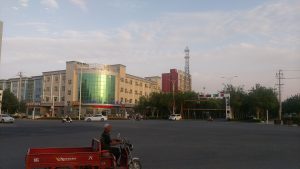
I stepped off the G-train onto the polished concourse of Changzhou North just as a winter drizzle turned the plaza into a mirror. The city didn’t announce itself with neon or noise. Instead, a row of plane trees stood bare along the boulevard, their branches etched against a sky the color of wet cement. A taxi driver leaned against his cab, smoking, unbothered by the wait. That quiet confidence — the sense that nothing urgent happens here unless you make it happen — stays with me every time I return. Most people treat Changzhou as a blur between Shanghai and Nanjing. They miss the lotus root starch warming in a clay pot, the sound of mahjong tiles clicking in a teahouse tucked behind a department store, and the way the Grand Canal catches the last light near Qingguo Lane. If you have a day, or better yet a night, the city rewards the slow walk.
Getting There and Moving Around
Two railway stations sit shoulder to shoulder on the same square. The north building handles the high‑speed G and D services that stitch Shanghai to Nanjing in under two hours; the south building, older and lower, still sees a handful of conventional K and T trains. Arrive on a G‑train and you exit into a taxi queue that moves fast — most rides to the city center cost roughly the price of a bowl of beef noodles. Metro Line 1 runs north‑south beneath the main artery, connecting the stations to Dinosaur Park in the east and the university district in the west. Buses fill the gaps, but the characters on the front can puzzle a first‑timer. I keep a screenshot of the Chinese name for my destination on my phone and show it to the driver. Ride‑hailing apps work reliably; just pin the pickup point at the station’s designated zone, not the curb.
Where to Sleep: Canal Side or University Quarter
The most atmospheric beds cluster around the old Grand Canal. A handful of boutique inns occupy renovated shikumen‑style row houses near Qingguo Lane. Wooden lattices filter morning light onto brick courtyards where the owner often brews a pot of jasmine tea for guests. Rooms are modest — tatami mats or a low platform bed — but the location puts you steps from morning vendors steaming buns and elderly men practicing tai chi on the stone embankment. If you prefer a newer feel, the Xinbei district near the high‑speed station offers chain hotels with reliable hot water and soundproof windows. Rates climb during the spring lantern festival and the autumn moon holiday; book a week ahead for those peaks.
Eating: What Arrives on the Table
Changzhou cuisine leans sweet, braised, and river‑fresh. The signature dish, “Number One Scholar” pork trotters, arrives glistening with dark soy, rock sugar, and a whisper of star anise. The meat falls from the bone, the skin sticky as lacquer. Another staple: crab roe soup dumplings, smaller than their Shanghai cousins, with a broth that tastes of the Yangtze estuary. For a home‑style lunch, locals order stir‑fried river shrimp with Longjing tea leaves — the tea curls around the pink shells, adding a vegetal perfume. Cold dishes matter too: smashed cucumber with garlic, lotus root slices dressed in vinegar and chili oil, and fermented tofu cubes that hit the tongue like aged cheese.
Pork trotters: front‑leg trotters, dark soy sauce, rock sugar, Shaoxing wine, star anise, ginger, scallion, water.
Cold lotus root: fresh lotus root, black vinegar, chili oil, garlic, cilantro, sesame seeds.
To cook the trotters at home, blanch the pieces first to purge blood. Sear them in a cold wok with a spoonful of oil until the skin browns. Add ginger, scallion, wine, soy, sugar, star anise, and enough water to cover. Bring to a boil, then drop to the lowest simmer. Two hours later the sauce reduces to a syrup. Spoon it over the meat repeatedly in the last ten minutes. For the dumplings, the gelatin must be firm — chill the pork skin broth overnight. Mix minced pork with a pinch of salt, stir in one direction until sticky, then fold in crab roe. Pleat the wrappers with twelve folds, steam over high heat for six minutes. The tea‑shrimp cooks in ninety seconds: coat shrimp in egg white and starch, flash‑fry, drain, toss with pre‑steeped tea leaves and a pinch of salt.
Ordering in a Restaurant Without a Menu
Many neighborhood spots hand you a QR code instead of paper. Scan, tap the pictures, and the kitchen prints the ticket. If the phone dies, point to a neighboring table and say “yí yàng” — same thing. The waiter will nod and repeat the dish name. Lunch rushes peak at 11:30; arrive at 11 and you choose your seat. Order one braised dish, one quick‑stir vegetable, a soup, and rice. Skip the “tourist set” advertised near the entrance — it usually swaps fresh river fish for frozen fillet. Ask for “shao lai” (less sugar) if the sweetness overwhelms you; the chef will adjust without offense. Tipping isn’t expected, but rounding up the bill to the nearest ten yuan earns a smile.
Beginner Mistakes and Local Rhythms
First‑timers often sprint through China Dinosaur Park at noon in July, then wonder why the heat feels punitive. The park is better at dusk when the animatronic beasts glow and the crowds thin. Another misstep: assuming the ancient Yancheng site is a reconstructed theme park. It’s an archaeological park with original moats and rammed‑earth walls; wear shoes that can handle uneven dirt paths. Don’t expect English signage beyond the main gate. The real rhythm reveals itself in the teahouses along Yanling Road. Around 3 p.m., retirees claim marble tables, shuffle tiles, and sip from lidded cups. Sit nearby, order a pot of biluochun, and listen. No one will invite you to play, but a nod and a “hao” when someone wins a hand signals respect. Leave before the dinner rush — around 6 — when the same tables fill with families sharing braised eel and steamed buns. The city doesn’t perform for visitors. It simply continues, and the reward comes from matching its pace.