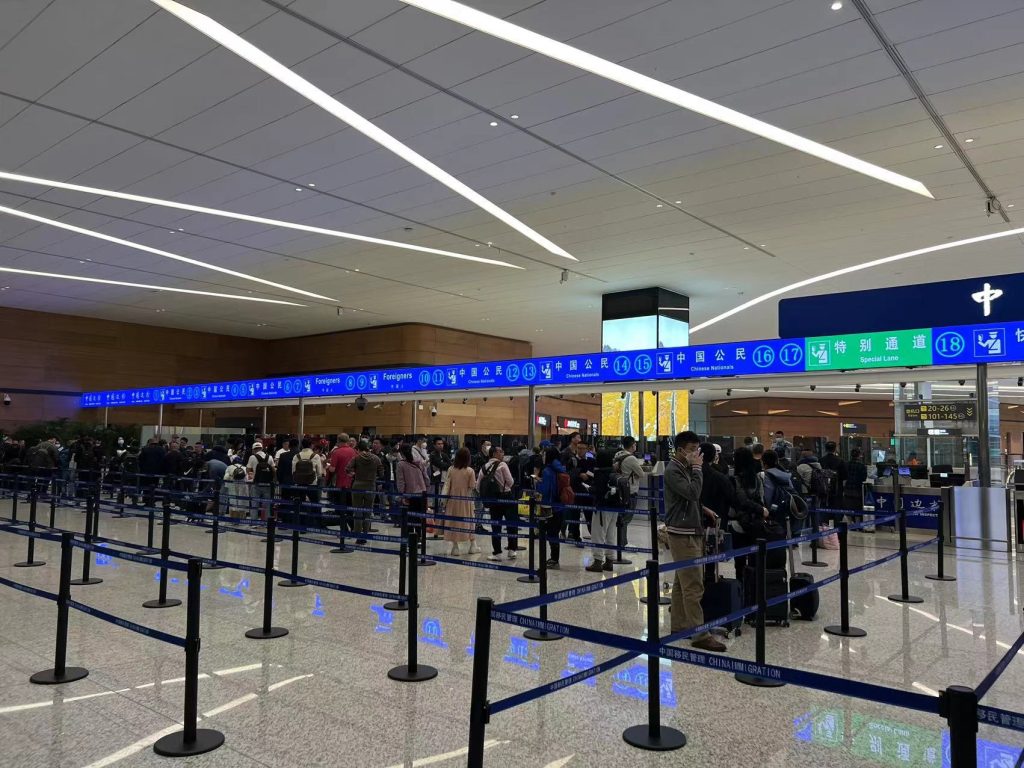
If you are preparing to travel under China’s unilateral visa exemption, sorting out your exit transit is just as essential as packing your passport. While the policy allows citizens from eligible countries to visit for tourism, business, family visits, or transit, border control officers at immigration inspection checkpoints must verify that your visit remains strictly temporary. Airlines will inspect this proof at check-in before issuing your boarding pass, and officers with the National Immigration Administration (NIA) routinely ask to see confirmation of your outbound travel when you arrive.
Because border inspection procedures focus on genuine travel intent rather than one-size-fits-all paperwork, requirements can feel slightly opaque. Here is how to prepare foolproof onward or return travel evidence, manage open-jaw itineraries, and avoid unnecessary hiccups at immigration counters across mainland ports.
What Immigration Officers Actually Check
China does not publish an exhaustive, inflexible statutory checklist of physical forms required for visa-free entry. Instead, border control evaluates each traveler under immigration regulations to confirm two core facts: you qualify under the eligible 30-day visa-free countries list, and you plan to leave the mainland before your legal stay window expires.
When an immigration officer asks to see your exit arrangements, they are typically scanning for:
A confirmed outbound booking: Standby tickets or unconfirmed waitlists are generally rejected by airline check-in staff and scrutinised heavily at border control.
A departure date within your allowed window: Your outbound journey must depart on or before Day 30. Keep in mind that your day of arrival counts as Day 0, meaning your countdown clock begins at 00:00 the day following entry. Verify your math in advance with our guide on stay calendar count.
A legitimate exit port and destination: Your departure can be to your home country or any third country or territory, including Hong Kong, Macau, Seoul, Tokyo, or Bangkok.
Airlines bear financial liability if they fly passengers who are refused entry, so carrier ground staff in London, Frankfurt, Singapore, or Sydney often scrutinise your onward ticket even more rigidly than the immigration officer in Beijing or Shanghai will.
Digital Apps vs. Printed Proof: Why Backups Matter
Relying entirely on a live mobile app or an active email inbox when landing at a Chinese airport is a risky strategy. International data roaming can take several minutes to establish a handshake with local networks (China Mobile, China Unicom, or China Telecom), and airport public Wi-Fi networks usually require SMS verification or passport kiosk registration before granting internet access. Furthermore, standard overseas email providers and search engines may be unreachable without an active roaming profile.
To ensure smooth processing at both your origin check-in counter and the Chinese arrival inspection lane, organize your proof into redundant layers:
Printed hard copies: Print your full English airline e-ticket receipt (showing your passenger name, 13-digit e-ticket number, flight numbers, and dates). Keep this folded inside your passport jacket.
Offline digital files: Download the PDF confirmation to your device storage (such as Apple Books, Files, or local Android storage) so you do not need an internet connection to pull it up.
Dedicated photo screenshots: Take clear screenshots of your booking confirmation screen showing the departure date, origin airport, and destination airport. Store them in a dedicated favorites album on your phone.
Having physical paper handy allows you to simply hand over your documentation with your passport and arrival card, eliminating the need to unlock your phone, adjust screen brightness, or hunt for signal at the inspection desk.
Handling Open-Jaw Trips, Trains, and Ferries
Not every visitor enters and exits by a simple round-trip flight. In late autumn and winter—especially during the busy November and December travel season when visitors explore autumn landscapes in the south or head north for early ski trips—many itineraries involve multi-city or multi-modal transit.
Multi-City and Open-Jaw Flights
If you fly into Shanghai Pudong (PVG) and plan to fly out of Guangzhou Baiyun (CAN) or Chengdu Tianfu (TFU), your ticket remains fully valid for visa-free entry provided the departure date is within 30 days. Because separate tickets booked on different reservation codes (PNRs) do not always appear on a single itinerary receipt, make sure your printed proof clearly shows the separate outbound booking from your domestic exit gateway.
High-Speed Rail Departures
Departing the mainland via the Guangzhou-Shenzhen-Hong Kong Express Rail Link (XRL) to Hong Kong West Kowloon is an increasingly popular route.
Book your tickets through China’s official railway platform (China Railway 12306) or an authorized international ticketing agency.
12306 issues digital e-tickets tied directly to your passport number rather than physical paper train tickets. Save the bilingual booking confirmation email and take a screenshot of the confirmed order page displaying your name, passport number, train number, and departure date.
Ferry Departures
If you are exiting via ferry from Shenzhen (Shekou Port) to Hong Kong International Airport or Macau, carry your electronic booking voucher showing confirmed payment and reservation details.
Supporting Details to Keep Accessible
While onward travel proof is the primary document officers inspect, border inspection is holistic. To sail through the checkpoint without delays, have your supporting accommodation details ready alongside your travel confirmation:
First-night hotel booking: Have the hotel name, district, and street address clearly written or saved on your phone. Having the address in both English and Chinese characters (Hanzi) is extremely helpful for both your arrival card and the immigration officer.
Complete arrival card: Complete the blue-and-white Foreigner Arrival Card distributed on your flight or available at podiums before the immigration gates. You can review our full arrival-day checklist to make sure every box is filled correctly before you enter the queue.
Always double-check announcements directly through the National Immigration Administration (NIA) portal, Chinese consular websites, or your operating carrier close to your travel week, as border inspection nuances and operational guidelines can update periodically.
Related Lovely China reading
For payments, start with Alipay and WeChat Pay hub and WeChat Pay vs Alipay for tourists. For trains, keep high-speed rail first-timers guide and 12306 passport signup for foreigners handy. City hubs: Beijing first-visit guide, Shanghai first-visit guide. Connectivity: roaming vs local SIM honest guide, pocket Wi-Fi vs eSIM for China, offline maps for foreigners. Bookmark China travel tools page.
Practical checklist
- Confirm official rules on the relevant government, park, airline, or bank page near your travel week
- Screenshot bookings, tickets, and QR codes while you still have stable Wi-Fi
- Save hotel and attraction names in Chinese characters in your phone notes
- Carry passport, a backup payment method, and a small cash float (why cash is still needed)
- Test one small mobile payment before you rely on wallets at a gate or taxi
- Keep the China travel tools page page bookmarked for related Lovely China hubs
FAQ
Is this travel advice official?
No. Lovely China orients travellers. Verify live rules on official pages, apps, and counters near your travel week.
Will every city behave the same?
No. Airports, stations, parks, and markets differ. Use local signage and staff instructions when they conflict with a general guide.
What should I screenshot before I lose Wi-Fi?
Bookings, tickets, hotel Chinese address, pickup pins, and payment success screens.
Notes for late 2026 travellers
November and early December bring cooler mornings, earlier sunsets, and comfortable walking weather across much of eastern and central China. Pack layers and leave extra time on clear weekends at popular sights.
This article does not invent ticket prices, opening hours, processing times, consular fees, or official statistics. When a number matters, verify it on the official site, app screen, or ticket board near your travel week.
If an official rule page disagrees with this guide, follow the official page. Lovely China orients English-speaking travellers; we are not an immigration, banking, or medical authority.