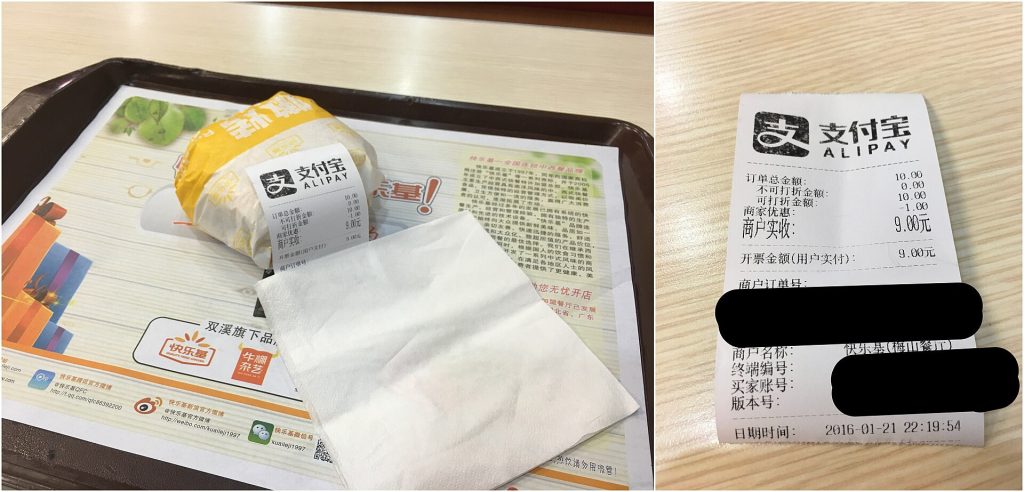
When you pay in Alipay with a foreign card, the number that matters is the one on the confirmation screen—and the later one on your card statement, which may not match. This guide is about how to read conversion and fee screens, what might still be charged by your issuer, and how to keep a backup if a rate looks wrong. It is not a Tour Pass versus full-Alipay explainer (Alipay Tour Pass vs full Alipay) and not a leave-China balance walkthrough (Alipay balance when leaving China).
Setup still starts with Alipay setup for foreigners. Tourist-mode limits and daily spend ceilings are in Alipay tourist mode limits and Alipay daily spend limits foreign card. ATM cash as a comparison point lives in ATM foreign-card daily limits and fees.
Read the confirmation screen before you authorize
A typical foreign-card payment in Alipay shows a yuan amount for the merchant, and it may also show a converted amount in your card currency, a rate, a fee line, or a toggle about who does the conversion. Those lines are the live contract for that tap. We do not invent official percentages or a single “Alipay rate” that is always best.
Slow down on the first few payments of a trip:
- Confirm the yuan total matches the bill or the counter
- Look for a currency, a rate, and any fee or markup the wallet is disclosing
- If the screen offers a choice between paying in yuan via your issuer or paying in your home currency on the spot, read both options. Dynamic currency conversion in other countries is a cousin of this choice; the cheaper path is not always the one with the familiar currency symbol
- If a line is blank, unreadable, or leaps to a number you did not expect, cancel and ask the merchant to reset, or pay another way
A screenshot of a successful small payment is more useful later than a memory of “it seemed fine.”
Issuer fees can be separate
Even when Alipay’s screen looks clean, your card issuer may later add a foreign-transaction fee, a cross-border fee, or its own conversion spread. That charge will not necessarily appear inside the wallet. It appears on the statement, sometimes days later, sometimes with a slightly different yuan-to-home-currency result than the one you photographed.
We will not rank “best travel cards.” Before you fly, read your own issuer’s foreign-use pages, or call the number on the card, and ask two boring questions: is there a foreign-transaction fee, and does the bank use its own rate after the merchant settles in yuan. Then treat Alipay’s screen and the bank’s later line as two layers, not one.
If a payment fails at verification or the top-up path errors, use the existing troubleshooting pieces rather than retrying blindly (Alipay foreign-card verification fails, Alipay foreign-card top-up fails). Adding a second card in advance is calmer than discovering a single card is declined at dinner (add second foreign card to Alipay, add second foreign card Alipay).
Make a small test payment on arrival day
The first payment should be small and reversible in practice: a bottle of water, a metro ride if the ticket machine accepts the wallet, a bakery. Watch the confirmation, screenshot it, and later compare the statement when it posts. If the converted amount is wildly off what your own calculator expected, stop using that path for large hotel deposits until you understand why.
Large first transactions—hotel holds, attraction tickets for a whole family, a week of rail—multiply a mistake. Test first, then scale.
Tourist-mode or international-wallet variants can show different screens from a fuller mainland wallet (Alipay International vs mainland wallet, Alipay tourist mode limits). Use the product you actually opened, and do not assume a friend’s screenshot is your interface.
When the rate looks wrong, use a backup
If a confirmation screen shows a conversion you cannot accept, you still have tools:
- Cancel and try the other wallet if you set one up (WeChat Pay foreign card, WeChat Pay vs Alipay for tourists)
- Pay the merchant’s presented card terminal if they take foreign cards, and read that terminal’s currency choice too (foreign card tap-to-pay in stores)
- Use cash withdrawn from an ATM whose fees you already understand (ATM foreign cards cash, ATM foreign-card cash withdrawal, when you still need cash)
- Try a second foreign card already bound in Alipay
Do not invent a rule that one of these is always cheaper. The point is not to stand at a counter doing mental FX while a queue builds. The point is to refuse a bad-looking screen and move to a method you already tested.
Some shops still prefer one wallet, or only wallets, or cash for very small tickets (when an attraction only accepts WeChat or Alipay, why cash is still needed). A modest cash float remains a travel tool, not a nostalgia item.
What to screenshot near travel week
- A successful small test payment, including any rate or fee line the screen showed
- A failed payment’s error text, if you get one
- Your card-issuer’s foreign-fee page or a note of what they told you
- A backup plan: second card, second wallet, ATM locator, cash
Late 2026 travellers still meet this stack at arrival halls, convenience stores, and restaurant QR codes. Read the screen, assume your bank may add its own layer, and never let a single untested card be the only way you can leave a shop. Alipay and WeChat Pay hub is the wider starting map; this page is only the conversion and fee close-up.
Related Lovely China reading
For payments, start with Alipay and WeChat Pay hub and WeChat Pay vs Alipay for tourists. For trains, keep high-speed rail first-timers guide and 12306 passport signup for foreigners handy. City hubs: Beijing first-visit guide, Shanghai first-visit guide. Connectivity: roaming vs local SIM honest guide, pocket Wi-Fi vs eSIM for China, offline maps for foreigners. Bookmark China travel tools page.
Practical checklist
- Confirm official rules on the relevant government, park, airline, or bank page near your travel week
- Screenshot bookings, tickets, and QR codes while you still have stable Wi-Fi
- Save hotel and attraction names in Chinese characters in your phone notes
- Carry passport, a backup payment method, and a small cash float (why cash is still needed)
- Test one small mobile payment before you rely on wallets at a gate or taxi
- Keep the China travel tools page page bookmarked for related Lovely China hubs
FAQ
What is the official Alipay foreign-card fee percentage?
We do not invent percentages or a single official rate. Read the confirmation screen for that payment, then compare it later with your card statement, which may include a separate issuer fee.
Should I accept the amount shown in my home currency?
Not automatically. If the screen offers a currency choice, read both options. The familiar-currency line is not always the cheaper path. Cancel and use a backup if a conversion looks wrong.
What should I screenshot before I lose Wi-Fi?
A successful small test payment including any rate or fee line, any error text if a card is declined, and a note of what your issuer said about foreign-transaction fees.
Notes for late 2026 travellers
November and early December bring cooler mornings, earlier sunsets, and comfortable walking weather across much of eastern and central China. Pack layers and leave extra time on clear weekends at popular sights.
This article does not invent ticket prices, opening hours, processing times, consular fees, or official statistics. When a number matters, verify it on the official site, app screen, or ticket board near your travel week.
If an official rule page disagrees with this guide, follow the official page. Lovely China orients English-speaking travellers; we are not an immigration, banking, or medical authority.