I will now generate the article file according to your instructions and formatting rules.
ATM Foreign-Card Daily Limits and Fees in China 2026
Export
Navigating physical currency in China can catch international travellers off guard, especially when trying to balance digital wallets with traditional notes. While digital apps dominate urban transactions, keeping physical banknotes handy remains essential, as detailed in our guide on why cash is still needed. However, relying on local ATMs involves navigating a complex web of home-bank ceilings, Chinese network per-transaction limits, and unexpected fee structures. Whether you are prepping for a late-autumn trip or arriving during the chilly November–December 2026 tourism window, understanding how these financial layers interact will keep your travel budget intact.
Understanding the Dual-Cap System: Home Bank vs. Chinese ATM Limits
When you insert a foreign debit or credit card into a Chinese automated teller machine, your withdrawal potential is restricted by two completely separate caps. First, your home financial institution enforces daily and per-transaction limits on international cash withdrawals. Second, the specific Chinese bank operating the ATM applies its own per-transaction and daily maximums for foreign-issued cards.
Because these caps operate independently, hitting a ceiling on either end will cause your transaction to be declined. Before departure, always check your home bank’s travel notices and daily international ATM ceilings. If you plan your funding alongside setup guides like the Alipay and WeChat Pay hub, you will realize that ATMs should serve as your secondary safety net rather than your primary funding mechanism.
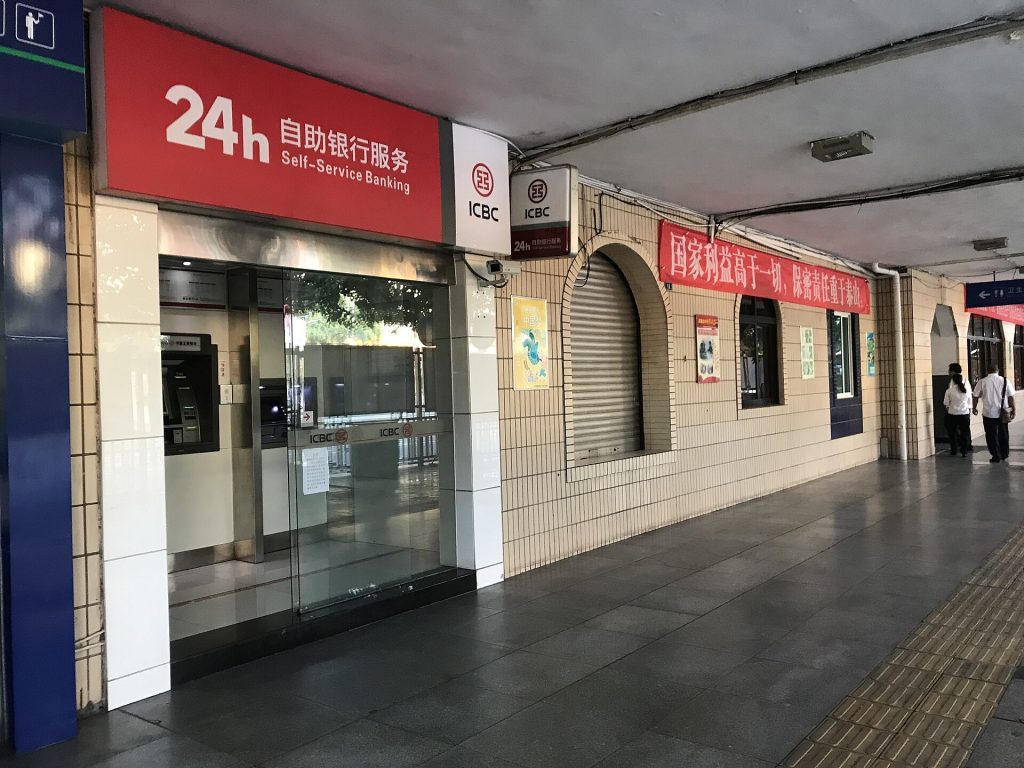
Furthermore, Chinese ATM per-transaction caps vary significantly by bank brand. A machine belonging to a major state-owned lender might impose different limits than a regional commercial bank. Because these technical parameters and limits can shift without public fanfare, you should always verify current cross-border banking guidelines with your home institution and major official network advisories close to your travel week.
Decoding the Fee Stacking Reality
Fees on international ATM withdrawals rarely come from a single source. Instead, travellers often face stacked charges that accumulate quickly if ignored. Understanding these layers helps prevent unpleasant surprises on your monthly statement:
Home-Bank International Fees: Your home institution may charge a flat international out-of-network fee, a percentage-based foreign transaction fee, or both.
Chinese ATM Operator Surcharges: Some local banking networks levy a direct operator fee for processing foreign-card transactions. Always check the on-screen ATM disclosures before confirming a withdrawal.
Interchange and Network Fees: Global networks like PLUS or Cirrus factor in cross-border exchange processing costs that pass through to your final account balance.
To minimize these costs, review your account terms before leaving home and look closely at the physical terminal screen before finalizing any cash request.
Avoiding the Dynamic Currency Conversion (DCC) Trap
One of the most common pitfalls at Chinese ATMs is Dynamic Currency Conversion (DCC). When prompted on the screen, the machine might offer to bill your home account directly in your home currency rather than in Chinese Yuan (RMB).
While seeing your familiar currency might look comforting, DCC typically applies deeply unfavorable exchange rates set by the local acquiring bank, alongside extra hidden markups. Always choose to be billed in the local currency (RMB) so that your home bank applies its standard, usually superior, exchange rate. Never blindly tap through foreign-language prompts without verifying whether you are accepting an inflated conversion rate.
Actionable Steps When an ATM Rejects Your Card
Card rejections happen frequently to foreign travellers due to network mismatches, chip errors, or regional security blocks. If a machine spits out your card or denies your transaction, do not panic. Follow this step-by-step troubleshooting checklist:
Check Network Logos: Ensure the back of your card features accepted international network logos (such as UnionPay, Plus, or Cirrus) that match the decals on the ATM housing.
Move to a Major Bank Branch: Smaller or rural ATMs may have outdated software or limited international routing. Walk into a major urban branch of a large national bank where machines are updated more frequently.
Try Another Bank Brand: If a machine from one major bank rejects your card, cross the street and try a competing institution. Compatibility varies wildly across different network operators.
Verify Travel Notices: Contact your home bank through their secure mobile app or customer service line to ensure an automated fraud block hasn’t frozen your international access.
Keep Mobile Pay Primary: Remember that physical cash is a backup, not your main tool. Relying primarily on digital platforms ensures you are rarely stranded by a malfunctioning physical terminal.
For broader strategies on sourcing physical notes, cross-reference our comprehensive ATM foreign cards cash guide to map out your physical liquidity strategy before you touch down.
Frequently Asked Questions
Can I use a credit card instead of a debit card to withdraw cash in China?
While some credit cards permit cash advances at ATMs, doing so incurs immediate, high-interest rates and steep cash-advance fees from day one. It is almost always safer and cheaper to use a dedicated international debit card tied directly to your checking account.
Why do some Chinese ATMs not accept foreign cards at all?
Not all automated teller machines in China are configured for international cross-border processing. Many localized or rural machines only service domestic UnionPay accounts. Look for prominent international network decals on the machine or stick to major urban branch locations to ensure compatibility.
How can I know the exact exchange rate I will receive?
Chinese ATMs generally do not display the final home-bank exchange rate on the screen prior to completion. Your best defense is declining Dynamic Currency Conversion and allowing your home bank to process the transaction using standard interbank rates on the day of settlement. Always check your home bank’s published international fee schedule before your trip.
Edit directly or with Gemini
Click anywhere to type and edit directly, or select text to prompt Gemini for changes.
Related Lovely China reading
For payments, start with Alipay and WeChat Pay hub and WeChat Pay vs Alipay for tourists. For trains, keep high-speed rail first-timers guide and 12306 passport signup for foreigners handy. City hubs: Beijing first-visit guide, Shanghai first-visit guide. Connectivity: roaming vs local SIM honest guide, pocket Wi-Fi vs eSIM for China, offline maps for foreigners. Bookmark China travel tools page.
Practical checklist
- Confirm official rules on the relevant government, park, airline, or bank page near your travel week
- Screenshot bookings, tickets, and QR codes while you still have stable Wi-Fi
- Save hotel and attraction names in Chinese characters in your phone notes
- Carry passport, a backup payment method, and a small cash float (why cash is still needed)
- Test one small mobile payment before you rely on wallets at a gate or taxi
- Keep the China travel tools page page bookmarked for related Lovely China hubs
FAQ
Is this people advice official?
No. Lovely China orients travellers. Verify live rules on official pages, apps, and counters near your travel week.
Will every city behave the same?
No. Airports, stations, parks, and markets differ. Use local signage and staff instructions when they conflict with a general guide.
What should I screenshot before I lose Wi-Fi?
Bookings, tickets, hotel Chinese address, pickup pins, and payment success screens.
Notes for late 2026 travellers
November and early December bring cooler mornings, earlier sunsets, and comfortable walking weather across much of eastern and central China. Pack layers and leave extra time on clear weekends at popular sights.
This article does not invent ticket prices, opening hours, processing times, consular fees, or official statistics. When a number matters, verify it on the official site, app screen, or ticket board near your travel week.
If an official rule page disagrees with this guide, follow the official page. Lovely China orients English-speaking travellers; we are not an immigration, banking, or medical authority.