I will now generate the article on Chinese tea house etiquette for foreign visitors as GitHub-flavored Markdown.
Chinese Tea House Etiquette for Foreign Visitors
Export
Stepping into a Chinese tea house is entirely different from grabbing a quick coffee on the go. Unlike Western cafes optimized for speedy takeaway cups and hurried laptop work, traditional tea houses serve as social sanctuaries, places of contemplation, and long-form community hubs. If you are planning your travels across China this November or December 2026, understanding local tea house etiquette ensures you blend in seamlessly, respect centuries-old customs, and genuinely enjoy the craft of fine tea.
Understanding Regional Teahouse Styles
Tea culture shifts dramatically depending on where you travel in China. Knowing the local style helps you adjust your expectations before walking through the door.
Sichuan Park Teahouses: Casual, bustling, and deeply community-oriented. Especially if you are following a Chengdu first-visit guide, you will find open-air bamboo chair setups where locals spend hours chatting, playing mahjong, or getting ear-cleanings.
Southern Gongfu Teahouses: Found widely in Guangdong, Fujian, and specialized urban parlors. These focus on meticulous brewing, small clay pots, and ritualized pouring.
Commercial Modern Tearooms: Popular in major business hubs, blending traditional leaf varieties with contemporary aesthetic designs, often utilizing smartphone apps for ordering and payment via platforms like the Alipay and WeChat Pay hub.
Seating and Entering
When you arrive at a traditional tea house, seating protocol matters just as much as it does during formal dining. Similar to what you might read about in Chinese banquet seating etiquette, seats are rarely entirely random.
Wait for Guidance: Staff will usually guide you to an available table or private room. Do not seat yourself in restricted or reserved zones.
Host and Guest Positions: If you are with local hosts or guides, let them seat you. The seat facing the main entrance or overlooking the scenic courtyard is traditionally reserved for the honoured guest or the eldest.
Space Respect: Tea houses can be lively, but keep your personal belongings neat. Avoid blocking communal pathways with large luggage or camera bags.
Ordering: Single Pot vs. Tasting Flights
Ordering tea requires a shift in mindset. You are paying for the experience, the leaf quality, and the hot water refills as much as the initial brew.
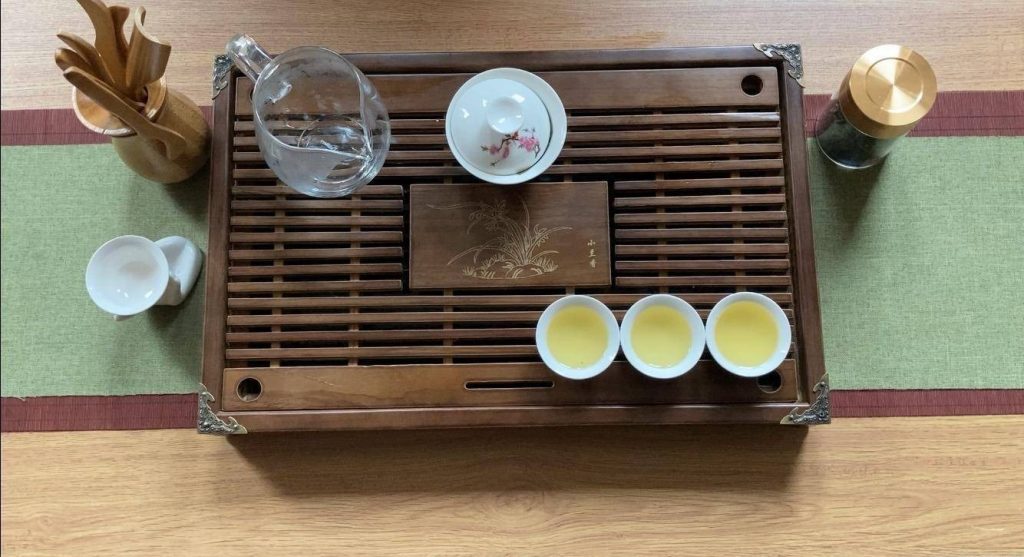
Single Pot Service: Common in casual or park settings. You choose a specific tea (such as jasmine, green, or oolong), and the server provides a large covered bowl (gaiwan) or tall glass along with a thermos of hot water so you can top up your own water throughout your stay.
Tasting Flights and Gongfu Service: In specialized tea rooms, a server or tea master may perform a formal ceremony, walking you through multiple steepings of high-grade oolong, puerh, or white tea.
Payment Setup: Most modern tea houses utilize QR code scanning at the table. Ensure your digital wallet apps are fully updated before settling down.
Pouring and Tasting Manners
Tea drinking in China is a communal ritual governed by subtle gestures of politeness and reciprocity.
Pour for Others First: Never fill your own cup before checking your companions’ cups. Pouring for others is a sign of respect and hospitality.
The Finger Tap Thanks: When someone pours tea into your cup, tapping your index and middle fingers twice on the table is a traditional silent gesture of gratitude, originating from an imperial legend about disguised emperors.
Sip, Don’t Slam: Unlike a shot of espresso or a quick mug of morning coffee, high-grade loose leaf tea is meant to be sipped slowly. If participating in a formal gongfu tasting, take small sips to appreciate the aroma notes across multiple infusions rather than draining the small cup in a single gulp.
Atmosphere, Photography, and Tipping
Navigating the social environment of a tea house involves keeping a few golden rules in mind to maintain harmony.
Keep Your Voice Moderate: Tea houses are meant for relaxation and conversation. While Chengdu tea houses can get delightfully loud with chatter and laughter, shouting across tables or speaking loudly on phone speakerphones is frowned upon.
Ask Before Photographing: Teahouses are visually stunning, especially with traditional architecture and steam rising from kettles. However, always ask permission before taking close-up photos of strangers, staff, or tea masters performing ceremonies.
Tipping Is Not Expected: Tipping is not part of Chinese service culture. Leave your cash or digital payment as billed; extra tips can sometimes cause confusion for staff.
Practical Checklist for Your Teahouse Visit
Check Operating Hours: Some traditional park teahouses open early with sunrise crowds, while urban boutique tea rooms open around late morning.
Verify Digital Payment: Ensure your mobile payment setup is active, as many smaller tea houses have phased out cash handling entirely.
Pace Your Afternoon: Plan to spend at least an hour or two. Teahouses are designed for slow travel, not quick pitstops.
Observe Locals First: If unsure how to handle a specific gaiwan lid or strainer, pause and watch how neighboring tables handle their hardware.
Frequently Asked Questions
Do I need to know a lot about tea to visit a Chinese tea house?
Not at all. Most tea houses welcome curious beginners. Menus often feature English translations or pictures, and servers are usually happy to recommend a balanced green, black, or scented tea based on your flavor preferences.
How long am I allowed to stay at a table?
Unlike busy cafes that rush table turnover, traditional tea houses expect you to linger. You can easily spend an entire afternoon reading, writing, or talking over multiple refills of hot water without feeling rushed by the staff.
Can I bring my own snacks or food into a tea house?
Outside food is generally discouraged, though some casual teahouses allow you to pair your tea with local bakery items or street snacks purchased nearby. If in doubt, check with the staff or order light traditional snacks (like melon seeds or dried fruit) directly from the teahouse menu.
Related Lovely China reading
For payments, start with Alipay and WeChat Pay hub and WeChat Pay vs Alipay for tourists. For trains, keep high-speed rail first-timers guide and 12306 passport signup for foreigners handy. City hubs: Beijing first-visit guide, Shanghai first-visit guide. Connectivity: roaming vs local SIM honest guide, pocket Wi-Fi vs eSIM for China, offline maps for foreigners. Bookmark China travel tools page.
Practical checklist
- Confirm official rules on the relevant government, park, airline, or bank page near your travel week
- Screenshot bookings, tickets, and QR codes while you still have stable Wi-Fi
- Save hotel and attraction names in Chinese characters in your phone notes
- Carry passport, a backup payment method, and a small cash float (why cash is still needed)
- Test one small mobile payment before you rely on wallets at a gate or taxi
- Keep the China travel tools page page bookmarked for related Lovely China hubs
FAQ
Is this culture advice official?
No. Lovely China orients travellers. Verify live rules on official pages, apps, and counters near your travel week.
Will every city behave the same?
No. Airports, stations, parks, and markets differ. Use local signage and staff instructions when they conflict with a general guide.
What should I screenshot before I lose Wi-Fi?
Bookings, tickets, hotel Chinese address, pickup pins, and payment success screens.
Notes for late 2026 travellers
November and early December bring cooler mornings, earlier sunsets, and comfortable walking weather across much of eastern and central China. Pack layers and leave extra time on clear weekends at popular sights.
This article does not invent ticket prices, opening hours, processing times, consular fees, or official statistics. When a number matters, verify it on the official site, app screen, or ticket board near your travel week.
If an official rule page disagrees with this guide, follow the official page. Lovely China orients English-speaking travellers; we are not an immigration, banking, or medical authority.