China’s high-speed trains are easier once you know what the usual seat classes actually feel like. On most G and D services you will see second class, first class, and—on many long-distance G trains—business class as the common paid options. Shorter C-trains and some routes use a simpler layout. Standing tickets (无座) exist as a last-resort product; they are not a class to choose for comfort, and 12306 standing tickets for foreigners covers that contrast without repeating it here.
This is a first-timer explainer of how those classes typically differ, and how to pick one for a given journey. It will not invent fares, seat-pitch numbers, or a promise that a class “always includes a meal.” 12306 (www.12306.cn) and the in-carriage signage win. An earlier seat-types article, HSR seat types explained, remains a useful overview; this piece is about choosing second, first, or business for the trip you are actually booking.
What second, first, and business usually mean
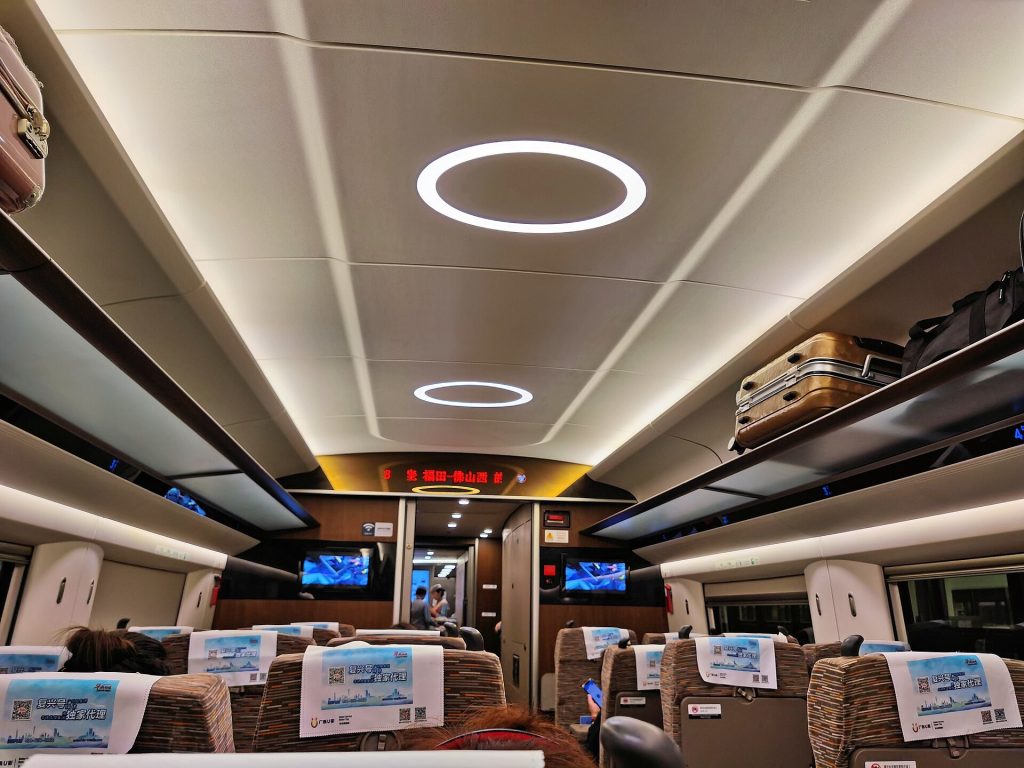
Second class is the standard cabin on G and D trains. Seats are arranged in a denser layout, typically with a mix of window, aisle, and middle seats in a row. Overhead racks and end-of-car luggage space are part of ordinary life in this cabin; for bag size and placement, use high-speed train luggage size and weight rather than guessing. For a daytime trip of a couple of hours, second class is the usual, perfectly reasonable choice for most visitors. It is also the class most likely to be the last one with tickets when a holiday week is busy.
First class, on trains that offer it, is a roomier cabin with a less dense seat layout. You usually get a wider seat and a quieter feeling simply because there are fewer people per row. It is not a private room. It is a comfort upgrade for travellers who want more space, easier aisle access, or a slightly calmer place to work. Whether a tray, a socket, and a shared footrest feel “worth it” depends on the length of the ride and on your budget, not on a universal rule.
Business class, where a train offers it, is the most spacious of the three common paid options. Layouts vary by train set: some have very wide seats that recline generously, and some arrangements feel closer to a premium cabin than to first class. It is still a seat on a scheduled train, not a lounge pass for the station. Meals, amenities, and lounge access—if any—are whatever 12306, the ticket, and official railway notices describe for that train on that day. Do not assume a meal is included because the word “business” sounds like an airline cabin.
Look at the official class name in 12306 or in the official interface of a booking partner. Translations can be slightly clumsy; the Chinese labels and the train’s own carriage signs are the ground truth.
C-trains, short hops, and when class matters less
Some intercity C-trains and short regional high-speed services have a simpler cabin mix. You may see second and first only, or a single open-coach style, depending on the train. For a thirty- or forty-minute hop, the comfort gap between classes is smaller than it is on a five-hour G-train. Spend your attention on leaving time to find the platform and carriage; find platform carriage and seat on HSR and high-speed rail first-timers guide will do more for that hour than an upgrade will.
If second class is sold out and first is still available, that is a practical reason to step up, not a failure of planning. If only a standing ticket remains, read 12306 standing tickets for foreigners and decide whether a later train in a seated class is the better day. Standing is a legal ticket to be in the carriage without an assigned seat; it is a poor match for luggage, children, or a long ride.
Overnight high-speed services, when they exist on your route, may use different products again. Book from the official list for that train rather than forcing a daytime class name onto a sleeper product.
How to choose for the journey you are booking
Start with length, luggage, and company. A short hop with a backpack is a second-class journey for most people. A longer daytime ride, a traveller who needs to work, or a family that wants adjacent seats with more room may justify first class if the official price difference is acceptable to you—check the live fare in 12306, not a remembered number. Business class is a comfort choice for a long ride or for travellers who value the extra space; it is not required for a “proper” high-speed experience.
If you are booking for a group, look at the seat map when the official interface shows one, and do not assume first class automatically seats four people around a table. Layouts differ. If you need a window, an aisle, or seats together, choose them in the official map or ask at a ticket window; 12306 versus Trip.com train booking explains 12306 versus a familiar third-party booking path, but the class names should still match the official ones.
Holiday weeks, including late December and the New Year period into 2027, can tighten availability. That is a reason to book earlier and to stay flexible on exact trains, not a reason to invent a “sold out every holiday” statistic. If your first choice of class is gone, a different departure in second class is often calmer than insisting on one fancy cabin on one specific train.
On board, your ticket’s carriage and seat numbers, the door signs, and the overhead seat labels are the instructions that matter. Sit in the class you paid for. If you have a problem with a seat or a neighbour, find a conductor rather than moving yourself into a quieter cabin.
Pick the class that matches the length of the ride and the official inventory in front of you. Second class is the normal backbone of the network. First and business are comfort options with real space differences and no guaranteed extras beyond what the official ticket describes. For the rest of a rail day, G / D / C train types explained will keep G, D, and C train types straight so the cabin choice sits in the right kind of train.
Related Lovely China reading
For payments, start with Alipay and WeChat Pay hub and WeChat Pay vs Alipay for tourists. For trains, keep high-speed rail first-timers guide and 12306 passport signup for foreigners handy. City hubs: Beijing first-visit guide, Shanghai first-visit guide. Connectivity: roaming vs local SIM honest guide, pocket Wi-Fi vs eSIM for China, offline maps for foreigners. Bookmark China travel tools page.
Practical checklist
- Confirm official rules on the relevant government, park, airline, or bank page near your travel week
- Screenshot bookings, tickets, and QR codes while you still have stable Wi-Fi
- Save hotel and attraction names in Chinese characters in your phone notes
- Carry passport, a backup payment method, and a small cash float (why cash is still needed)
- Test one small mobile payment before you rely on wallets at a gate or taxi
- Keep China travel tools page bookmarked for related Lovely China hubs
FAQ
Is business class like an airline cabin with a meal included?
Not necessarily. Business class is the most spacious of the usual paid seats where a train offers it, but meals, lounges, and extras are only what 12306, the ticket, and official railway notices describe for that train on that day. This article does not invent fares or a guaranteed meal.
Is second class acceptable for a long high-speed trip?
Yes. Second class is the standard cabin and the usual choice for most visitors. First and business are comfort upgrades with more space. For a short C-train hop, the gap between classes is often smaller than on a long G-train.
What if second class is sold out?
A later train with a seated ticket, or an official step up to first if it is still available, is usually calmer than a standing ticket (无座) on a long ride. Check live inventory on 12306 (www.12306.cn).
Notes for late 2026 travellers
Late December 2026 and the New Year week into 2027 bring colder mornings, earlier sunsets, and holiday crowds in many city hubs. Pack real winter layers in the north, and leave extra time on weekends and around 1 January.
This article does not invent ticket prices, opening hours, processing times, consular fees, or official statistics. When a number matters, verify it on the official site, app screen, or ticket board near your travel week.
If an official rule page disagrees with this guide, follow the official page. Lovely China orients English-speaking travellers; we are not an immigration, banking, or medical authority.