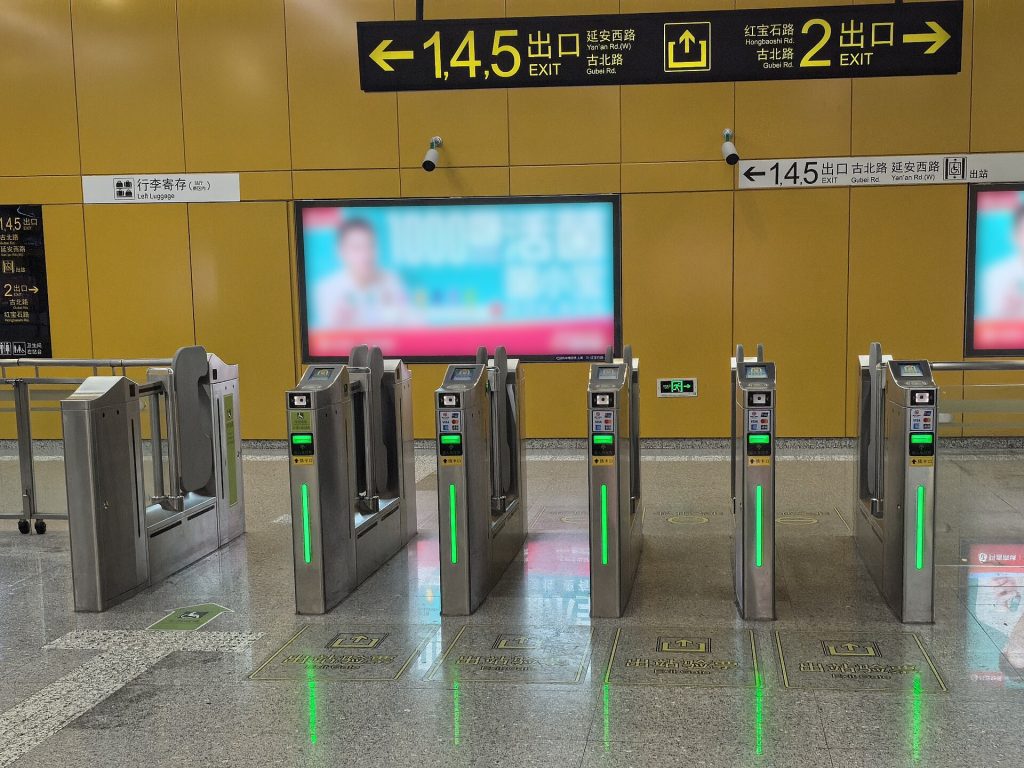
A foreign debit or credit card that taps nicely in London or Singapore will not automatically open a metro gate in China. Some cities have been adding international contactless acceptance—look for Visa, Mastercard, UnionPay, or similar marks on the validator—but the hardware is uneven. A gate on one line may show the logo; the next transfer may not. This article is about testing calmly and keeping a backup, not about announcing that “China metro is contactless now.”
It sits beside, and does not replace, tourist metro cards versus mobile pay, the Beijing subway first-timers guide, and Yikatong versus ride code. Store contactless is a different problem; see foreign-card tap-to-pay in shops.
What “contactless at the gate” actually means
Where it is offered, you hold a contactless bank card, or a phone or watch wallet that presents that card, to the reader on the gate. The fare is charged according to that city’s rule for bank-card riders. That rule may include a deposit-like preauthorization, a daily cap, or a need to tap out on the same card. None of those details should be memorized from a blog. If the city publishes an official bank-card or “foreign card” metro page, read that page for the week you ride.
Many gates still expect a local QR ride code (Alipay, WeChat, or a metro app), a stored-value card, or a single-journey ticket. International contactless is an extra path, not the default path, in a large share of stations.
Do not invent a list of cities here. Announcements have appeared in more than one first-tier system, and they can be extended, paused, or limited to certain stations. The logo on the gate in front of you is more reliable than a memory of a press release.
How to test without blocking the gate
Stand to the side of the main rush, look at the validator, and check for card-scheme marks or a contactless symbol. If they are absent, do not argue with the plastic: use a QR code or a ticket machine.
If marks are present, try one tap with the same card you use at home. Use a single card, not a stack, and keep metal wallets out of the way. If the gate opens, remember to tap out with the same card at the destination if the system requires it. If the gate refuses, step aside immediately so the queue can move. A decline is common and does not prove that the card is broken. It may mean this gate is not enrolled, this card product is excluded, or the bank wants an online check that did not complete.
Sometimes a bank will send an approval prompt (OTP or app confirmation). That is a bank process, not a metro rule. It may or may not appear; do not count on being able to complete a 3-D Secure dance in a crowded gate line. If the tap sits in a pending state, use another fare method and sort the bank notice later on Wi-Fi.
Always carry a plan B
Before you rely on any gate trick, set up at least one of: a working Alipay or WeChat Pay metro ride code, a local stored-value or tourist transit card sold at a service centre, or the ability to buy a single-journey ticket with a method the machine accepts. In Beijing, the Yikatong-versus-code explainer is the practical companion. In Shanghai and elsewhere, official metro apps and customer counters still solve “the machine hates my passport” faster than a second failed tap.
A small cash float remains useful at some customer windows, even as machines lean toward QR. If your first ride is from an airport or railway station with luggage, give yourself time to buy a fallback ticket before you join a packed gate.
Practical habits that prevent a stuck fare
Use the same card or the same QR identity to enter and exit. Do not pass a card back to a second person in your group; most systems want one credential per rider. If you enter on a bank card and cannot tap out, look for a service office rather than jumping a gate. Unpaid or mismatched journeys can become desk problems later.
Children, luggage gates, and accessible gates may follow different hardware. Follow the signed lane rather than forcing a suitcase through a reader that was never meant for it.
Contactless is a convenience when it works. It is not a reason to skip wallet setup. The travellers who stay calm in 2026 are the ones who can ride a city even when one logo on one gate says no.
Related Lovely China reading
For payments, start with Alipay and WeChat Pay hub and WeChat Pay vs Alipay for tourists. For trains, keep high-speed rail first-timers guide and 12306 passport signup for foreigners handy. City hubs: Beijing first-visit guide, Shanghai first-visit guide. Connectivity: roaming vs local SIM honest guide, pocket Wi-Fi vs eSIM for China, offline maps for foreigners. Bookmark China travel tools page.
Practical checklist
- Confirm official rules on the relevant government, park, airline, or bank page near your travel week
- Screenshot bookings, tickets, and QR codes while you still have stable Wi-Fi
- Save hotel and attraction names in Chinese characters in your phone notes
- Carry passport, a backup payment method, and a small cash float (why cash is still needed)
- Test one small mobile payment before you rely on wallets at a gate or taxi
- Keep China travel tools page bookmarked for related Lovely China hubs
FAQ
Will my Visa or Mastercard work on every China metro gate?
No. International contactless acceptance is uneven by city, line, and gate. Look for the logos on the validator and keep a QR or ticket backup.
What should I do if the gate declines the tap?
Step aside immediately, use a ride code, stored-value card, or single-journey ticket, and do not block the queue.
Do I use the same card to exit?
If you entered with a bank card on a system that requires tap-out, use the same card. If something goes wrong, find a service office rather than jumping the gate.
Notes for late 2026 travellers
Late December 2026 and the New Year week into 2027 bring colder mornings, earlier sunsets, and holiday crowds in many city hubs. Pack real winter layers in the north, and leave extra time on weekends and around 1 January.
This article does not invent ticket prices, opening hours, processing times, consular fees, or official statistics. When a number matters, verify it on the official site, app screen, or ticket board near your travel week.
If an official rule page disagrees with this guide, follow the official page. Lovely China orients English-speaking travellers; we are not an immigration, banking, or medical authority.