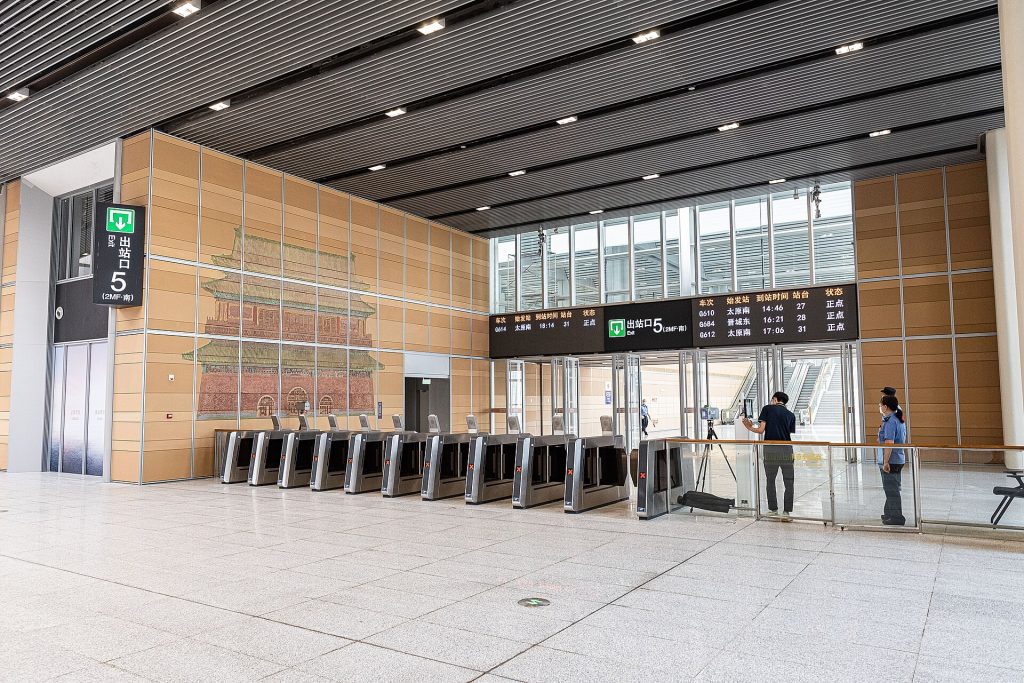
Navigating China’s high-speed rail network is remarkably efficient, but for international travelers and expats, the physical process of moving through station security, checking names, and passing through platform gates differs significantly from the experience of local passengers using national ID cards. While Chinese citizens rely on biometric resident cards at automated turnstiles, foreign travelers must navigate a mix of automated readers and manual verification channels. Knowing what to expect at each step prevents travel-day stress, particularly during busy seasonal rushes such as November and December weekend travel peaks.
Station Entry and Initial Identity Checks
Your journey begins before you even reach the waiting hall. When entering a major Chinese railway station, you must pass through a primary security and ID checkpoint.
The Security Screen: All luggage, bags, and personal items must go through X-ray conveyor belts, and passengers walk through a metal detector. For details on prohibited items and packing standards, review our train station security and luggage guide.
The Entrance ID Check: Security staff or automated turnstiles verify your identity against the travel system. Foreigners should look for staffed manual lanes (often marked as 人工通道) if automated scanners fail to recognize foreign passport formats. Always have the physical passport used for booking ready in your hand.
If you are still setting up your accounts or looking for ticketing strategies, consult our resources on 12306 passport signup for foreigners and 12306 English interface tips. For a broader overview of train classifications, check out G / D / C train types explained.
Waiting Hall Navigation and Boarding Screens
Once inside, you will enter a massive central waiting hall. Finding your correct zone requires matching your train details to the overhead LED departure boards.
Monitor the Boarding Status: The departure screens display your train number (such as G or D series), destination, current boarding status, and the assigned platform gate number (e.g., Gate 5 or 检票口 5).
Timing the Gate Reveal: Gate numbers do not always appear hours in advance; they often populate on the screen 15 to 30 minutes before departure. Keep an eye on the boards rather than guessing based on past trips. If you need assistance with ticket modifications while at the station, you can reference the train ticket window with passport guidelines.
Platform Gates and Passport Behavior for Foreigners
When the screen indicates that boarding has begun, passengers queue up for the platform gates. This is where foreign passport behavior diverges sharply from local practice.
Automated vs. Manual Lanes: While Chinese ID holders breeze through facial-recognition turnstiles, foreign passports frequently encounter scanning errors due to chip compatibility or regional system variances. If your passport flashes a red light or fails to trigger the automated gate, do not panic or repeatedly jam your document into the machine.
Using the Manual Channel: Step immediately to the side and head to the staffed manual inspection lane (人工通道) located right next to the automatic turnstiles. Present your physical passport to the railway employee. Staff will manually verify your e-ticket record in their system and open the side gate for you.
Name Match Precision: Ensure the name format and passport number on your ticket match your physical document character-for-character. If you encounter seating or availability questions, guides like high-speed rail first-timers guide and 12306 standby tickets for foreigners offer additional context. Verify official rules directly through official channels like China Railway 12306 or the National Immigration Administration as your travel dates approach.
Arriving Early: A First-Timer’s Buffer
First-time travelers in China are strongly advised to arrive at the station significantly earlier than local commuters recommend. While seasoned local travelers with domestic IDs can dash through security and automated gates in ten minutes, foreign passport holders need a comfortable buffer.
Navigating manual queue lines, clarifying platform changes, and handling unexpected passport-scanning hiccups take extra time. Arriving early ensures you can calmly clear security, locate your waiting zone without rushing, and address any unexpected gate queries before boarding gates close—which typically happens 5 minutes before the train departs.
FAQ
Why won’t the automatic platform gate scan my foreign passport?
Automatic gates are primarily optimized to read the embedded chips and biometric data of Chinese resident ID cards. Many foreign passports cannot be read by these specific hardware turnstiles. This is a normal occurrence and does not mean your ticket is invalid. Simply step out of the automated queue and walk over to the adjacent staffed manual lane (人工通道) where an agent will inspect your passport and let you through.
Do I need to print a physical paper ticket before going to the gate?
For the vast majority of high-speed rail routes across China, paper tickets are no longer required. Your e-ticket is digitally linked to the passport you used during booking. You only need to bring your original, physical passport to clear security and platform gates. Keep digital booking confirmations or screenshots on your phone as a helpful reference for staff if requested.
How early should I arrive at a major train station as a foreigner?
It is best to arrive at the station at least 45 to 60 minutes before your scheduled departure time. Major hub stations in cities like Shanghai, Beijing, or Guangzhou are sprawling and busy, particularly during Friday evening rushes or seasonal holiday periods. Extra time guarantees a stress-free transition through security lines, departure board monitoring, and manual gate verification.
What should I do if station staff cannot find my booking?
If station staff at the manual gate cannot locate your order, calmly pull up your booking confirmation details on your 12306 app, third-party booking app (such as Trip.com), or confirmation email. Verify that you are presenting the exact passport number used to purchase the ticket and that you are at the correct departure station, as large cities often operate multiple distinct railway stations.
Related Lovely China reading
For payments, start with Alipay and WeChat Pay hub and WeChat Pay vs Alipay for tourists. For trains, keep high-speed rail first-timers guide and 12306 passport signup for foreigners handy. City hubs: Beijing first-visit guide, Shanghai first-visit guide. Connectivity: roaming vs local SIM honest guide, pocket Wi-Fi vs eSIM for China, offline maps for foreigners. Bookmark China travel tools page.
Practical checklist
- Confirm official rules on the relevant government, park, airline, or bank page near your travel week
- Screenshot bookings, tickets, and QR codes while you still have stable Wi-Fi
- Save hotel and attraction names in Chinese characters in your phone notes
- Carry passport, a backup payment method, and a small cash float (why cash is still needed)
- Test one small mobile payment before you rely on wallets at a gate or taxi
- Keep the China travel tools page page bookmarked for related Lovely China hubs
FAQ
Is this travel advice official?
No. Lovely China orients travellers. Verify live rules on official pages, apps, and counters near your travel week.
Will every city behave the same?
No. Airports, stations, parks, and markets differ. Use local signage and staff instructions when they conflict with a general guide.
What should I screenshot before I lose Wi-Fi?
Bookings, tickets, hotel Chinese address, pickup pins, and payment success screens.
Notes for late 2026 travellers
November and early December bring cooler mornings, earlier sunsets, and comfortable walking weather across much of eastern and central China. Pack layers and leave extra time on clear weekends at popular sights.
This article does not invent ticket prices, opening hours, processing times, consular fees, or official statistics. When a number matters, verify it on the official site, app screen, or ticket board near your travel week.
If an official rule page disagrees with this guide, follow the official page. Lovely China orients English-speaking travellers; we are not an immigration, banking, or medical authority.