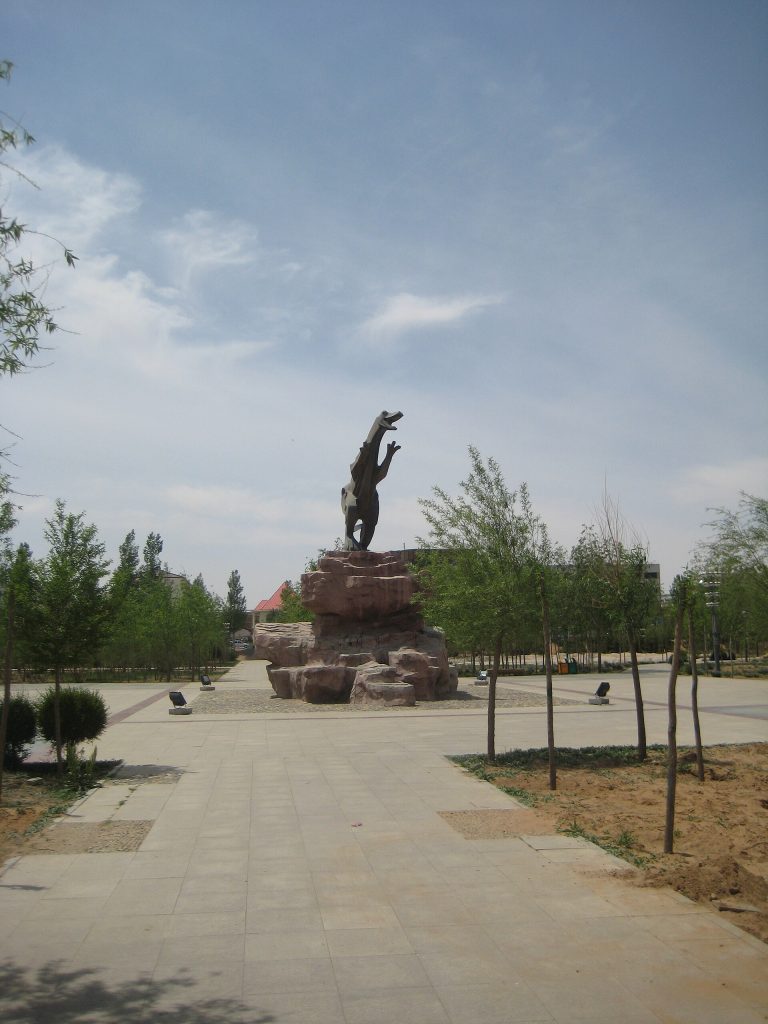
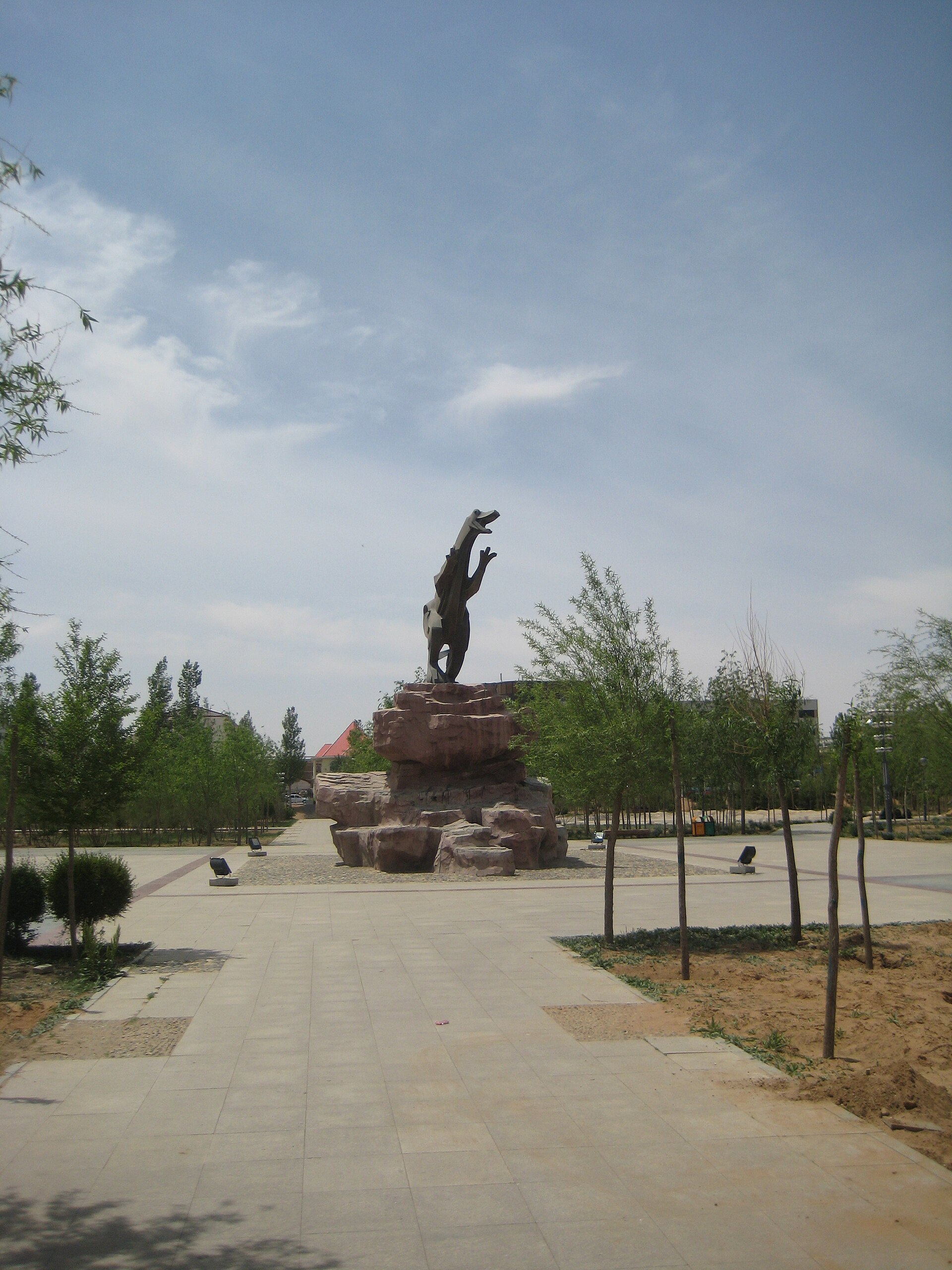
The minibus from Zamyn-Üüd shudders to a halt on the Chinese side of the border, the engine dying with a sigh of relief. Steam rises from the hood in the autumn chill. Ahead, the giant arch of the Erenhot gate frames the sky — two rearing dinosaurs locked in a pose that looks more like a dance than a fight. You step down onto pavement that has felt the weight of a thousand crossings, the air smelling of diesel, dry grass, and the faint metallic tang of the train yards to the east.
Crossing the Line on Foot
Most foreigners arrive at the border crossing not by plane or long-distance train, but by the daily shuttle bus from Ulaanbaatar that drops you at the Mongolian checkpoint. You walk the final two hundred meters through the neutral zone. The Chinese side is a long, low building with separate lanes for pedestrians, trucks, and tour groups. Have your passport open to the photo page and your visa — if you need one — already separated from the clip. The officer barely glances up; a red stamp hits the page, a fingerprint scanner beeps, and you are through.
Do not change money with the men lingering near the exit holding thick wads of colorful notes. Their rate is a trap. Walk another five minutes to the Bank of China branch on the main drag, or use the ATM inside the lobby of the big hotel near the square. The machine swallows UnionPay and foreign cards alike, spitting out crisp red hundred-yuan notes. If you are continuing by train, the station sits on the eastern edge of town, a twenty-minute taxi ride from the border gate. Negotiate the fare before the door closes; thirty yuan is the usual benchmark, though the meter will run higher if you let it.
Sleeping Near the Tracks
Erenhot does not do boutique. The accommodation cluster sits between the central square and the railway station, a strip of three- and four-story buildings with neon signs buzzing in Mongolian script and Chinese characters. The International Hotel dominates the corner — marble lobby, uniformed doorman, rooms that smell of lemon cleaner and old carpet. A standard double with a view of the dinosaur gate runs around two hundred yuan. Hot water runs strong after nine in the evening when the heating plant kicks in.
Two blocks back, the Jinjiang Inn offers clean beds, reliable Wi-Fi, and a breakfast buffet where the congee is thick enough to stand a spoon in. No English at the front desk, but the check-in kiosk has a picture menu. Tap your passport photo, pay cash or WeChat, and the key card appears. For the budget traveler, the youth hostel behind the bus station has six-bed dorms with heavy blankets and a shared kitchen that smells of boiled mutton and garlic. The owner, a woman with silver braids, will write your train destination in Chinese on a slip of paper if you show her your ticket on the phone.
The Dinosaur Park at Dusk
You do not come to Erenhot for nightlife. You come for the dinosaurs. The Erlian Dinosaur Geopark sits ten kilometers north of town, a sprawl of sandstone ridges where real fossils still erode from the cliffs. The main gate opens at eight and closes at six, but the best light hits the sculptures — a forty-meter brachiosaurus, a flock of feathered raptors, a tyrannosaur mid-roar — when the sun drops low in the west, painting the Cretaceous dust gold. A shuttle bus runs from the square every hour on the half-hour; the driver knows the stop by the English word “Dinosaur” shouted over the engine.
Inside, the museum holds a clutch of eggs the size of grapefruits, still embedded in red matrix, and a femur you can touch — cool, heavy, older than the grasslands outside. The fossil dig site is roped off, but a guide with a brush and awl will let you watch if you wait quietly. Wear closed shoes. The ground is sharp shale and cactus spines. Bring water; the kiosk at the entrance sells warm soda and instant noodles, nothing fresh.
Eating Where the Truckers Stop
Lunch is a bowl of hand-pulled noodles in a steam-clouded canteen behind the train station. The broth remembers every sheep bone that ever simmered in it — milky, peppered with chili oil, topped with a tangle of cilantro and a few slices of tendon that melt on the tongue. The noodles arrive in a stainless steel bowl the size of a washbasin. You add vinegar from a crockery jar, a spoonful of garlic paste, and slurp until the rim is clean.
- Hand-pulled lamb noodles (手把羊肉面) — thick wheat strands, bone broth, cilantro, chili oil
- Milk tea (奶茶) — salty, buttery, served in a bowl with fried millet
- Roast lamb ribs (烤羊排) — charred on a tabletop grill, dipped in cumin salt
- Steamed dumplings (蒸饺) — mutton and onion, pleated by hand, juice hot enough to burn
Order by pointing at the picture menu laminated to the wall. The owner shouts the order to the kitchen in a dialect that blends Mandarin and Mongolian. Payment is cash or a QR code taped to the cash register. No napkins on the table — grab a roll of toilet paper from the dispenser by the door. The mistake newcomers make is asking for “less spicy.” The chili is not a condiment here; it is the architecture of the flavor. Eat it as it comes, or eat plain rice.
Moving On: Trains, Buses, and the Long Road West
The train to Hohhot leaves the station at 7:40 in the morning and again at 6:20 in the evening. Hard sleeper berths sell out fast during the Naadam festival in the seventh lunar month. Book at the station window twenty days out, or pay the ten-yuan commission at the travel agency on the square — they have a direct line to the allocation system. The ride is twelve hours across the steppe. The window frames a movie: herds of white-tailed gazelle, a lone herder on a motorcycle, the sudden flash of a salt lake.
If you are heading back to Mongolia, the international train to Ulaanbaatar departs weekly. The platform is a carnival — Mongolian traders loading crates of cashmere, Chinese tourists with instant noodle boxes, border guards checking visas with dogs that sniff the luggage wheels. The gauge change happens at the border; the bogies are swapped while you wait in the carriage, a mechanical ballet that takes two hours. Keep your valuables on your person. The toilet locks from the inside, but the corridor door does not.
Buses to Hohhot and Baotou leave from the lot behind the station when full. No schedule. You sit on a plastic stool, eat sunflower seeds, and watch the driver smoke until the last seat fills. Then the engine roars, the door folds shut, and the grasslands swallow the road. The mistake is expecting precision. Time here moves with the wind, the herds, and the train whistle that cuts the night every twelve hours. You do not chase the schedule. You wait for it to come to you.