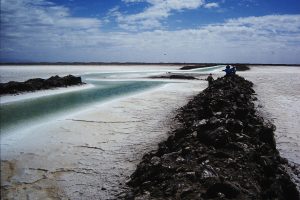
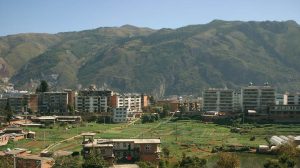
The minibus from Yangzhou’s west station rattles past endless greenhouse rows, plastic sheeting flapping in the wind, before the road suddenly drops and the water opens up. To the left, Gaoyou Lake stretches gray and flat to the horizon, a few fishing boats stippling the surface. To the right, the old Grand Canal runs straight as a ruler, its stone towpath still worn smooth by centuries of rope. The bus sighs to a halt beside a roundabout where a bronze courier leans into a perpetual sprint, clay tablets tied to his belt. That statue — half postman, half marathoner — is the first thing you see, and it tells you everything about how this city thinks of itself.
Orientation and the rhythm of the lake
Gaoyou sits on the eastern lip of its namesake lake, about forty kilometers north of Yangzhou’s center. The Beijing–Shanghai expressway hums past the eastern edge, but the soul of the place is west of the canal, where the water dictates the tempo. Morning mist clings to the reeds until nine or ten; by noon the surface turns mirror-hard and the heat bounces off the dikes. In autumn, the lake shrinks, exposing mudflats where migrant birds pick at snails. In summer, lotus leaves crowd the shallows and the air smells of wet earth and fermented bean paste from the riverside factories. Most visitors stay in the compact urban core — a grid of broad avenues and narrow hutong alleys that you can cross on a shared bike in twenty minutes — but the real Gaoyou lives along the water.
Walking the postal heritage spine
Start at the courier roundabout and walk north along Renmin Road. After three blocks the pavement narrows and you slip into the Postal Museum compound, a restored Qing dynasty relay station tucked behind a high brick wall. Inside, the courtyard still holds the stone trough where horses drank and the low stable where couriers swapped mounts every ten li. Glass cases display bamboo tally sticks, wax seals, and a map of the imperial network that once linked Beijing to Hangzhou in twelve days. The curator, a retired schoolteacher named Lao Chen, will unlock the back room if you ask politely — there sits a replica courier’s kit: oilskin cape, bronze whistle, and a pair of straw sandals worn through at the heel. Allow an hour. No English labels, but the objects speak clearly enough.
- Postal Museum: 8:30–17:00, closed Monday. Free entry, ID required.
- Courier roundabout: Best light for photos at sunset when the bronze catches gold.
- Back-room access: Ask at the front desk; a small tip (twenty yuan) gets Lao Chen’s stories.
Canal-side mornings and the Wenyou Terrace
Cross the canal on the arched stone bridge at dawn. The towpath here is alive: elderly men practicing taiji with swords that flash in the low sun, women rinsing lotus roots in woven baskets, a vendor steering a three-wheeled cart stacked with steaming pork buns. Follow the path south for fifteen minutes until the pagoda of Wenyou Terrace rises above the plane trees. The terrace itself is a Song dynasty scholar’s retreat rebuilt in the Ming — a two-story wooden pavilion with upturned eaves and a view straight down the canal to the lake. Inside, calligraphy scrolls hang between the columns; one, dated to the eighth lunar month of a long-ago year, reads “The moon over the water is the same moon over the capital.” Climb the narrow stair to the upper floor. From there you see the whole geometry: canal, dike, lake, city, expressway — each layer a different century.
- Wenyou Terrace: Open 8:00–17:30. Ten yuan entry.
- Best moment: Sixth lunar month, lotus bloom, when the water turns pink at the edges.
- Don’t miss: The stone tablet rubbing stall at the foot of the stairs — rub your own copy of the moon poem.
Gaoyou Lake: boat, bike, and bird logic
The lake is too big to walk, too shallow for deep-draft boats. Locals navigate it in flat-bottomed punts propelled by a single oar sculled from the stern. Hire one at the fishing harbor west of the canal lock — look for the blue tarp stretched over a bamboo frame, usually three old men smoking and mending nets. Fifty yuan buys an hour; they’ll take you through the lotus lanes to the bird sanctuary at the northern tip. In the ninth lunar month, thousands of bean geese and swan geese settle on the mudflats, their calls a low chorus that carries across the water. If you prefer wheels, rent a shared e-bike in the city and ride the dike road that crowns the western shore. The pavement is smooth, the wind constant, and every few kilometers a concrete watchtower offers shade and a view back toward the pagoda. Pack water and a hat; there is no shelter once you leave the harbor.
- Punt hire: Fishing harbor, west of canal lock. Negotiate before boarding.
- Bird season: Ninth to eleventh lunar months. Bring binoculars; the geese stay far out.
- Dike cycling: Twenty-kilometer loop from harbor to northern sluice gate and back. Flat, exposed, glorious.
Food that travels with the water
Gaoyou’s pantry is the lake. Breakfast means a bowl of *gaoyou tangbao* — soup dumplings the size of a ping-pong ball, skin so thin you see the amber broth trembling inside. The classic spot is a nameless stall on Dongmen Alley where the wrapper is pleated by a woman who never speaks; she drops twelve into a bamboo steamer, counts them onto a plastic plate, and hands you a spoon and a dish of black vinegar slivered with ginger. Eat fast: the skin tears if you hesitate. For lunch, order *huaiyang salted duck* at any canal-side restaurant. The birds are cured with coarse salt, star anise, and a splash of rice wine, then air-dried on bamboo racks until the skin turns lacquer-red. Slice cold, dip in plum sauce. Dinner is often a communal hotpot of lake shrimp, water chestnuts, and lotus root sliced into wheels, simmered in a broth of fermented bean paste and dried chili. The flavor is saline, sweet, and faintly smoky — the taste of the dike at dusk.
- Tangbao stall: Dongmen Alley, 6:00–9:30. Twelve pieces, eight yuan.
- Salted duck: Ask for “lao ya” (old duck) — birds cured at least three weeks.
- Hotpot base: Fermented bean paste (doubanjiang), dried chili, rock sugar, lake water.
Mistakes that mark you as a stranger
First, don’t treat the lake as a scenic backdrop. It’s a working body of water — fishing nets, aquaculture pens, irrigation intakes. Wandering into a pen area earns you a sharp whistle and a shouted reprimand. Second, the canal towpath is not a park trail; cargo barges still pass, and the rope grooves in the stone are slippery when wet. Wear shoes with grip. Third, many small temples and ancestral halls along the alleys are active, not museums. If incense is burning, bow once at the threshold and move on; don’t photograph the altar. Fourth, the postal museum’s back room is a privilege, not a right. Show up without greeting Lao Chen and you’ll see only the glass cases. Finally, don’t expect English menus. Point, smile, and learn the characters for duck (鸭), lotus root (藕), and shrimp (虾). A pocket notebook with those three written large saves more meals than any translation app.
- Lake etiquette: Stay on marked dike paths; respect net markers (red flags on bamboo poles).
- Canal safety: Step back when a barge horn sounds — two long blasts.
- Temple courtesy: No flash, no selfies at altars. Bow, breathe, leave.
- Language cheat sheet: Write 鸭, 藕, 虾 on a card. Show it, eat well.
Leaving the way the couriers did
The last bus to Yangzhou departs when the sky turns the color of bruised plum. You wait at the same roundabout where the bronze courier runs forever, his clay tablets clicking against his thigh in the wind. An old woman beside you peels a salted duck egg, the yolk bright as a harvest moon. She offers half. You take it, crack the shell, and taste the lake — brine, clay, time. The headlights sweep the canal. The bus doors hiss open. You climb aboard, and the city slides backward: pagoda, dike, lotus, water, all of it measured in the stride of a messenger who never stopped running.