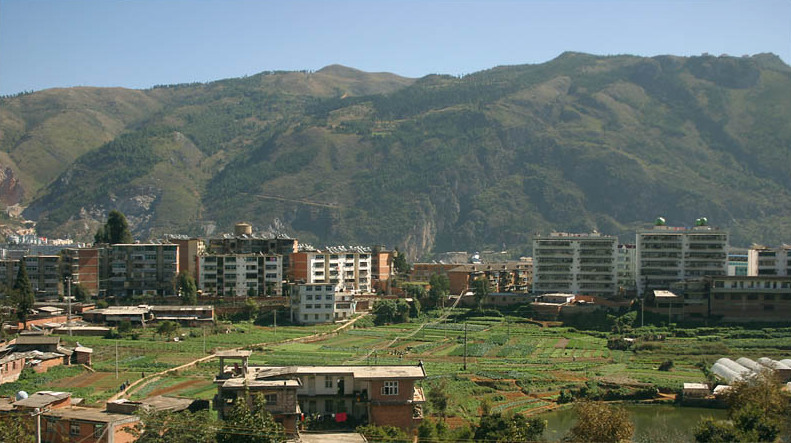
The minibus shudders to a halt on a hairpin bend above the Red River valley, and the conductor leans out the window shouting for Gejiu. Inside, the air smells of dried chili, engine oil, and the sweet ferment of tofu someone packed in a bamboo basket. Four hours out of Kunming, the highway has climbed from subtropical banana groves into a basin wrapped in mist, where tin mines once turned this town into a name on the London Metal Exchange. Today the population hovers around 140,000, small enough that the whole place feels like a single neighborhood stretched along a ridge, yet large enough to hide corners most guidebooks skip.
Getting There Without Losing a Morning
Buses leave Kunming’s West Coach Station and the newer South Station every thirty minutes from dawn until late afternoon. The ride takes between four and six hours depending on whether the driver treats the speed limit as a suggestion. A ticket costs roughly eighty yuan; buy it at the counter rather than from a tout hovering near the gate, and keep the receipt — conductors sometimes ask to see it at the mountain checkpoint. If you prefer wheels under your own control, the G80 expressway is paved all the way, but fog can roll in thick after lunch, so leave early. The train line terminates at Mengzi, forty minutes downhill by local bus; unless you are hauling heavy gear, the direct coach remains the simpler option.
Moving Around the Basin
City buses numbered 1, 2, and 3 loop through the center past Jin Lake for one yuan a ride. The fleet consists of older vehicles with wooden bench seats that have polished to a shine over decades; they rattle like tin cans but run frequently. Flag one down anywhere along the main ring road — there are no fixed stops, just wave. Taxis cluster near the long-distance station and the lake’s north gate; meters start at eight yuan, though drivers often quote a flat twenty for cross-town trips after dark. For the outlying scenic spots — Manhao, Baohua, Baiyun — hire a private car for the day (around two hundred yuan) or join a shared minivan that departs when full from the square beside the lake.
Jin Lake: The Town’s Living Room
Jin Lake sits in the middle of Gejiu like a dropped mirror. At dawn, retirees practice tai chi on the stone promenade while vendors steam corn on the cob in tin pails. By midmorning, the path around the water fills with parents pushing strollers and office workers eating rice noodles from plastic bowls. The Culture Square on the eastern shore hosts a nightly dance troupe — middle-aged women in sequined jackets moving to remixed folk songs — and a weekend market where farmers lay out baskets of wild mushrooms, bitter greens, and fist-sized pomelos. Walk the full three-kilometer loop if you want the quiet western shore, where willow branches trail into the water and the only sound is the plop of carp surfacing for insects.
Temples That Remember the Miners
Baohua Temple clings to a slope above the old tin district, its upturned eaves blackened by decades of incense. The main hall houses a gilded Sakyamuni flanked by eighteen arhats, each face carved with a different expression — amusement, sorrow, skepticism. Monks still chant at 4:30 a.m.; if you arrive before the tour groups, you can sit on the cold stone steps and hear the wooden fish beat a rhythm that once marked shift changes for the mines. Yunsi Temple, smaller and quieter, hides behind a bamboo grove on the opposite ridge. Its claim to fame is a stone stele inscribed with the names of miners who died in a 1930s collapse — locals still leave cigarettes and rice wine at the base. Both sites open at sunrise and close at dusk; no ticket, but a ten-yuan donation box sits by the threshold.
Manhao and the River Below
Thirty kilometers southeast, the Red River cuts a gorge so steep the sun only reaches the water at noon. Manhao Scenic Area spreads across the riverbank: Baohua Park’s terraced gardens, Baiyun Mountain’s stairway of a thousand steps, and Datun Lake, a reservoir so still it reflects the karst peaks like a second sky. The stair climb takes forty minutes if you pause for breath; at the summit, a pavilion sells instant noodles and hot tea from a thermos. Boats leave the dock every hour for a twenty-minute loop around Datun — bring a windbreaker, the water cuts through a T‑shirt even in summer. Weekends draw families from Mengzi and Kunming; weekdays you may have the pavilion to yourself.
Eating: Dumplings, Noodles, and the Night Market
Gejiu’s signature dish is not Yunnan rice noodles but northern-style boiled dumplings, a legacy of miners who arrived from Hebei and Liaoning generations ago. The most reliable bowl comes from Northeast Dumpling King, a fluorescent-lit room on Jiefang Road where the wrapper is rolled thin enough to read a newspaper through. Order the pork-and-cabbage mix, dip in black vinegar with slivered ginger, and chase it with a bowl of sour-spicy rice noodles from the stall next door. For breakfast, hunt down a cart selling *erkuai* — thick rice cakes grilled over charcoal, brushed with chili oil, and folded around pickled mustard greens and a fried egg. After dark, the night market behind Culture Square ignites: skewers of beef tendon, quail eggs in soy broth, grilled tofu brushed with fermented bean paste, and bowls of *guoqiao* noodles assembled tableside with raw chicken slices that cook in the boiling broth.
- Dumpling wrapper: high-gluten flour, cold water, pinch of salt — knead fifteen minutes, rest thirty.
- Filling: ground pork (30 % fat), finely chopped napa cabbage (squeezed dry), ginger water, soy sauce, sesame oil, white pepper.
- Method: roll wrappers to two millimeters, place a teaspoon of filling, pleat edges, boil three minutes until they float.
- Dipping sauce: aged black vinegar, light soy, minced garlic, chili oil, sesame seeds.
Where to Sleep Without a Reservation Surprise
Chain hotels cluster near the long-distance bus station — clean, air‑conditioned, and forgettable. For character, walk two blocks west to the lane behind the old tin company headquarters; a handful of courtyard guesthouses occupy renovated siheyuan with tiled roofs and central courtyards planted with camellias. Rooms run 150 to 300 yuan, usually including a thermos of pu’er tea. The owners, often retired geologists or teachers, will sketch a map on a napkin marking the best mushroom foraging trail or the hidden viewpoint where the lake catches the last light. Book by WeChat a day ahead in peak season (the weeks around the Mid‑Autumn Festival); otherwise, walk in and negotiate.
Seasonal Rhythm and Festival Calendar
Spring (the second and third lunar months) brings the tin‑flower bloom — white blossoms covering the slag heaps — and the Torch Festival, when Yi villages on the surrounding slopes light pine torches and wrestle in the meadow. Summer monsoon turns the roads slick; carry a poncho and expect afternoon downpours that clear by evening. Autumn (eighth and ninth lunar months) is the sweet spot: crisp mornings, clear views from Baiyun Mountain, and the rice harvest festival in Manhao, where farmers thresh grain to the beat of bronze drums. Winter is quiet, temperatures hovering just above freezing, and the lake often wears a skin of mist until noon — perfect for solitary walks and hot pot in a back‑alley kitchen.
Pitfalls That Catch First‑Timers
Assuming the bus schedule is fixed — it isn’t; drivers leave when the vehicle fills. Counting on English signage — outside the lake park, most signs are Chinese only; download offline maps with Chinese labels. Skipping cash — mobile pay works in chain stores, but the best food stalls, temple donation boxes, and shared minivans still expect paper yuan. Overpacking for the mountain steps — Baiyun’s staircase is steep and uneven; wear flat shoes with grip, not sandals. Ignoring altitude — Gejiu sits at 1,700 meters; the first night can bring a dull headache. Drink water, skip the baijiu toast at dinner, and give yourself a slow morning before climbing.
A Day You Can Actually Follow
Arrive on the 7 a.m. bus, drop your bag at a courtyard guesthouse, walk to Jin Lake for a bowl of *erkuai* and a lap around the water. Midmorning, take bus 2 to Baohua Temple, stay for the chanting, then descend to the old tin quarter for a coffee in a converted warehouse. Lunch at Northeast Dumpling King — order twenty dumplings, a side of cold kelp threads, and a bottle of local barley beer. Afternoon: hire a shared van to Manhao, climb Baiyun Mountain, boat on Datun Lake, return before dusk. Evening: night market behind Culture Square — eat skewers standing up, watch the dance troupe, finish with a bowl of guoqiao noodles. Next morning, rise early, catch the mist on the lake’s western shore, then board the 10 a.m. bus back to Kunming with a bag of dried wild mushrooms from the weekend market.