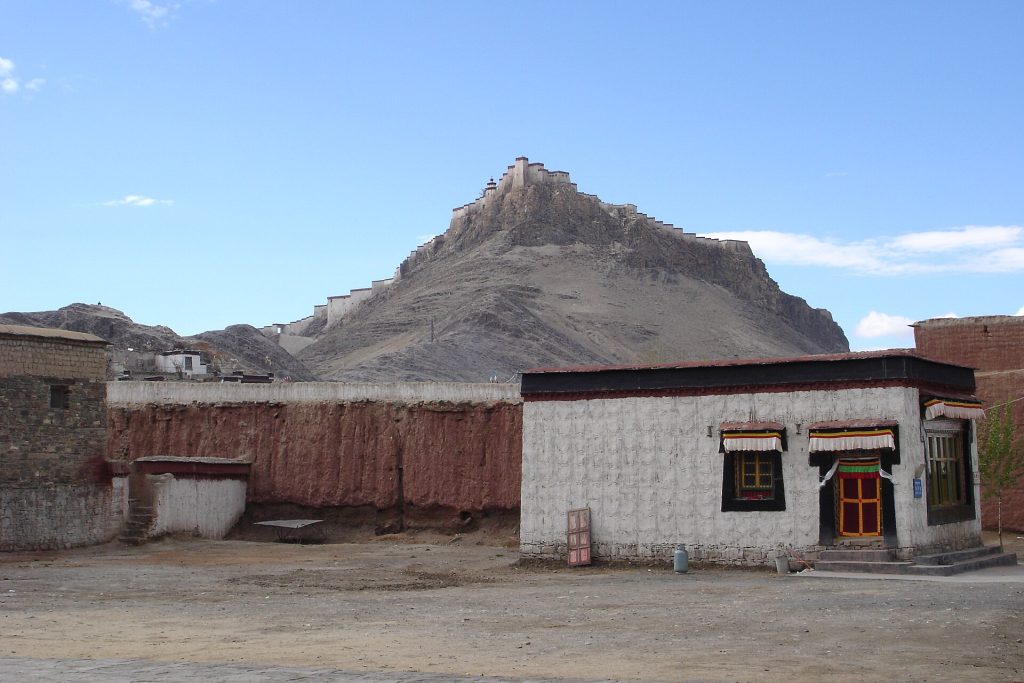
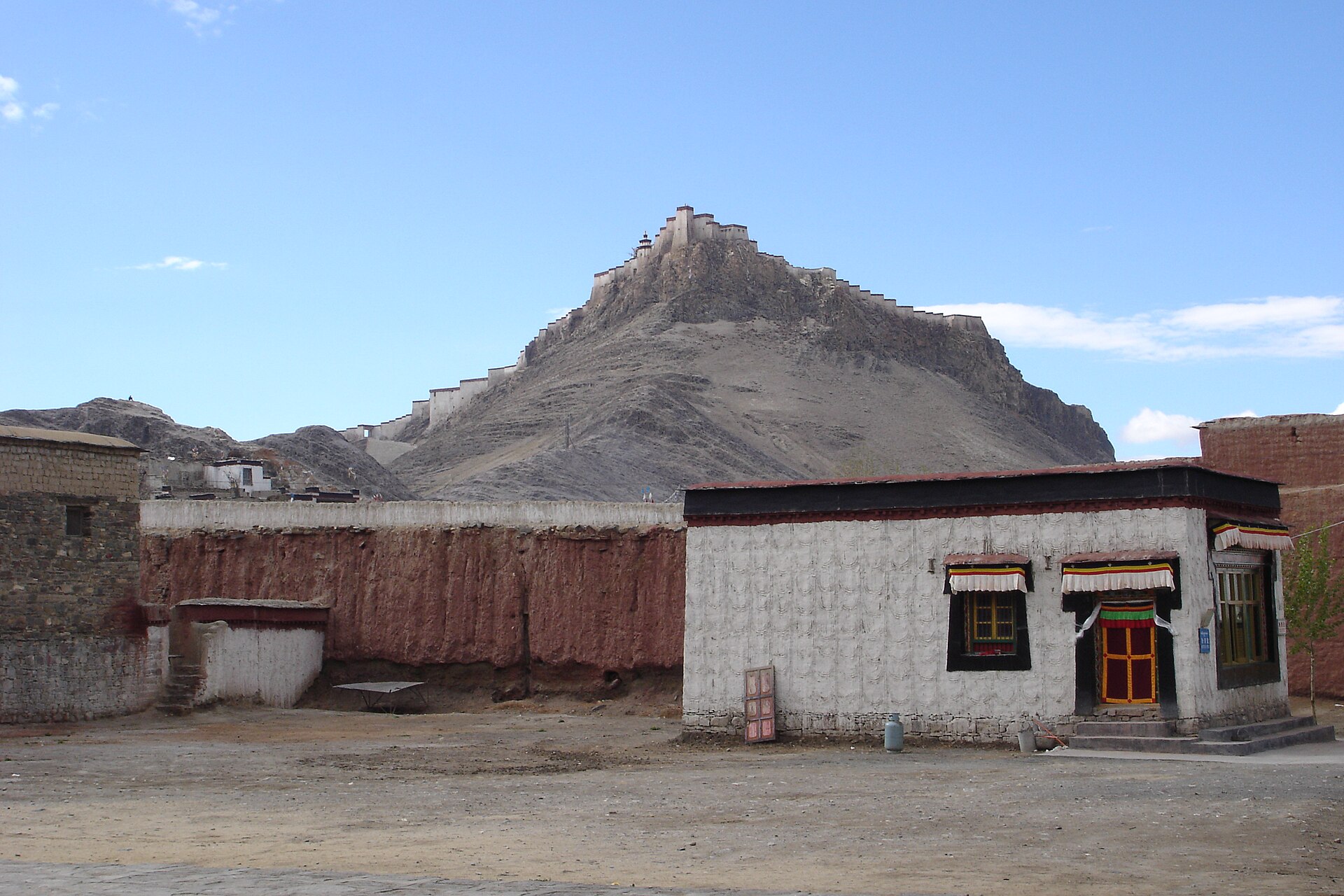
The minibus from Shigatse drops you at the crossroads where the main street fans out toward the river. Prayer flags snap above the bakery, and the scent of yak butter tea rises from a doorway where two old men are turning prayer wheels in slow rhythm. You have arrived in Gyantse at the tail end of the barley harvest, when the fields along the Nyang-chu glow gold and the air carries the dust of threshing floors.
Getting There Without a Tour Bus
Most travelers roll in on a pre‑booked loop from Lhasa, but the public bus from Shigatse runs every morning and costs a fraction of the private‑car price. The ride takes about two hours along the Friendship Highway, climbing past the turquoise finger of Yamdrok Lake before dropping into the valley. If you catch the 8 a.m. departure from the Shigatse long‑distance station, you’ll be walking the Gyantse lanes by mid‑morning. Bring a thermos of hot water and a packet of tsampa; the bus stops only once, at a roadside noodle shack where the broth remembers every hand that stirred it.
Moving Around the Town
The old quarter fits inside a twenty‑minute walk. Cobblestones give way to packed earth behind the monastery walls, and the alleys are narrow enough that a horse‑drawn cart forces you into a doorway. Taxis cluster near the bus terminal — unmarked sedans with drivers who quote a flat fee before you sit down. Agree on the number, not the meter, and keep small bills ready. A bicycle rental shop tucked beside the youth hostel offers heavy steel frames for about twenty‑five yuan a day; the chains rattle and the brakes squeal, but the freedom to coast down to the river at your own pace is worth the wobble.
Pelkor Choede and the Kumbum
The monastery compound sits at the town’s heart, its yellow‑hat roofs glowing against the hillside. Inside the assembly hall, butter lamps flicker before rows of thangka that have survived revolutions and rain. The real marvel is the Kumbum, a nine‑tiered chorten studded with seventy‑seven chapels. You climb the internal stairwell in a spiral, each level tighter than the last, until the roof opens onto a panorama of barley terraces and the distant fort. Monks in crimson robes sweep the courtyards at dawn; if you linger near the western gate when the horns sound, an elder may press a blessed cord into your palm without a word.
Gyantse Dzong: The Fort on the Hill
A steep path switchbacks up the ridge behind the monastery to the dzong, the fortress that held off the British expedition in 1904. The walls are pocked by cannon fire, and the museum inside displays rusted Lee‑Enfield cartridges beside traditional matchlock rifles. From the ramparts you can trace the Nyang‑chu as it braids through the valley, and you understand why the town grew here — controlling the river meant controlling the trade route to India. Visit in late afternoon when the tour groups have left; the wind carries the sound of children herding goats in the fields below.
Eating and Sleeping Like a Local
Dinner options cluster along the main drag. A family‑run kitchen behind a blue door serves hand‑pulled noodles in yak broth, topped with a spoonful of chili oil and a handful of cilantro. Order the momo plate — steamed dumplings stuffed with minced yak and onion — and ask for a side of fermented radish. The guesthouse upstairs from the same kitchen rents clean rooms with thick quilts; the owner will wake you with a bowl of sweet milk tea at first light. No online booking exists. Show up, smile, and gesture at the empty bunk.
Seasonal Rhythms and Festival Windows
If your visit falls during the fourth lunar month, the town swells for the Saga Dawa festival. Pilgrims circle the Kumbum prostrating every three steps, and the monastery courtyard hosts cham dances where masked lamas whirl in silk brocade. The horse‑racing festival in the seventh lunar month turns the river plain into a thunder of hooves and a rainbow of traditional tents. Accommodation doubles in price and vanishes fast; arrive three days early or camp on the monastery’s outer lawn with permission from the abbot’s office.
Common Missteps
- Assuming the bus station has an English schedule board — it doesn’t. Ask the ticket seller to write the departure time in Chinese characters on your palm.
- Photographing monks inside chapels without permission. Step back, lower the camera, and wait for a nod.
- Paying the first taxi quote. Walk fifty meters toward the hostel; the price drops by half.
- Skipping altitude medication because Gyantse feels lower than Lhasa. At 4,040 meters the headache still finds you.
- Leaving without buying a sack of roasted barley flour from the market. It travels light and makes a passable breakfast with hot water on the train out.