The minibus from Kunming’s western station rattles through the red-soil hills of southern Yunnan, the engine whining on the final climb into the valley where the Nanxi River cuts a brown line between two countries. By the time the driver pulls into the dusty lot beside the old crossing, the clock on the station wall reads late afternoon. A knot of porters in blue jackets waits beside a row of cargo bicycles piled high with foam boxes of mangoes and live chickens. Across the iron bridge, the Vietnamese side glows with neon signs advertising cold beer and foot massage. You step off the bus, passport in hand, and the smell of diesel, frying garlic, and wet cardboard hits you all at once.
Choosing Your Crossing
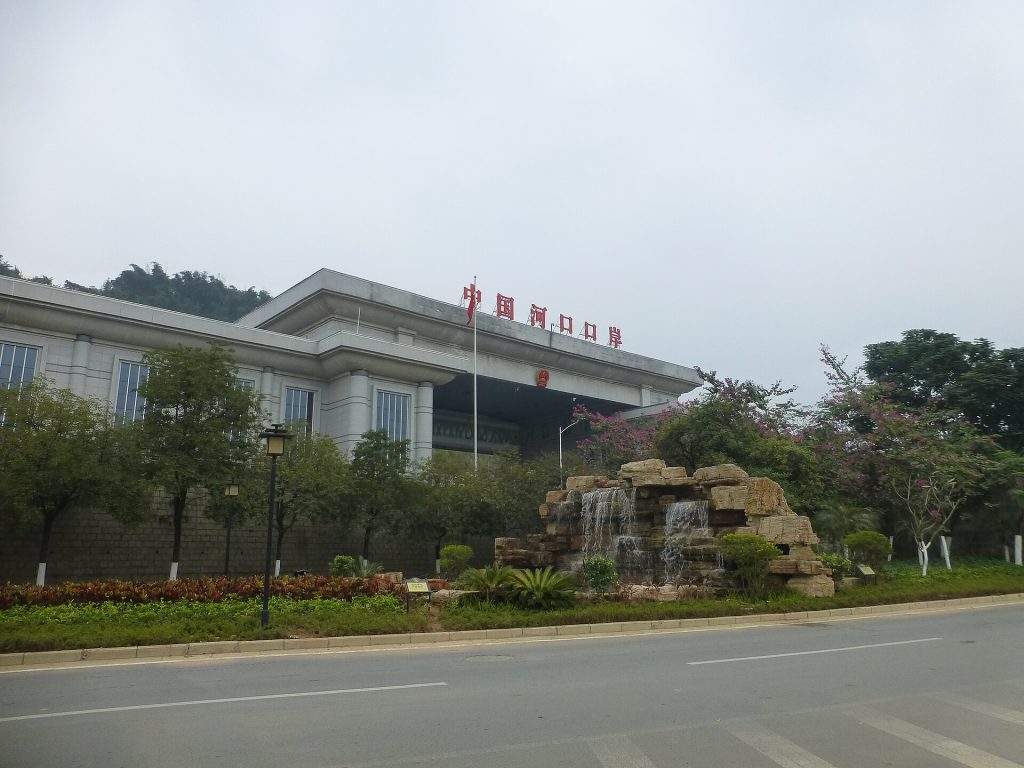
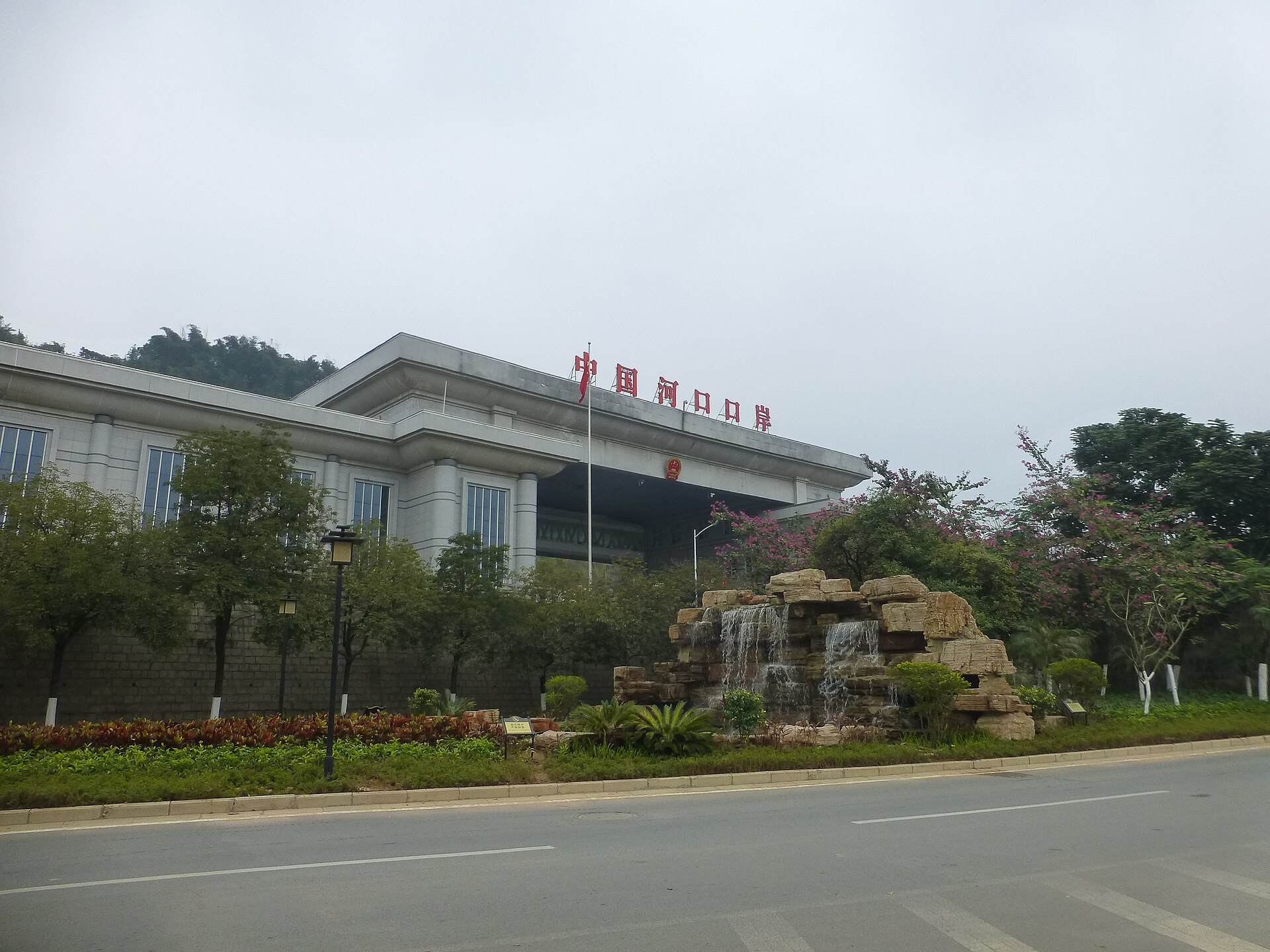
Hekou has two gates, and picking the wrong one can cost you an hour of walking in the heat. The old crossing sits in the center of town, a steel-truss bridge spanning the river right where the market spills onto the sidewalk. This is the pedestrian artery. Motorbikes and bicycles squeeze through the same lanes, horns blaring, vendors shouting prices for SIM cards and currency exchange. The Chinese exit hall is a low concrete building with a faded sign reading Zhongguo Hekou; the Vietnamese side opens directly onto Lao Cai’s main drag. It operates on Beijing time from early morning until late evening, an hour ahead of the clocks across the water.
The new crossing lies a few kilometers upstream, reachable by a twenty-minute taxi ride along the river road. It is a sprawling complex of truck lanes, tour-bus bays, and a modern glass terminal. If you are arriving on a through-bus from Kunming or continuing straight to Sapa, this is where you will clear customs. Pedestrians can use it, but the walk between the Chinese and Vietnamese inspection halls is long, exposed, and poorly signed. Unless you have wheels waiting, stick to the old bridge.
Visa and Paperwork on the Spot
China does not issue visas at Hekou. You must arrive with a valid entry permit already in your passport. Vietnam, however, offers a visa-on-arrival desk inside the Lao Cai immigration hall, but only if you hold a pre-approved letter from a Vietnamese travel agency or the online e-visa system. Without that letter, you will be turned back at the Vietnamese window. The e-visa, applied for weeks earlier, lets you walk straight to the counter, pay the stamping fee in crisp dong, and collect the entry stamp in ten minutes. Bring a printed copy of the approval, a passport photo, and small-denomination cash—cards are not accepted at the booth.
Chinese exit formalities are straightforward: scan the passport, face the camera, collect the slip. Keep the slip; you surrender it when you re-enter China. On the Vietnamese side, fill the white arrival card before you reach the window. Lines swell when tour groups disembark, usually mid-morning and late afternoon. If you hit a queue, find a plastic stool at the riverside café on the Lao Cai side, order a glass of cà phê sữa đá, and wait for the surge to pass.
Getting There and Moving On
The high-speed rail station, Hekou North, sits on the outskirts, a twenty-minute drive from the old bridge. Trains from Kunming South take roughly three and a half hours, slicing through tunnels and over viaducts that replaced the old metre-gauge line. From the station, a green city bus (Route 2) runs every twenty minutes to the border plaza; a taxi costs about thirty yuan and saves the wait. If you are coming from the Yuanyang rice terraces, the mountain road drops down in hairpin turns—allow four hours by hired car, more if fog clings to the ridges.
Once across, Lao Cai station faces the bridge. The overnight train to Hanoi departs around 9 p.m., arriving at 5 a.m.; the day train leaves mid-morning. Tickets sell out during holiday weeks, so book via the Vietnam Railways app or a local agent in Hekou’s backpacker alley. For Sapa, shared minivans cluster in the square outside the Vietnamese immigration hall. They leave when full, roughly every thirty minutes, and climb the mountain road in an hour. Negotiate the fare before you board—sixty thousand dong per seat is the usual baseline.
A Day Trip Rhythm
Cross early, before the tour buses unload. Walk the bridge at 8 a.m., when the light turns the river copper and the cargo bikes are still loading. Spend two hours in Lao Cai’s market: the wet section reeks of fermented shrimp paste and fresh herbs, the dry section piles cheap Chinese electronics beside Vietnamese conical hats. Eat a bowl of phở at the stall where the broth has simmered since dawn—rice noodles, star anise, beef slices that curl in the heat.
Walk north along the river promenade to the French-era railway bridge, its rusted girders straddling the water. Locals fish from the banks, casting nets into the current. Turn back before noon, when the sun flattens the color out of the streets. Recross the bridge, hand over your exit slip, and you are back in Yunnan in time for a late lunch of rice noodles in a courtyard alley behind the bus station.
What Newcomers Get Wrong
- Assuming the border is open twenty-four hours. The gates close at 11 p.m. Beijing time; the last exit stamp is issued thirty minutes earlier.
- Showing up without Vietnamese dong. The visa stamp fee must be paid in local currency; money changers on the bridge give poor rates.
- Trusting the “visa on arrival” sign without a pre-approval letter. The desk will not process a walk-up application.
- Taking a taxi to the new crossing for a day trip. The walk between halls eats half your daylight.
- Leaving the Chinese exit slip in a pocket you cannot find. Without it, re-entry requires a supervisor and a lot of gesturing.
Money, Language, and Small Courtesies
Yuan and dong circulate on both sides of the bridge, but prices are quoted in the local unit. A bottle of water costs three yuan in Hekou, seven thousand dong in Lao Cai. Vendors calculate mentally; if you hand over a hundred-yuan note for a ten-yuan snack, expect change in a mix of both currencies. Mandarin works on the Chinese side; Vietnamese dominates across the river, though many market women speak enough Yunnanese-inflected Mandarin to haggle. A smile, a polite xin chào, and a calculator app bridge the rest.
Porters at the old crossing wear numbered vests. If you have heavy bags, agree on a price—usually twenty yuan per load—before they lift anything. They know the shortest path through the inspection maze and will wait while you clear customs. Tip ten thousand dong on the Lao Cai side if they carried you all the way to the minivan stand.
The border does not feel like a line on a map. It feels like a market that happens to have a passport check in the middle. Move with the flow, keep your documents dry in a zip-lock bag, and you will be drinking cold Bia Hoi on the Vietnamese bank before the morning fog lifts off the hills.