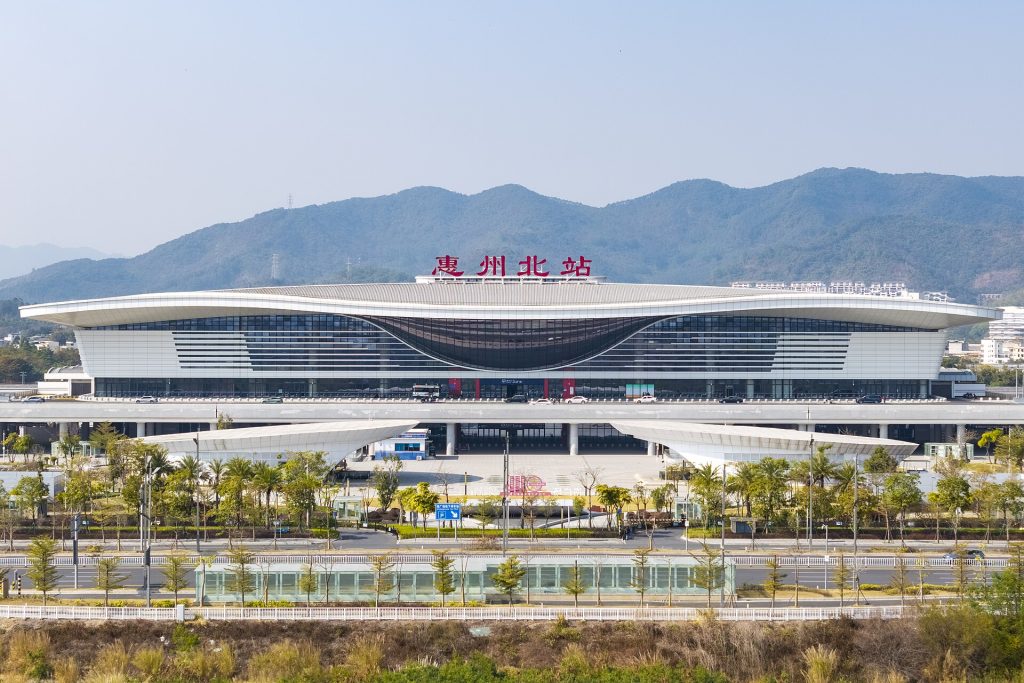
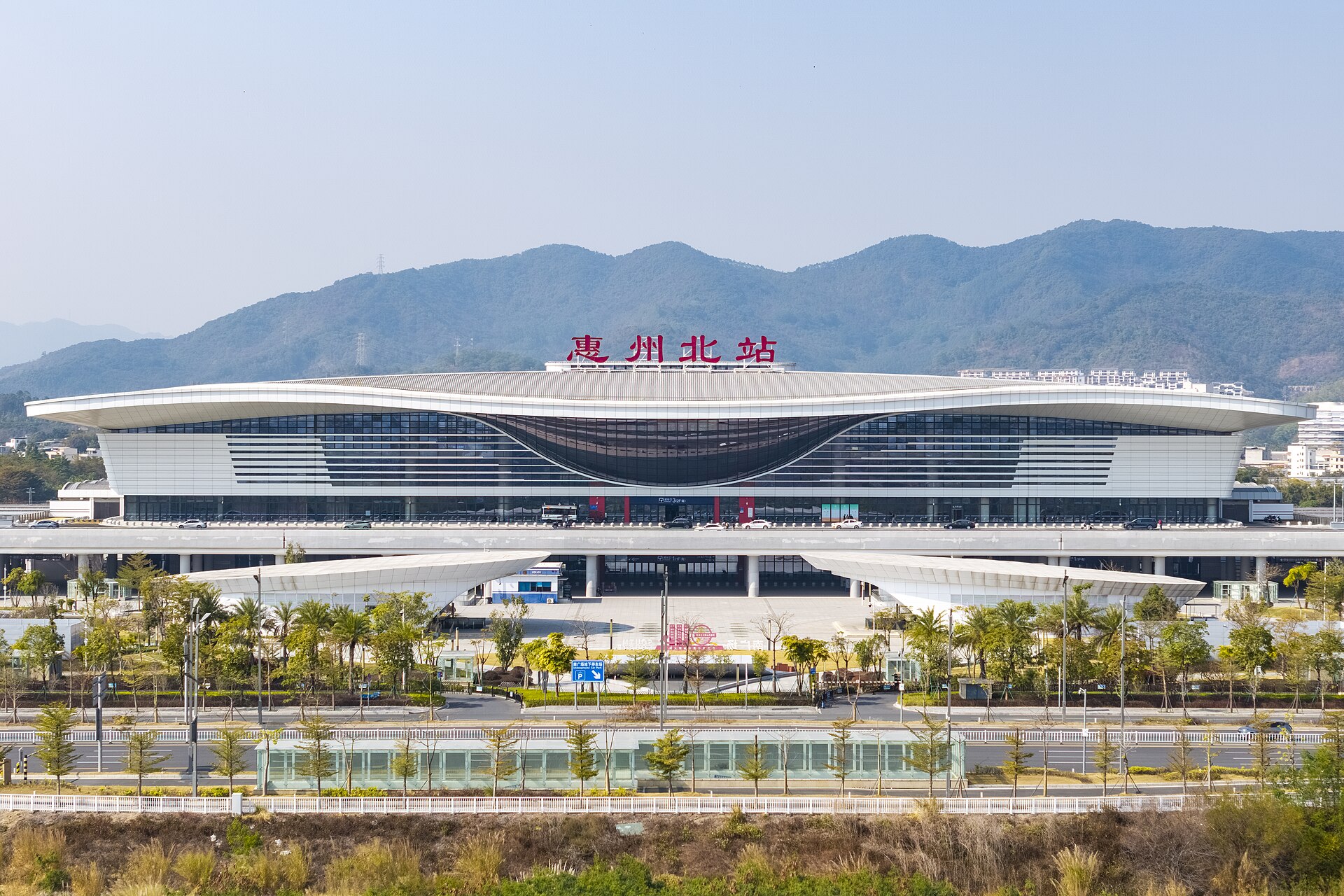
The high-speed rail pulls into Huizhou North just after noon. Through the window, the Pearl River Delta unfurls in strips of banana groves and fish ponds, then suddenly gives way to a skyline of glass towers reflected in the West Lake. A taxi driver shouts something in Hakka to a colleague across the forecourt, switches to Cantonese for the dispatcher, and greets me in Mandarin with a grin. Forty minutes from Shenzhen, two hours from Hong Kong, and the city feels like a secret the rest of the delta forgot to exploit.
Getting There Without the Hassle
Most visitors arrive by high-speed rail. Trains from Shenzhen North take twenty minutes; from Guangzhou East, just under an hour. The station sits in Huiyang District, a twenty-minute drive from the historic core. Taxis queue in a covered bay—insist on the meter, though drivers often quote a flat fifty yuan to the West Lake hotels. If you land at Shenzhen Bao’an Airport, the intercity bus from the Ground Transportation Center runs every thirty minutes and drops you at the Huizhou bus terminal near the lake. Driving from Hong Kong? The Shenzhen Bay Bridge crosses the border in forty minutes on a clear day; the Huizhou expressway toll is roughly eighty yuan.
Where to Sleep: Lake Views or Alleyway Quiet
Two neighborhoods dominate the short-stay market. Along the southwest shore of West Lake, a cluster of four-star chains—Jinjiang Metropolo, Atour, and a local brand called Huizhou Hotel—offer floor-to-ceiling windows facing the pagodas. Rooms run four to six hundred yuan on a weekday. Book a lake-view floor; the morning mist rolling off the water is worth the extra fifty yuan.
For something quieter, slip into the lanes behind the Confucian Temple in Huicheng District. Courtyard guesthouses converted from Qing-era merchant homes rent for two to three hundred yuan. Hosts usually speak Hakka at home and Mandarin to guests. Breakfast is often included: steamed rice rolls, pickled mustard greens, and a bowl of silky congee. No elevator, narrow stairs, and the bathroom may share a wall with the neighbor’s kitchen, but you fall asleep to the sound of mahjong tiles clacking in the courtyard.
West Lake at Dawn and Dusk
West Lake (Xihu) is not a single pond but a chain of five linked lakes threaded by stone bridges and causeways. Locals treat it as their living room. At six in the morning, the path fills with retirees practicing tai chi, women dancing to tinny speakers, and fishermen casting hand nets from wooden skiffs. Rent a paddle boat from the dock near Su Causeway—thirty yuan for half an hour—and drift under the Nine-Dragon Bridge as the sun gilds the tiled roofs of Sizhou Pagoda.
Come back at sunset. The causeway lights flicker on, red lanterns sway above the tea houses, and couples pose for wedding photos on the marble balustrades. A vendor pushes a cart of grilled squid brushed with chili-garlic sauce; a skewer costs five yuan. Walk the full loop—about six kilometers—if your knees allow. Otherwise, hop the electric ferry that shuttles between the three main piers every twenty minutes.
Hakka Heritage in the Hills
Thirty kilometers southeast of the city center, the village of Longmen (Dragon Gate) sits in a valley where the Zeng family has lived for eight centuries. Their ancestral halls—gray brick, swallow-tail gables, carved lintels—are still occupied. Descendants in their seventies sweep the courtyards and will unlock the clan school if you ask politely. No ticket booth, no tour groups, just a donation box by the incense burner.
Further out, the Hakka walled villages of Hekou and Xinwei rise like fortresses: thick rammed-earth walls, narrow gun slots, a single iron-studded gate. Inside, families still share a communal well and dry persimmons on bamboo racks. Hire a driver for the day—three hundred yuan round trip—and leave by nine to beat the tour buses. Wear sturdy shoes; the lanes are uneven cobblestone and the staircases inside the watchtowers are steep ladders.
Eating Like a Local: Seafood, Goose, and Late-Night Snacks
Huizhou cuisine sits at the intersection of Hakka saltiness, Cantonese finesse, and Chaoshan seafood fire. Three dishes define a first visit.
- Dongjiang Salt-Baked Chicken — A whole bird buried in coarse salt heated in a wok until the skin turns paper-thin and the meat stays juicy. Served torn by hand with a dip of minced ginger, scallion, and hot oil.
- Steamed Freshwater Fish with Preserved Mustard Greens — Usually grass carp or bighead from the East River. The sour-salty greens cut the richness; the broth is sipped like tea.
- Chaoshan-Style Beef Hot Pot — Thin slices of raw beef, hand-cut tendon, and meatballs dropped into a clear broth simmering with white radish and coriander. Dip in satay sauce mixed with raw egg yolk.
For a sit-down meal, head to Lao Huizhou Restaurant on Yunlong Road. Order the salt-baked chicken, a plate of stir-fried river snails with fermented black bean, and a clay pot of winter melon soup. Expect a wait at dinner; take a number and drink herbal tea in the courtyard.
After ten, the night market on Pinghai Road wakes up. Stalls sell oyster omelets crisp at the edges, bowls of beef brisket noodles with hand-pulled strands, and skewers of pork intestine glazed in sweet soy. Grab a plastic stool, order a bottle of warm rice wine, and watch the delivery riders zip past on electric scooters.
Language, Etiquette, and the Unwritten Rules
Hakka is the heartbeat here. You will hear it in the market, on the bus, in the kitchen. Mandarin works everywhere, but a few Hakka phrases earn smiles: “M̀-goi” (thank you), “Ho̍k-hó” (delicious), “Ngài hó” (hello). Cantonese is understood by most under fifty, especially in Huiyang.
At a family table, wait for the eldest to lift chopsticks first. Never stick chopsticks upright in rice—that mimics incense for the dead. When pouring tea, tap two fingers on the table to thank the pourer; it’s a silent bow. If a host refills your bowl, leave a few bites to show you’re satisfied. Finishing everything signals you’re still hungry.
Temples and ancestral halls require shoulders covered and hats off. Photography inside the main hall is often forbidden; look for the red sign with a crossed-out camera. In walled villages, do not enter private courtyards unless invited. The gate may be open, but that’s for ventilation, not invitation.
Day Trips That Don’t Feel Like Day Trips
Daya Bay, forty minutes east by car, has a string of beaches—Shuangyue Bay, Golden Beach, Dapeng Peninsula—that draw surfers in autumn when the northeast monsoon kicks up swell. Rent a board from a shack on the sand; lessons run two hundred yuan for two hours. Seafood shacks behind the dunes steam crab with garlic and vermicelli. Stay for the stars; light pollution is low.
Closer in, the Luofu Mountain scenic area rises behind the city. A cable car climbs to the Taoist temples clinging to cliffs; incense smoke curls through pine forests. The hike from the middle station to the summit takes two hours on stone steps. Monkeys watch from the railings—keep snacks zipped. Downhill, a vegetarian restaurant near the gate serves mock duck, bamboo fungus, and lotus root stuffed with sticky rice. No menu; the abbess decides what’s cooked that day.
What Trips Up First-Timers
Assuming Huizhou is just a smaller Shenzhen. It isn’t. The pace is slower, the dialects thicker, the pride in Hakka roots fiercer. Expecting English menus outside international hotels—rare even in mid-range spots. Carry a photo of the dish you want or use a translation app with offline packs downloaded.
Skipping cash. Mobile payment works almost everywhere, but the night market vendors, the village donation boxes, and the ferry ticket machine often only take notes. Keep a hundred yuan in small bills.
Overpacking the itinerary. The city rewards lingering: a second cup of tea in a lakeside pavilion, a detour down an alley where an old woman hand-rolls rice noodles, the spontaneous invitation to join a mahjong game. Leave half a day empty. The best moments in Huizhou happen in the gaps.