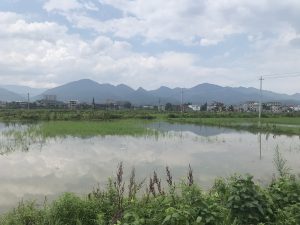
The minibus rattles over a cattle guard and onto a stretch of road where the lane markings have long since faded into the tar. To the left, a terraced cornfield climbs a slope so steep it looks like a green staircase dropped from the sky. To the right, a dry riverbed cuts through russet cliffs, the kind that glow like embers when the late afternoon sun hits them. The driver, a man with a cigarette tucked behind his ear and a Shanxi dialect thick enough to chew, gestures at a cluster of grey-brick roofs huddled against a hillside. “Huangcheng,” he says. No English, no Mandarin I recognize at first, just the name of the place I came to find. I shoulder my pack, hop down onto gravel still warm from the day, and realize the map on my phone hasn’t loaded a new tile in twenty minutes. This is Jincheng prefecture: no tourist police, no QR-code audio guides, just stone villages breathing dust and history.
Getting There and Moving Around
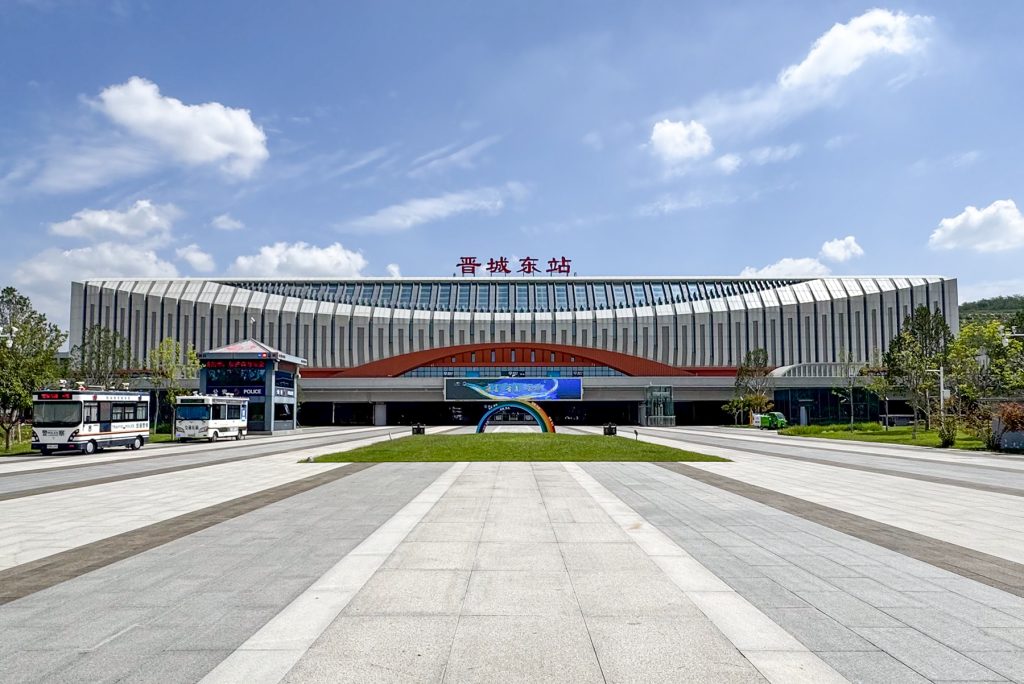
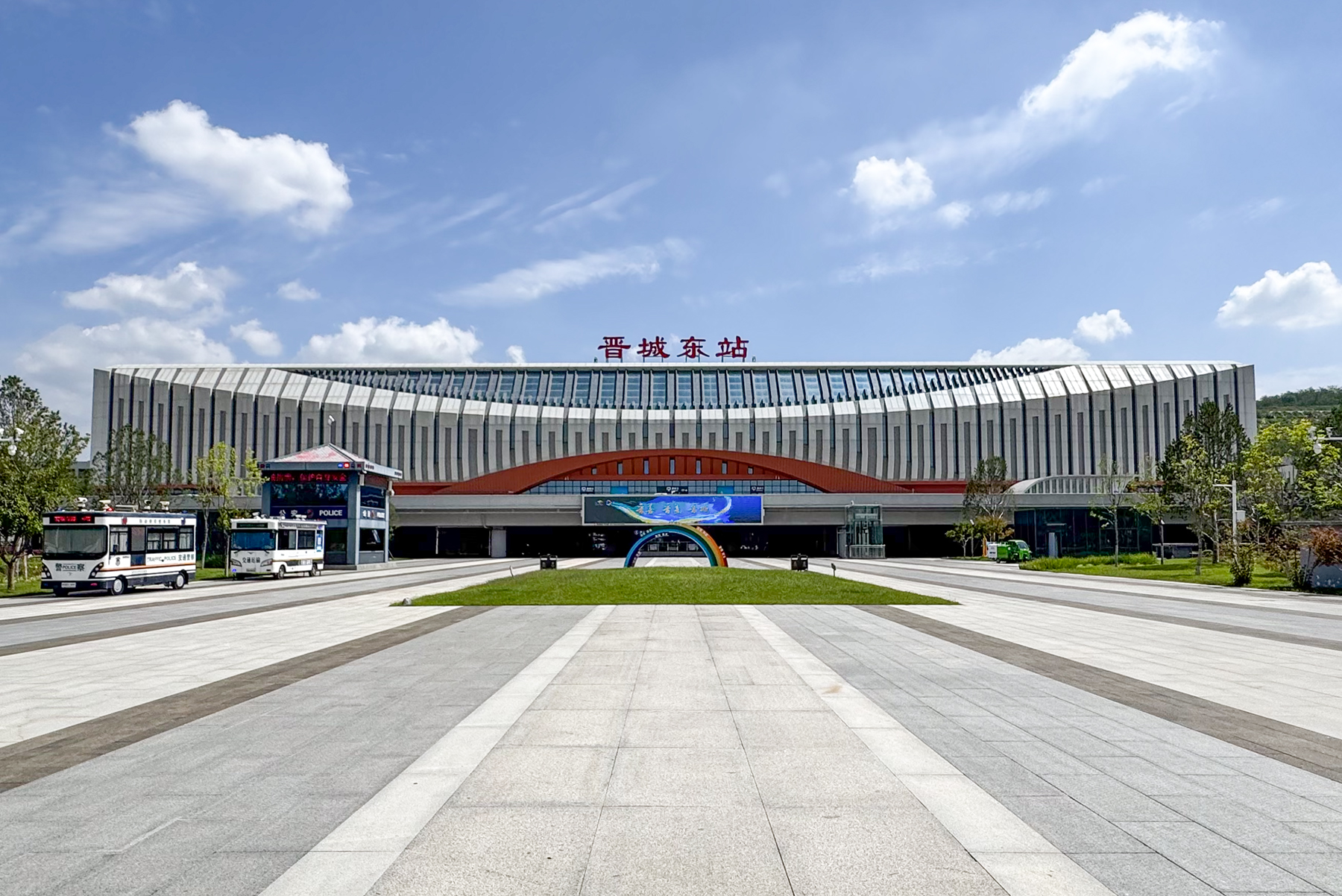
High-speed rail now stitches Jincheng to the rest of North China. The station sits on the flat plain south of the old city, a glass-and-steel box that feels oversized for the trickle of passengers. From Beijing West, the ride is about three hours; from Xi’an North, just over two. Once you step onto the forecourt, the app-based ride-hailing cars cluster near the exit, but drivers often cancel if the destination reads “Huangcheng Xiang” or “Wangmangling.” They prefer the city loop. Your backup is the long-distance bus station two blocks west of the railway square. Look for the window with a handwritten cardboard sign listing mountain villages in marker pen. Buses leave when full, not on a timetable. Buy a ticket to the nearest township — usually Yangcheng or Qinshui — then flag a shared minivan at the township’s main intersection. Negotiate the fare per seat before the engine starts; thirty to fifty yuan is the going rate for the final climb into the hills. If you rent a car in the city, ask the agency for a vehicle with decent ground clearance. The last five kilometers to the best villages are often unpaved, rutted by coal trucks, and slick with moss after rain.
Huangcheng Xianggu: The Fortress Village
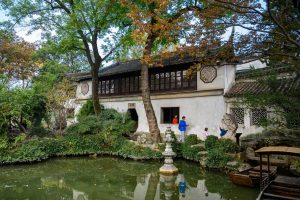
Huangcheng is not a single courtyard but a walled compound layered like an onion. The outer wall, built of rammed earth faced with slate, encloses a lane of Ming-era merchant houses. Inside that, a second wall protects the inner mansion of the Chen family, scholars who rose to imperial examiners. You enter through a gatehouse where the lintel still bears scorch marks from a Japanese incendiary raid in 1942. The guide — usually a retired schoolteacher who volunteers for tips — will point out the “scholar tree” in the central courtyard, a gnarled sophora planted the year a Chen ancestor passed the palace exam. Its roots have lifted the flagstones into a hump you have to step over. Don’t just follow the flagged path. Duck into the side rooms where glass cabinets hold yellowed examination papers, the calligraphy so precise each character looks printed. The rear garden holds a pond fed by a spring that never freezes; in the tenth lunar month, steam rises from the surface at dawn, and the koi glide like slow coins. Stay until the tour groups from Taiyuan board their buses. The light slants through the arrow slits, and the place exhales.
Wangmangling: The Sky Road
Wangmangling sits on the southern rim of the Taihang range, where the plateau shears off into a vertical drop of eight hundred meters. The “Sky Road” is a ribbon of asphalt carved into the cliff face in the 1990s, eighteen hairpin turns stacked like a coiled serpent. Minibuses shuttle visitors from the ticket gate to the summit parking lot, but the real walk begins where the pavement ends. A boardwalk hugs the precipice, bolted into rock with expansion anchors that glint in the sun. On a clear autumn morning, you can see the Yellow River looping like a silver belt across the plain fifty kilometers away. Cloud inversions are common after rain in the ninth lunar month; the valleys fill with white cotton while the peaks poke through like islands. Wear shoes with grippy soles — the boardwalk gets slick with condensation. Vendors at the summit sell roasted sweet potatoes from foil-wrapped drums and thermoses of millet tea. Buy one. The sweet potato skin chars black, the flesh steams yellow, and the tea cuts the chill that seeps through your cuffs.
Ancient Villages Off the Loop: Xiangyu and Guoyu
Tour buses rarely reach Xiangyu, a village strung along a stream in Qinshui County. Its claim is a Ming-dynasty opera stage built into the village temple, the only surviving wooden stage in Shanxi with a rotating floor. The mechanism still works: a crew of four men hauls ropes beneath the planks, and the central section revolves to reveal a new backdrop — palace, garden, battlefield. Performances happen only during the Lantern Festival in the first lunar month, but the caretaker, an elderly man named Lao Li, will demonstrate the turn for a few yuan if you find him in the side hall mending a drumhead. Guoyu, twenty minutes farther up the valley, is quieter. Its lanes are paved with river cobbles set on edge, a herringbone pattern that drains water instantly. Every courtyard door bears a stone tablet carved with the family’s highest exam rank. One house, the “Three Jinshi Mansion,” produced three palace graduates in a single generation. The current occupant, a woman in her seventies, brews tea in a cracked porcelain pot and serves it in bowls without handles. She doesn’t ask where you’re from. She asks if you’ve eaten. Say no, and she’ll ladle hand-rolled noodles into a broth thick with day-lily buds and pork fat. Eat it squatting on a stone threshold. That is the meal you remember.
Eating in the Mountains: What Lands on the Table
Jincheng cuisine is Shanxi cuisine stripped to its bones: wheat, vinegar, chili, salt. No sugar, no soy glaze, no garnish. In a farmhouse kitchen near Wangmangling, I watched a woman pull noodles the length of her outstretched arms, slapping the dough against a marble slab until it sang. She dropped the strands into boiling water, counted to thirty, fished them into a wooden trough, and doused them with a ladle of rendered pork fat, aged vinegar, minced garlic, and a spoonful of chili oil the color of dried blood. The noodles clung together in a glossy rope. You lift them with chopsticks, they don’t break. Side dishes arrive on enamel plates: cold kelp ribbons tossed with sesame seeds; pickled mustard stems crunching like green glass; a bowl of stewed beans, each skin split open, swimming in broth the color of weak tea. Meat is a garnish — slivers of cured pork belly tucked into steamed buns, or a handful of minced lamb stirred into millet porridge at breakfast. In the city, restaurants serve “Jincheng Roast Liver” (晋城烤肝), thin slices of pork liver dusted with cumin and charred on a flat iron. Order it with a bowl of knife-shaved noodles (刀削面) and a bottle of Lao Chen Cu (老陈醋), the black vinegar aged in ceramic jars. The vinegar is not a condiment; it’s the backbone.
- Hand-pulled noodles (拉面): High-gluten flour, water, salt. Knead twenty minutes, rest thirty. Pull, slap, fold, repeat until strands are even. Boil thirty seconds. Dress with pork fat, aged vinegar, garlic, chili oil.
- Knife-shaved noodles (刀削面): Stiff dough held in one hand, curved knife in the other. Shave ribbons directly into rolling boil. Serve in lamb broth with cilantro and pickled chili.
- Steamed millet cake (小米糕): Millet flour, boiling water, pinch of soda. Steam in oiled bowls twenty minutes. Unmold, slice, pan-fry in lard until edges lace brown.
- Cured pork belly (腊肉): Pork belly rubbed with salt, Sichuan pepper, star anise. Cure ten days, hang in chimney smoke three weeks. Slice paper-thin, steam over rice.
- Day-lily bud soup (黄花菜汤): Dried buds rehydrated, simmered with pork ribs, ginger, scallion. Finish with beaten egg drizzle.
What Newcomers Get Wrong
First, they assume English works. It doesn’t. Not at the bus station, not at the ticket window, not in the noodle shop where the menu is a chalkboard behind the counter. Download offline Chinese maps and a translation app that photographs characters. Second, they pack light city shoes. The village lanes are cobbled, uneven, and in the seventh lunar month, slick with algae. Ankle-support boots or trail runners save your knees. Third, they try to “do” Huangcheng and Wangmangling in one day from the city. You spend four hours in transit and ninety minutes looking. Sleep in a village guesthouse — a converted courtyard room with a kang (heated brick bed) and a shared bathroom. The host will wake you with a thermos of hot water and a question: “Where tomorrow?” Fourth, they skip the vinegar. A meal without Lao Chen Cu is like a sentence without a verb. Buy a small ceramic bottle at any grocery; it travels well. Fifth, they photograph people without asking. In Xiangyu, an old man mending a net shook his head when I raised my camera. I lowered it. He smiled, pointed at his grandson chasing a chicken, and nodded. That photo — the boy mid-leap, feathers flying — is the only one I kept.
Seasonal Rhythms and Quiet Corners
Spring arrives late in the Taihang foothills. In the third lunar month, apricot blossoms dust the terraces white, and the stream through Guoyu runs high with snowmelt. Summer brings tour groups from Zhengzhou and Xi’an; the Sky Road queues stretch an hour. Autumn is the sweet spot: the ninth lunar month turns the slopes amber and crimson, the air is dry, and the persimmons hang like lanterns from village eaves. Winter is silent. Snow seals the high passes, the minibuses stop running, and the guesthouses close. If you come then, you’ll have the Chen mansion to yourself, the only footprints in the courtyard your own. The kang stays hot all night, fed by corn cobs and coal briquettes. You wake to the sound of a rooster, the smell of woodsmoke, and the realization that the map on your phone still shows a gray grid. Some places refuse to be downloaded. You just have to walk them.