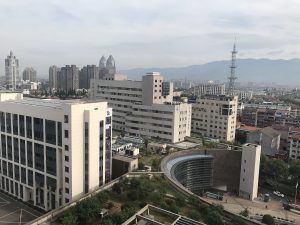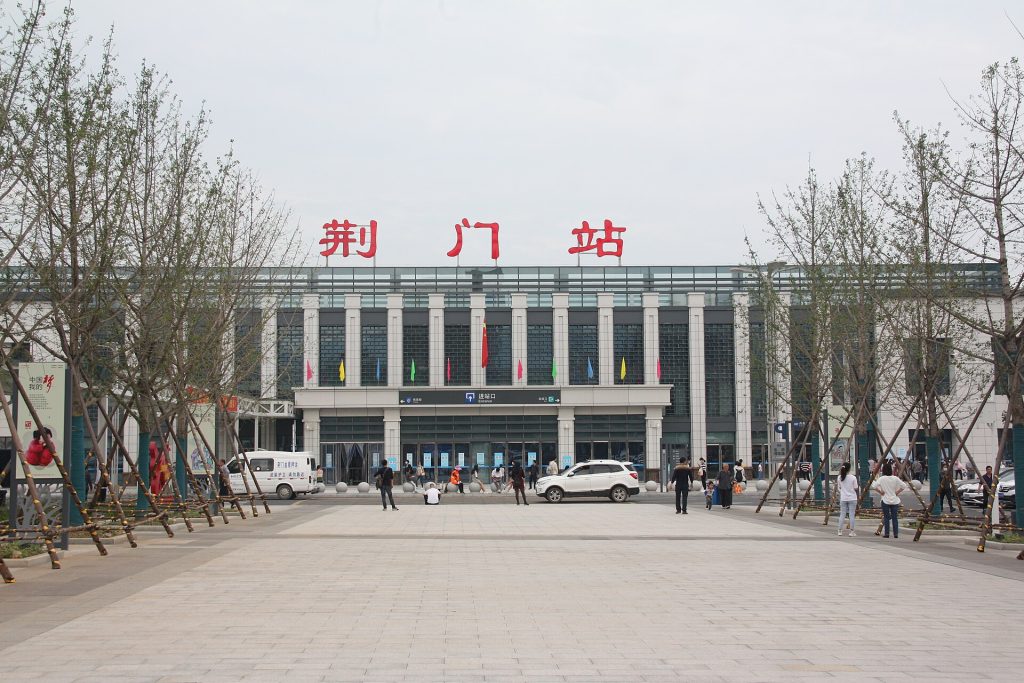
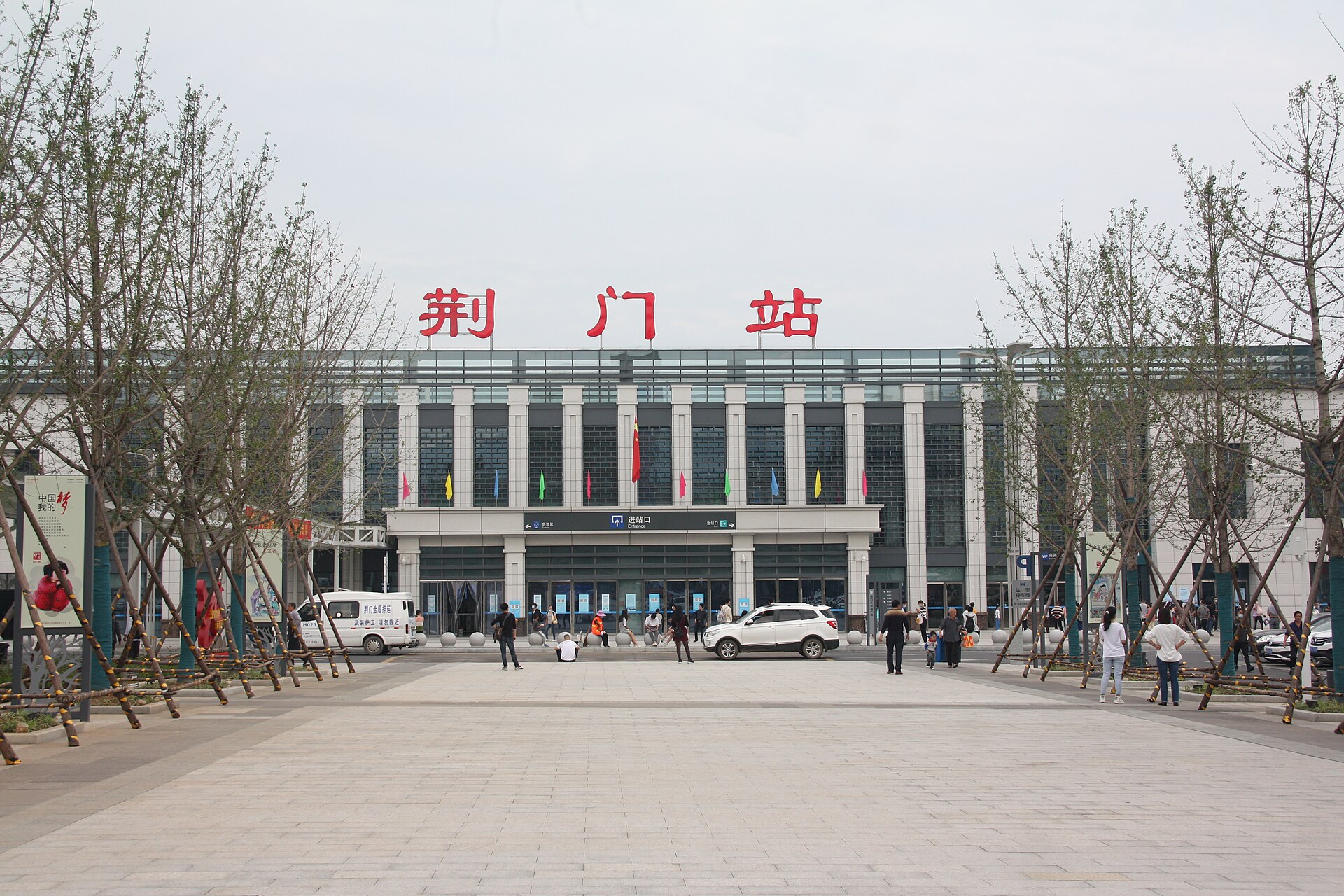
The bus from Wuhan deposits you at the south station just as the morning fog lifts off the Han River plain. A vendor on the forecourt is already flipping reganmian in a blackened wok, the sesame paste smoking where it hits the iron. You eat standing, noodles slick with chili oil, watching commuters on electric bikes thread through the exhaust. This is Jingmen: a working city that keeps its Chu dynasty bones buried under concrete and construction cranes.
Getting Oriented
The urban core sits in a basin ringed by low mountains. Two main arteries — Xiangshan Avenue running east-west and Jingmen Avenue north-south — cut a grid that is easy to read on a phone map. Most sights cluster in three zones: the Zhanghe reservoir corridor to the north, the Dahong Mountain foothills to the south, and the Ming tomb complex out west near Zhongxiang county town. Buses numbered 1 through 30 cover the center; anything above 100 heads to the scenic areas. Taxis start around eight yuan and rarely exceed thirty for cross-town trips. Download the local ride-hailing app — DiDi works, but the Hubei-specific “E-Xing” often has shorter waits near the high-speed rail station.
Zhanghe Scenic Area: Water and Stone
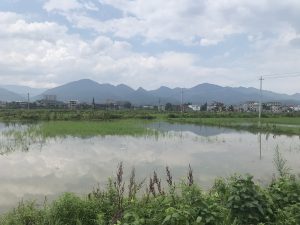
Forty minutes north by car, the Zhanghe dam spreads a finger lake across the valley. The main loop road hugs the shore for twenty kilometers. Weekday mornings are quiet; you share the viewing platforms with retirees practicing tai chi and photographers waiting for kingfishers. The “Three Gorges of Zhanghe” speedboat run departs from the south wharf every hour on the half-hour — forty minutes of wind and limestone cliffs that turn gold at sunset. If you prefer your own pace, rent a paddleboard from the kiosk near the east gate; a deposit of two hundred yuan and an ID card gets you two hours. Bring water and a hat; shade is scarce on the water.
- Entry: 60 yuan for the park gate; boat tickets sold separately.
- Best light: late autumn, when the maples on the peninsula burn red against the blue.
- Food stop: the farmhouse restaurant at Zhanghe Village serves whole stewed carp with pickled mustard greens — order it “la zi” if you want the dried chilies whole.
Dahong Mountain: Steps into Cloud
South of the city, the Dahong range rises in folded ridges. The main trailhead at the tourist center has a cable car, but the real walk begins where the gondola drops you: a stone stairway of 3,600 steps climbing through bamboo, then mixed deciduous forest, then alpine meadow. In spring the rhododendrons bloom in corridors of pink and white; in winter the summit often wears a cap of rime ice. Allow four hours up, three down if your knees hold. There are no toilets past the halfway pavilion — use the one at the cable-car station. Vendors at the top sell vacuum-packed bamboo shoots and hot corn on the cob; the corn is sweet, the shoots chewy and salty.
- Gear: light hiking shoes, a wind shell, two liters of water.
- Timing: first cable car at 8:00 a.m.; last descent at 5:30 p.m. (earlier in winter).
- Shortcut: a minibus runs from the tourist center to the mid-mountain temple — saves the first 800 steps.
Xianling Mausoleum: Silent Guardians
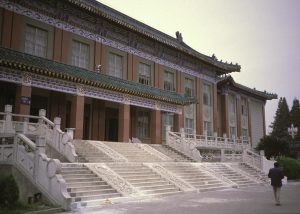
West toward Zhongxiang, the Ming emperor’s parents sleep under a tumulus the size of a hill. The approach is a spirit way lined with stone beasts — qilin, xiezhi, horses — each carved from a single block of gray-white sandstone. Moss softens the edges; lichen maps the centuries in green and orange. The underground palace is closed to visitors, but the surface halls display excavated gold belts, jade pendants, and a copper boiler still bearing the foundry mark of the Nanjing arsenal. Few tour groups come this far; you can stand in the main courtyard and hear only wind in the cypresses. The site museum has English captions on the major pieces. Buy the combined ticket at the gate; it includes the small exhibition hall across the parking lot where a reconstructed chariot shows how the bronze fittings clicked together.
- Hours: 8:30 a.m. to 5:00 p.m., last entry 4:15.
- Transport: bus 202 from Jingmen west station to Zhongxiang, then a local taxi ten minutes.
- Etiquette: no flash photography in the relic hall; speak low — this is still an ancestral worship site for some families.
Eating Like a Local
Jingmen’s palate runs salty, spicy, and heavy on river fish. The signature dish is menmian — thick wheat noodles braised in dark soy, pork fat, and a spoonful of fermented bean paste until the sauce clings like lacquer. A proper bowl arrives with a tangle of blanched bean sprouts, a few shards of pickled radish, and a slick of chili oil you stir in yourself. Beef versions use shank simmered until the tendon melts; the broth is opaque, collagen-rich. Fish cakes (yutuan) are pounded silver carp mixed with egg white and starch, steamed in bamboo trays, then pan-fried to a golden crust. Order them “qing chao” — quick-stirred with garlic chives — or dropped into a clear soup with winter melon slices.
- Breakfast hunt: follow the steam to any alley stall selling hutang fen — thick rice noodles in peppery pork broth topped with fried dough sticks.
- Night market: the stretch behind the People’s Hospital lights up after 7 p.m. with skewers (lamb, lotus root, tofu skin), grilled oysters brushed with garlic paste, and bowls of snail rice noodles from Liuzhou transplants.
- Vegetarian trap: many “vegetable” dishes are seasoned with dried shrimp or lard. Say “wu rou, wu hai xian, wu la you” — no meat, no seafood, no chili oil — and confirm twice.
Seasonal Rhythms and Local Expectations
Spring arrives with the Qingming rains; the hills turn emerald and the reservoir swells. This is when families drive out for tomb-sweeping picnics — you will see entire clans spreading plastic cloths beside the Zhanghe shore, burning paper money, sharing cold chicken and baijiu. Summer brings thunderstorms that flash-flood the mountain roads; check the weather app before heading to Dahong. The Mid-Autumn Festival in the eighth lunar month fills the city parks with lantern riddles and mooncake boxes exchanged between colleagues. Winter is dry and sharp; the best hotpot in town is a copper pot of beef tripe, lotus root, and hand-pulled noodles simmered at the table — find it in the courtyard restaurant behind the old supply-and-marketing cooperative building on Jiefang Road.
Locals move at a different clock. Shops shutter for a long lunch between 12 and 2; government offices close on the dot at 5. If you need a bank or a SIM card, go before noon. English is rare outside the high-speed rail station and the two international-brand hotels. Carry a screenshot of your destination in Chinese characters. When a stranger offers you a sip from their thermos — usually tea, sometimes baijiu — accept with two hands. It is not a hazard; it is how the city says welcome.
Common Missteps
- Assuming the high-speed station (Jingmen West) is walkable to downtown — it is a twenty-minute taxi ride across the ring road.
- Buying “Chu culture” souvenirs at the scenic-area gates; the better lacquerware and bronze replicas are in the antique lane behind the municipal museum.
- Skipping the reservoir because “it is just a lake” — the limestone karst here is older than the Three Gorges and far less crowded.
- Ordering “mild” in a restaurant; the kitchen hears “no chili” and still ladles in the fermented bean paste, which carries its own heat.
- Leaving without a bag of Zhanghe lotus root powder — mix it with boiling water for a translucent, sweet gel that travels well in a suitcase.