The bus from Kashgar pulls into the station just as the morning light hits the poplar rows along the river. Dust swirls around the tires. A vendor taps on the window with a bag of warm nan, the sesame seeds catching the sun. You step down onto pavement that has felt the weight of camel caravans, Soviet trucks, and now the electric hum of three-wheelers. This is Khotan, where the desert meets the oasis and the past is not behind glass but baked into the mud walls.
Arriving Without a Schedule
Flights from Urumqi land at the airport south of town, a low building where the baggage claim is a conveyor belt powered by a single motor. Taxis wait in a loose semicircle. Drivers do not use the meter for the run into the city; they quote a per-seat price, usually twenty or thirty yuan, and wait until the car fills. If you are traveling light, bus number nine stops across the highway, past the irrigation canal. The stop has no shelter, just a sign faded by UV. In the terminal there is nothing to buy but water from a dispenser. A convenience store sits on the far side of the road, and sometimes a cart sells steamed buns from a steel cabinet.
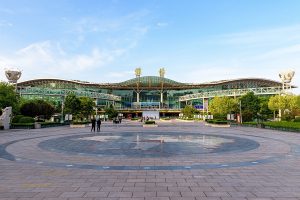
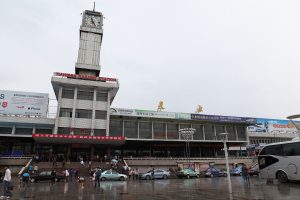
The train from Kashgar follows the desert’s edge, the tracks laid on gravel that shifts in the wind. The ride takes about three hours. The station sits on the western fringe, a modern hall that feels oversized for the current traffic. Taxis and shared vans cluster at the forecourt. Negotiate the fare before the engine starts; a ride to the central bazaar area should cost roughly the same as the airport run.
Moving Through the Oasis
Khotan spreads along the Yurungkash River. The old town hugs the water; the new grid stretches north toward the highway. Buses numbered one through twenty-something link the main arteries. They are cheap, crowded at shift change, and the route maps are posted only in Chinese. If you cannot read the characters, ask the driver for the stop nearest your destination — he will nod and shout when you arrive.
Three-wheel electric rickshaws are the real circulatory system. Flag one down on any corner. Agree on a price before you sit; five to ten yuan covers most hops within the core. Drivers know every alley, every workshop gate, every restaurant back door. At night they cluster near the night market, headlights cutting through the smoke of kebab grills.
Bicycles can be rented from shops near the main park. The terrain is flat, the traffic chaotic but predictable once you learn the rhythm: stay right, signal with your hand, never assume a car sees you. A bike lets you follow the irrigation ditches to the edge of the sand, where the green stops abruptly and the dunes begin.
The Jade River and the Sunday Market
Early morning, before the heat settles, walk to the Yurungkash. Locals call it the White Jade River. Men in rubber boots wade knee-deep, sluicing gravel through wooden screens. They are hunting nephrite, the creamy stone that made this oasis famous. You can join them. The water is cold, the stones slippery. Most finds are palm-sized, milky white with a waxy luster. A vendor on the bank will weigh a piece in his hand and name a price. Haggling is expected. Start at half.
Sunday transforms the square near the Id Kah-style mosque into a river of people. The market starts at dawn. By mid-morning the lanes are impassable. Stalls sell everything: bolts of atlas silk with the traditional ikat patterns, dried apricots stacked in pyramids, copper teapots hammered by hand, live chickens in woven crates, piles of cumin and red chili flakes. Food vendors steam manty in tiered pots, the dough thin as paper, the filling juicy with mutton and onion. Eat standing, using your fingers. Wipe your hands on the napkin provided. No one rushes.
Yotkan: The Buried Capital
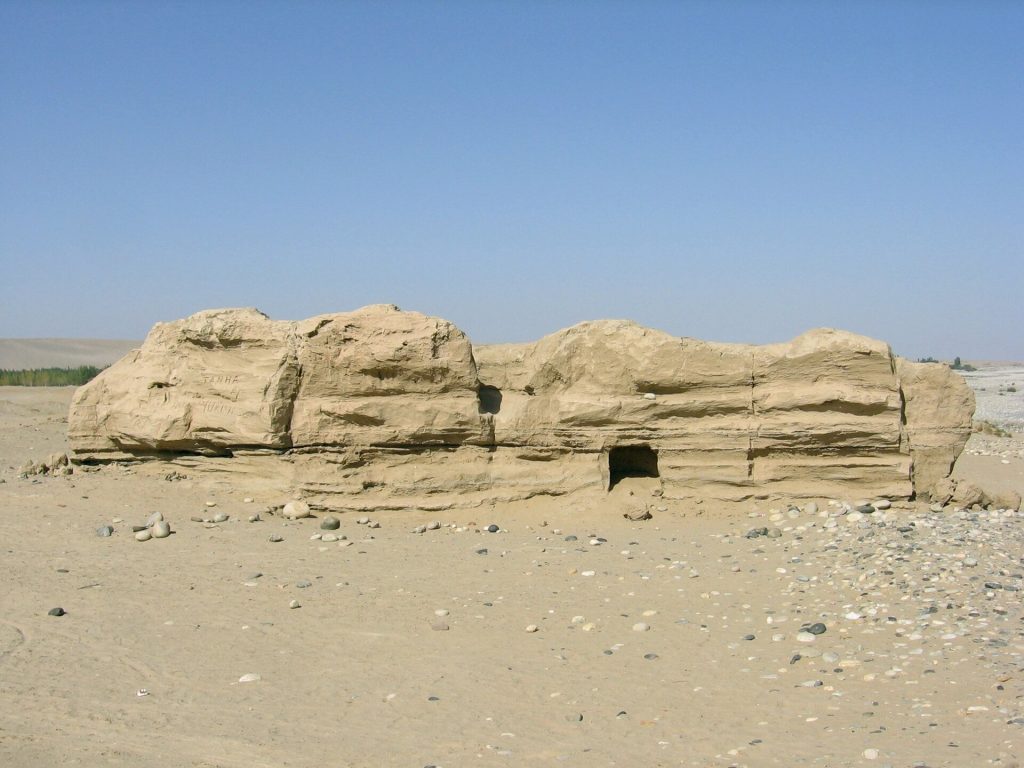
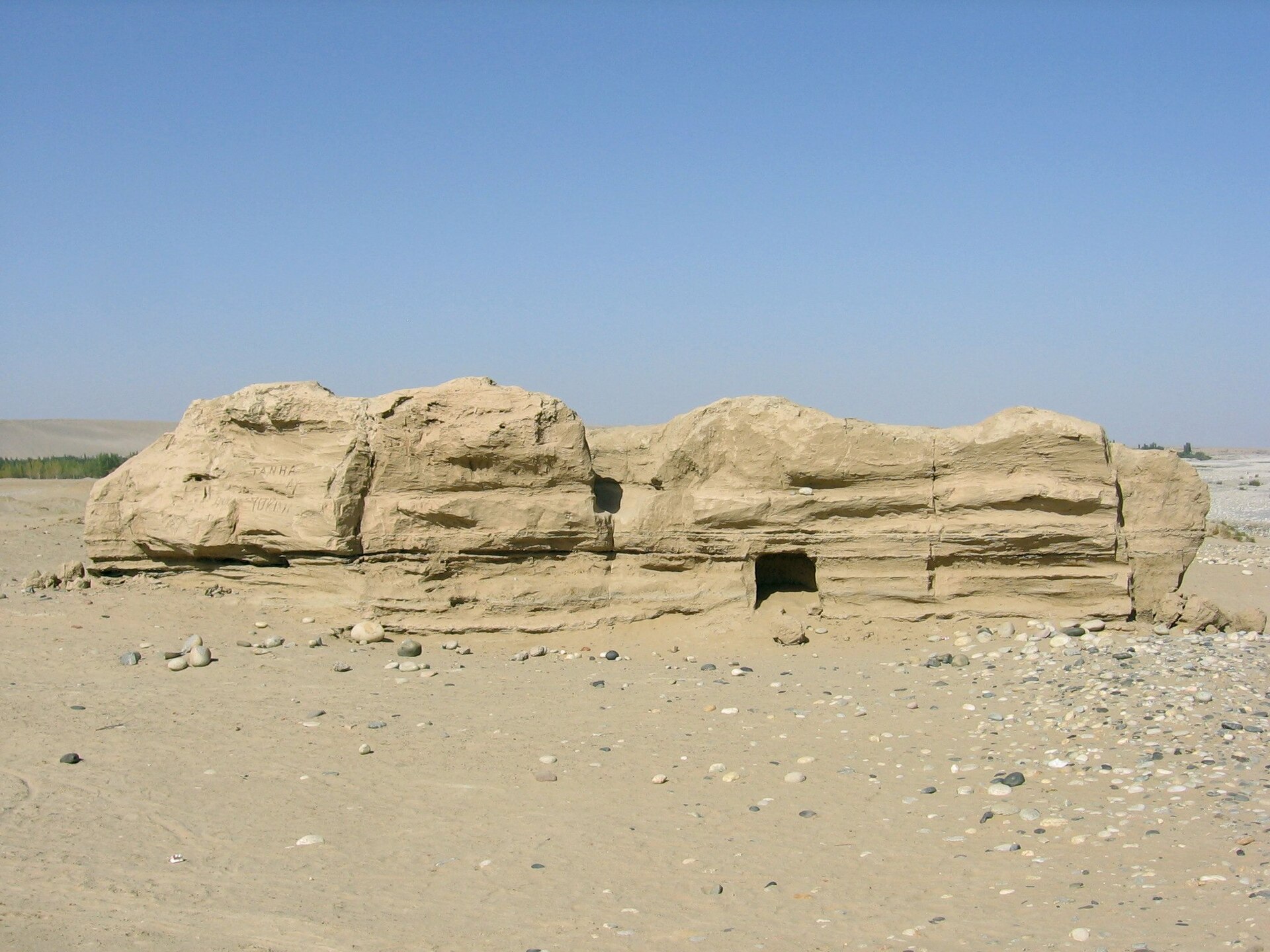
Ten kilometers west, the fields give way to mounds. This is Yotkan, the ancient seat of the Khotan kingdom. No grand arches remain, only the humps of rammed earth and the occasional shard of pottery surfacing after rain. A small museum at the site entrance displays a few Buddha heads, coins with Kharosthi script, and fragments of wall painting — lotus petals, flying apsaras, donors in Central Asian dress. The real exhibit is the ground itself. Walk the perimeter path. In the spring, wild tulips push through the saline soil. In autumn, the cotton harvest turns the surrounding flats white. Bring water. There is no shade.
A taxi from the city center costs about fifty yuan round trip if you ask the driver to wait an hour. Or take bus number twenty-one to the last stop and walk the final kilometer along the canal road. The site closes at dusk. The guard locks the gate and rides off on a motorcycle.
Workshops Behind Closed Gates
Khotan’s reputation rests on silk, carpet, and jade. The factories are not on the tourist map. They are in courtyard compounds down lanes too narrow for tour buses. Ask your guesthouse owner to call ahead. A family running a silk workshop will unroll bolts of khan atlas, the “khan’s silk,” the warp threads dyed before weaving so the pattern bleeds at the edges. They will show you the loom, the shuttle flying, the rhythm unchanged for centuries. You can buy a length off the loom. The price is lower than the shop in the bazaar, and the money stays in the household.
Carpet workshops operate similarly. Women sit at vertical looms, fingers tying knots by feel. The designs — pomegranate, ram’s horn, cloud band — carry names in Uyghur. A six-by-nine-foot rug takes months. If you commission one, leave a deposit and a shipping address. The workshop will roll it, wrap it in burlap, and send it by freight. Do not expect a tracking number. It arrives when it arrives.