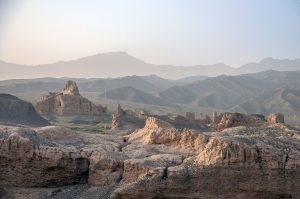
The minibus lurches around a hairpin bend above the Hongshui River, and the driver leans on the horn to warn a water buffalo ambling along the shoulder. Below, the water runs the color of strong tea, cut by the white wakes of long-tailed cargo boats. Ahead, the karst peaks of Jinxiu rise like broken teeth against a low sky, their flanks patched with terraced rice paddies that climb until they vanish into cloud. This is the way into Laibin — not a destination you tick off, but a corridor you move through, where the Yao villages cling to ridges and the Zhuang market towns spread along the river bends.
Getting There and Moving On
The Xianggui railway slices through the city from north to south, so the overnight sleeper from Guilin deposits you in Xingbin District before dawn. High-speed services from Nanning take just over an hour, but the older conventional trains still stop at every county seat — Xiangzhou, Wuxuan, Xincheng — which is useful if your destination is a village rather than a station. From the main station forecourt, minibuses leave when full for Jinxiu Yao Autonomous County, a two-hour climb into cooler air. If you prefer wheels under your own control, the G72 expressway runs parallel to the tracks; exit at Laibin North for the city center, or stay on toward Hechi for the mountain counties. Shared rides to the Lotus Mountain trailhead gather at the Jinxiu bus station parking lot around midmorning.
Where to Sleep: River Towns and Ridge Villages
In Xingbin, the business hotels cluster near the railway station and the Hongshui River bridge — clean rooms, hot water, and a downstairs restaurant that serves snail rice noodles until midnight. For something quieter, cross the river to the older quarter where guesthouses occupy renovated shophouses with wooden shutters and tiled courtyards. In Jinxiu, the county town has a handful of three-star places, but the real experience is a family homestay in a Yao village such as Dazhai or Shibajia. You sleep on a hardwood bed under a mosquito net, wake to the sound of a pestle pounding tea, and eat breakfast around a fire pit. Bring cash; few mountain hosts accept mobile payment. In Wuxuan, the hot-spring resorts along the river cater to weekenders from Nanning — book a private pool if you want to avoid the communal tubs.
Eating: River Fish, Mountain Greens, and Oil Tea
Food in Laibin follows the water and the altitude. Down in the valleys, the Zhuang specialize in sour flavors — pickled bamboo shoots, fermented beans, and the sharp kick of suan ye, a broth made from wild tomatoes and river fish. Up in the Yao hills, the palate turns smoky and bitter. The signature dish is youcha, oil tea: puffed rice, fried peanuts, chopped scallions, and cured pork swirled into a bowl of pounded tea leaves and hot water. You drink it with a bamboo spoon, slurping the solids last. Another staple is five-color sticky rice, dyed with maple, gardenia, turmeric, and purple plant juices, served in a wooden trough at festival tables.
- Oil tea (youcha) — home method: Pound fresh tea leaves with ginger and garlic in a stone mortar until fragrant. Heat oil in a wok, fry the paste, add water and simmer ten minutes. Strain into bowls over puffed rice, peanuts, scallions, and diced cured pork.
- Sour fish soup — restaurant order: Ask for “suan tang yu” with wild river carp, pickled bamboo, tomato, and perilla leaves. The broth should be clear, not cloudy, and the fish added at the last minute so it stays tender.
- Five-color sticky rice — festival style: Soak glutinous rice overnight in four natural dyes plus one plain batch. Steam each color separately, then layer in a wooden mold. Unmold onto banana leaves and serve with roasted soy flour.
Beginners order the tourist set menu at the highway stop — sweetened pork ribs, overcooked greens, and a bottle of warm beer. Skip it. Walk toward the market where the stools are low and the menus are handwritten on red paper. Point to the bowl the old man beside you is eating.
Walking the Ridges: Lotus Mountain and Cathedral Mountain
Lotus Mountain (Lianhua Shan) rises behind Jinxiu town, its summit a flat plateau ringed by sheer cliffs. The pilgrim path starts at the stone archway beside the bus station — 3,600 steps, they say, though nobody counts. You pass a chain of small temples, each with a censer blackened by incense, and a spring where pilgrims fill plastic bottles. The final stair is a narrow cleft in the rock; at the top, the wind carries the sound of bronze bells from the main hall. On a clear morning you can see the Hongshui River looping like a silver ribbon through the karst forest. Cathedral Mountain (Tangwang Shan) is steeper, less visited, and the trailhead is an unmarked dirt pull-off on the county road. A local guide is essential — the path follows a ridge that drops vertically on both sides. Yao porters carry supplies up in bamboo baskets; hire one at the village below and pay double the going rate. He will show you the cave where medicinal herbs are dried and the cliff face where ancestors carved niches for coffins.
Market Days and Festival Rhythms
The Zhuang towns run on a twelve-day market cycle. In Xincheng, the mulberry and silkworm market falls on the third and ninth days of each lunar month — women in indigo headscarves unload baskets of cocoons, men bargain over looms, and the air smells of boiled silk. In Xiangzhou, the Buddha melon market peaks in late summer; the fruit is pale green, knobbly, and sweet as honeydew. For the Yao, the Panwang Festival arrives in the tenth lunar month, usually after the rice harvest. Villages slaughter pigs, brew vats of rice wine, and dance the long-drum through the night. Outsiders are welcome at the communal feast, but you must accept the first cup of wine offered by the village elder — refusing is an insult. The Singing Festival in the third lunar month draws crowds to the riverbanks where young men and women exchange antiphonal songs across the water. If you are invited to join a circle, clap the rhythm and listen; do not improvise lyrics unless you know the dialect.
Practical Missteps and How to Avoid Them
First-time visitors often treat Laibin as a day trip from Guilin or Nanning. The distances on the map look short, but mountain roads eat time — allow a full day just to reach Jinxiu and return. Another mistake is assuming Mandarin works everywhere. In the high villages, Yao and Zhuang are the daily languages; learn a few greetings: “hao” for yes, “m hai” for thank you in Yao, and “gyaiz” for good in Zhuang. Carry small denominations of cash — fifty and twenty yuan notes — because vendors in mountain markets rarely have change for a hundred. Pack a lightweight rain shell even in the dry season; the peaks generate their own showers. Finally, do not photograph altars, coffins, or ritual objects without explicit permission. A nod and a raised camera is not consent. Ask the host, wait for the verbal yes, and lower the lens if they hesitate.
Sample Three-Day Loop
Arrive on the morning train, drop bags in a Xingbin courtyard guesthouse, and walk the old streets to the river market for sour fish soup. Afternoon bus to Jinxiu, check into a Yao homestay in Dazhai, and hike the lower slopes of Lotus Mountain before dark. Rise before dawn for the full summit climb, descend by noon for oil tea and five-color rice. Afternoon minibus to Wuxuan, soak in a private hot-spring pool, and eat grilled river fish at a riverside stall. Morning train back to Nanning or Guilin, with a stop in Xincheng if the mulberry market day aligns — buy a spool of raw silk and a jar of fermented bean paste to carry home.