The train slows on the approach to Liaoyang station, and through the window the Grey Tower rises above a clutter of tile roofs and poplar trees. Steam from a platform vendor’s corn cobs mixes with the smell of coal smoke from the heating plant. An elderly man in a Mao cap lifts his thermos in greeting. This is not a city that performs for tourists; it simply goes on living atop two millennia of walls, battles, and reinvention.
Reading the Map Before You Move
Liaoyang sits in the central plain of Liaoning, roughly an hour south of Shenyang by high‑speed rail and forty minutes north of Anshan. The old core clusters around the intersection of Zhonghua Road and Gongnong Road, where the Grey Tower anchors a pedestrian square. Most historic sites lie within a two‑kilometre radius of that square, so a comfortable pair of shoes replaces the need for constant taxi hops. The newer industrial districts stretch east toward the Taizi River; they matter if you are visiting factories, but they add little to a short stay.
Arriving Without a Fuss
High‑speed trains from Shenyang North, Dalian, and Panjin pull into Liaoyang Railway Station on the western edge of the centre. A taxi ride to the Grey Tower area costs about the price of a bowl of beef noodles and takes ten minutes in light traffic. Long‑distance buses from Shenyang’s Huanggu terminal drop passengers at the South Bus Station, a short walk from the White Tower Park. If you drive, the Shen‑Da Expressway exits directly onto Zhonghua Road; parking is easiest in the underground lot beneath the Wanda Plaza mall, then walk north into the historic zone.
Walking the Layers of History
Start at the Grey Tower (Guangyou Temple Pagoda), a thirteen‑storey Liao‑dynasty brick tower that has survived earthquakes, artillery, and the Cultural Revolution. Climb the internal staircase if the gatekeeper allows it; the view frames the old city’s checkerboard streets against distant cooling towers. Two blocks west, the White Tower (Baita) stands in a quiet park where retirees practice sword forms at dawn. Its base holds a small exhibition of Liao‑era ceramics — green‑glazed jars, rust‑spotted bowls — labelled only in Chinese, so bring a translation app.
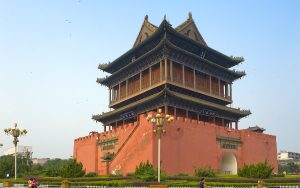
From the White Tower, follow the remnant city‑wall park southward. The reconstructed gate at Dongjing Old City marks where Nurhachi’s short‑lived capital once stood. Only foundation stones and a section of rammed‑earth wall remain, but the signage explains the 1621 palace layout: nine courtyards, a throne hall, and a drum tower aligned on a north‑south axis. Across the street, the Liaoyang Museum occupies a 1950s Soviet‑style building. Its star pieces are a gilt‑bronze Buddhist canopy from the Northern Wei and a collection of Russo‑Japanese War shell casings dug from the 1904 battlefield just outside the east gate. Allow ninety minutes.
If the season is right — late spring or early autumn — hire a shared electric bike near the museum and ride ten kilometres east to the Dongjingling Battlefield Memorial. Stone markers trace the trenches where Russian and Japanese artillery dueled for two weeks. The site is solemn, wind‑blown, and almost empty on weekdays. Bring water; the nearest shop is back at the highway junction.
Eating Where the Locals Queue
Liaoyang’s cuisine leans salty, garlicky, and heavy on cabbage, pork, and hand‑pulled noodles. The most honest meals happen in the alley behind the Grey Tower, where steam rises from three generations of the same family kitchen.
Suancai Dun Fen (Pickled Cabbage Stew with Glass Noodles) — fermented napa cabbage, fatty pork belly, sweet‑potato vermicelli, dried chilli, and a splash of aged vinegar simmered in a clay pot until the noodles turn translucent.
Gao Gan Mian (High‑Rod Noodles) — alkaline wheat noodles bounced on a bamboo pole, topped with minced pork, cucumber ribbons, bean sprouts, and a spoonful of sesame‑peanut sauce.
Zha Ji Bing (Fried Chicken Pancake) — shredded chicken, scallion, and egg folded inside a thin wheat wrapper, pan‑fried until the edges lace brown.
Liangfen (Mung‑Bean Jelly) — served cold with garlic water, chilli oil, vinegar, and crushed peanuts; a lunchtime staple when the summer heat presses down.
Order by pointing at the pot or the picture menu taped to the wall. A bowl of noodles and a side of pickled vegetables rarely exceeds thirty yuan. Pay at the counter after eating; tipping is not expected.
Sleeping in the Old Grid
Mid‑range chains — Jinjiang Inn, 7 Days, Hanting — cluster around the railway station and Wanda Plaza. Rooms are clean, quiet, and priced for domestic business travellers. For atmosphere, book a courtyard guesthouse in the lanes north of the Grey Tower. The host will likely be a retired teacher who brews tieguanyin in a gaiwan and knows which wall section still shows Ming‑era brick stamps. Expect a firm kang bed heated by a pipe from the communal boiler; the heat clicks on after the autumn equinox and runs until the spring equinox. Bathrooms are shared but scrubbed each morning. Rates hover around two hundred yuan, cash preferred.
Seasonal Rhythms and Festival Pauses
Winter arrives early. By the tenth lunar month the Taizi River develops a skin of ice thick enough for locals to drive motorcycles across. The city slows during the Spring Festival week; museums close, restaurants shutter, and the only open stalls sell dumpling wrappers and firecrackers. Plan around the Lantern Festival (fifteenth day of the first lunar month) when the Grey Tower square hosts a riddle‑lantern night — students, grandparents, and migrant workers all guessing characters written on red paper. Summer brings the Peony Fair at White Tower Park in the fourth lunar month; the blooms are spectacular, but hotel prices double. Autumn, especially the ninth lunar month, offers crisp air, empty paths at the battlefield site, and the best light for photographing the towers.
What Newcomers Get Wrong
First, assuming English signage exists beyond the museum lobby. It does not. Download offline Chinese maps and a photo‑translation tool before you leave the hotel. Second, treating the city as a day trip from Shenyang. The towers deserve morning light and evening shadow; the alley food demands an unhurried lunch. Third, skipping the battlefield because it looks like empty fields. The silence there is the exhibit. Fourth, expecting nightlife. After nine the streets belong to dog walkers and street‑sweeper trucks. Finally, forgetting cash. Many family restaurants and guesthouses still operate without QR codes. Carry small denominations; a hundred‑yuan note can stall a transaction for ten minutes while the owner hunts change.
Leaving Without Regret
On the last morning, walk the city‑wall park at sunrise. Elderly men fly kites shaped like centipedes, their strings humming against the wind. Buy a final bowl of liangfen from the cart near the south gate — cold, sharp, peanut‑crunchy. The train whistle sounds from the station. You board carrying the taste of fermented cabbage and the memory of a thirteen‑storey brick spine that has watched empires rise, burn, and fade, yet still casts its shadow over a living neighbourhood.