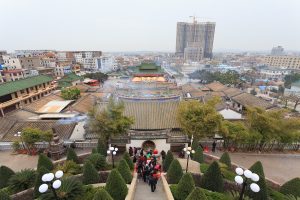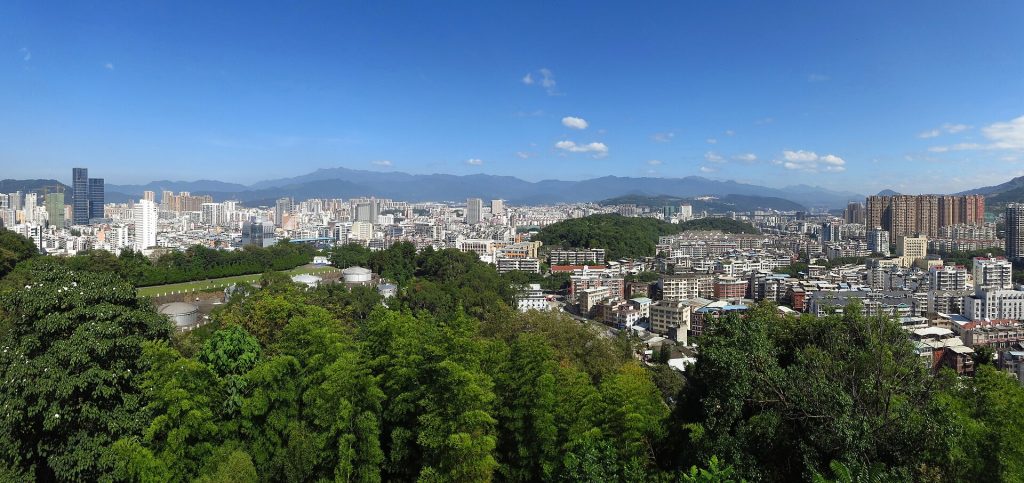
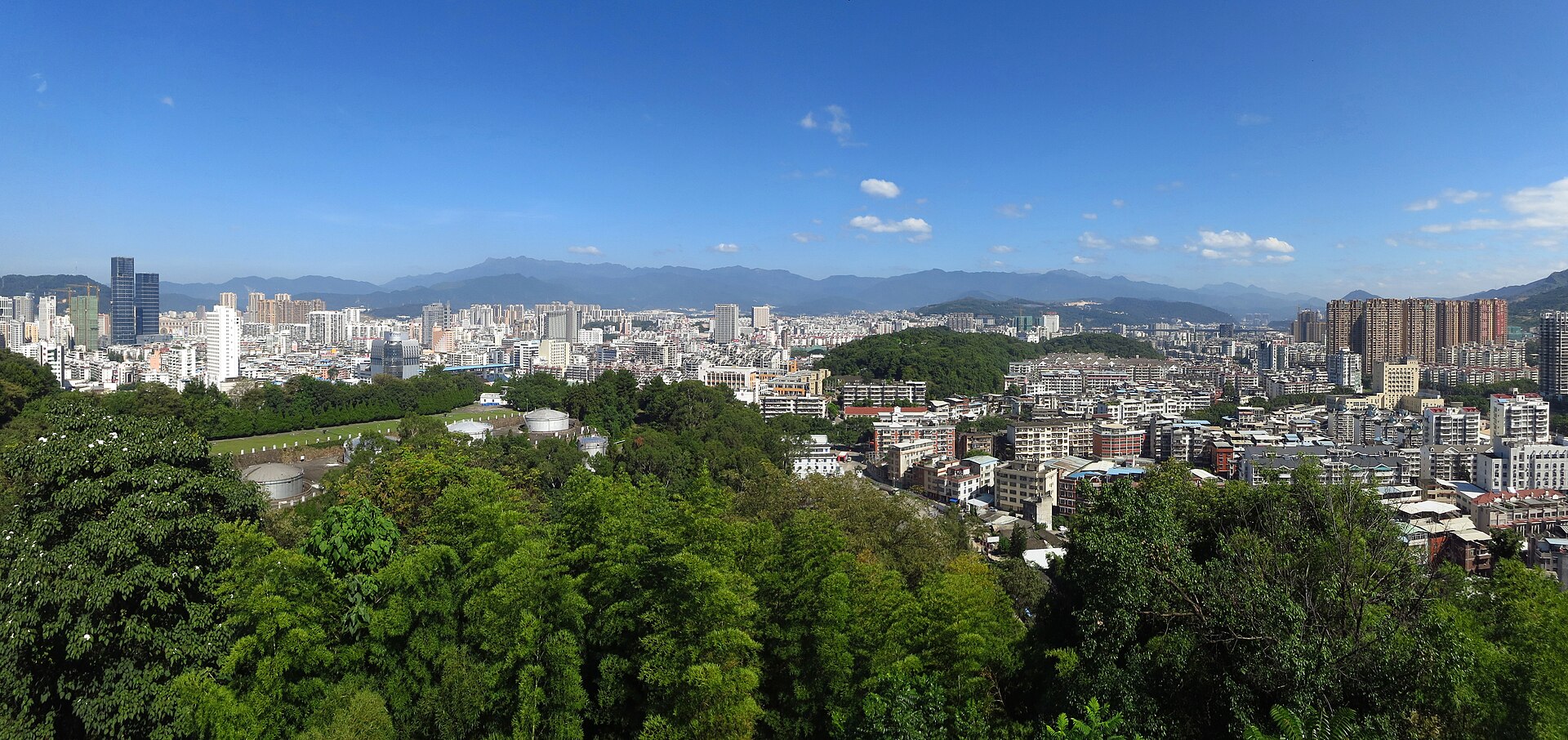
The minibus shudders to a halt on a side street in Xinluo District, the diesel engine coughing as the driver kills the ignition. Steam rises from a row of bamboo steamers at a noodle stall across the lane, mixing with the scent of fermented bean paste and wood smoke. An elderly woman in a floral apron waves a pair of chopsticks, motioning for passengers to eat before the next departure. There is no English signage, no tourist information kiosk, just the rhythm of a city that moves to its own inland clock.
Getting There Without a Tour Bus
Longyan sits off the main tourist radar, which means the transport links are functional rather than polished. The Guanzhishan Airport in Liancheng County handles flights from a handful of major hubs — Shanghai, Chengdu, Kunming — but the schedule is thin. A shuttle bus connects the terminal to the city center in about forty minutes; have small bills ready for the fare. The high-speed rail station is newer and more convenient for most travelers. Trains from Xiamen take roughly two hours, from Fuzhou about three, and the overnight sleeper from Shenzhen pulls in just after dawn. Taxis queue outside the station, but drivers rarely speak Mandarin clearly, let alone English. Screenshot your destination in Chinese characters before you land.
Where to Sleep: Hakka Courtyards and Business Hotels
In Xinluo, the options cluster around the railway station and the older commercial streets near the river. Chain hotels — Jinjiang, GreenTree — offer clean rooms and reliable hot water, the safe bet for a single night. For something with texture, look for a guesthouse converted from a traditional Hakka tulou or a courtyard house in the older lanes of Peitian or Zhuangkou villages, usually a short drive from the urban core. These places rarely appear on international booking platforms. Call the owner directly via WeChat or ask a local contact to reserve. Expect a firm mattress, a squat toilet in some older rooms, and breakfast served family-style: steamed buns, pickled mustard greens, and a bowl of rice porridge.
Eating: Peanut Soup, Paper-Wrapped Chicken, and the Night Market
Longyan food is Hakka food: salty, oily, preserved for the long haul. The signature dish arrives in a clay pot — huang ji, paper-wrapped chicken. The bird is marinated in rice wine, ginger, and soy, wrapped in lotus leaf or parchment, then slow-baked until the meat falls off the bone and the paper chars at the edges. You tear it open at the table, steam hitting your face, the aroma sweet and herbal. Another staple is hua sheng tang, peanut soup. Raw peanuts are pounded into a paste, simmered with rock sugar and a splash of ginger juice until the liquid turns opaque and velvety. Drink it hot in winter, chilled with ice shavings in summer.
- Paper-wrapped chicken (纸包鸡): Whole chicken, rice wine, ginger slices, scallions, soy sauce, lotus leaf or baking parchment. Marinate two hours. Wrap tight. Bake at 180°C for fifty minutes.
- Peanut soup (花生糊): Raw peanuts (skin on), rock sugar, fresh ginger, water. Blend peanuts with water to a slurry. Simmer thirty minutes, stirring constantly. Add sugar and ginger juice at the end.
- Hakka stuffed tofu (客家酿豆腐): Firm tofu blocks, minced pork, chopped shiitake, soy sauce, white pepper. Hollow tofu. Stuff with meat mix. Pan-fry until golden. Braise in light broth ten minutes.
- Stir-fried river snails (炒田螺): Fresh snails, perilla leaves, garlic, chili, fermented black beans. Scrub snails. Flash-fry aromatics. Add snails, splash of beer, cover and steam three minutes. Finish with perilla.
After dark, head to the night market near the old bus station. Plastic stools line the alley. Order a bowl of ban mian — flat rice noodles in a broth thick with dried shrimp, pork bone, and a spoonful of chili oil. Watch the vendor pull the dough by hand, slap it on the board, slice ribbons straight into boiling water. Mistakes beginners make: asking for “less oil” (the flavor lives in the fat), skipping the fermented bean paste on the side, or expecting a menu with pictures. Point at a neighbor’s bowl. Nod. Pay when you finish.
Day Trips: Earth Towers and Mountain Temples
Most visitors use Longyan as a base for Yongding and Nanjing tulou clusters. The Hongkeng cluster in Yongding is the most accessible — a ninety-minute drive on the expressway. Hire a driver for the day; public buses run infrequently and stop at every village. Start early, before the tour groups from Xiamen arrive mid-morning. Walk the ring corridor of Zhencheng Lou, count the generations listed on the ancestral tablets in the central hall. In Nanjing county, the Tianluokeng “Four Dishes and One Soup” cluster sits in a valley; the viewing platform requires a steep climb up stone steps, but the angle shows all five towers framed by tea terraces.
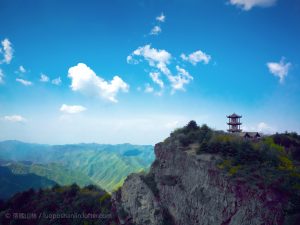
If you have a second day, push west to Guanzhai Mountain (Guanzhishan) in Liancheng. The Danxia landforms — red sandstone cliffs, narrow slot canyons — are quieter than the famous Zhangjiajie peaks. A cable car hauls you to the main ridge; from there, a plank road clings to the cliff face. Monkeys watch from the pines. Bring water and a windbreaker; the temperature drops fast after the autumn equinox. The mountain temples are active — monks chant in the morning, incense curls from the courtyard burners. Remove your hat. Speak low. Do not step on the threshold.
Culture and Etiquette: What Locals Expect
Hakka hospitality is generous but structured. If you are invited into a family home — common if you stay in a village guesthouse — you will be seated at the head of the table. The host serves you first, piling your bowl with the best pieces of meat. Refusing is impolite; eat what you can, leave a little to show you are satisfied. Tea is poured for elders before juniors. When receiving a cup, tap two fingers on the table — a silent thank you. Shoes come off at the door of any home or temple. In the tulou, the central courtyard is sacred space; do not smoke or shout there. During the winter solstice or the Double Ninth Festival, families gather for ancestor rites. If you stumble upon one, stand back, watch, do not photograph without a nod from the eldest man present.
Language is the wall. Mandarin works in hotels and stations, but in villages the dialect is thick Hakka. Learn three phrases: m̀-goi (thank you), m̀-sāi (excuse me), hó-chī (delicious). Write your destination and hotel address in characters. Carry a small notebook; drawing a map works better than translation apps when the signal dies in the mountains. Cash is king in rural areas — small denominations of red hundred-yuan notes. Mobile pay works in the city, but the QR code sticker on the noodle stall may be faded or missing.
Common Missteps and How to Avoid Them
First-time visitors often treat Longyan as a day trip from Xiamen. It is not. The tulou clusters deserve a full day each, and the mountain roads eat time. Another error: assuming the “ancient town” label means a preserved museum. Changting and Liancheng have old streets, but people live there — laundry hangs over the lanes, motorbikes squeeze through the arches. Respect the residents. Do not peer into open doors. Do not fly drones over the tulou without permission; the fine is steep and the noise disturbs the elders. Finally, do not expect nightlife. The city rolls up the sidewalks by ten. If you want a drink, buy a bottle of local rice wine from a corner shop and share it on your guesthouse balcony, listening to the frogs in the rice paddies.