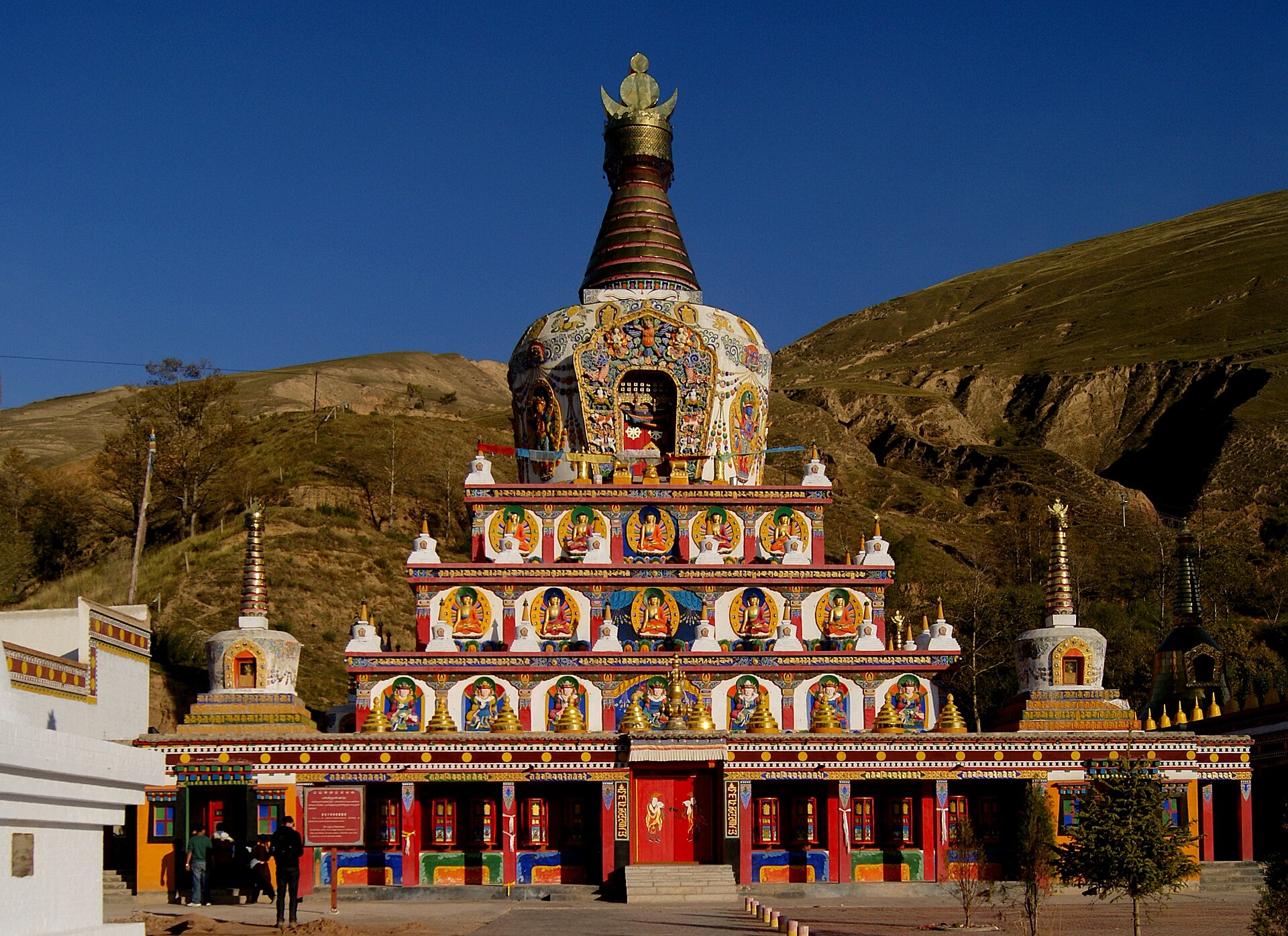
The minibus from Xining had been climbing for four hours when the valley floor dropped away and the Longwu River appeared, a brown ribbon cutting through terraces of barley and rapeseed. We pulled into the station just as the afternoon call to prayer drifted from the whitewashed minaret of the Hui mosque, mixing with the low horns from Longwu Monastery on the hill. Dust swirled around the taxi rank. A vendor in a wool skullcap handed me a steaming bowl of hand‑pulled noodles before I could ask for a menu. That first mouthful — chewy wheat, chili oil, a scatter of cilantro — tasted like the town itself: Tibetan spice, Hui practicality, and a plateau wind that carries both.
Getting There and the First Night
Most travelers arrive by road. The highway from Xining runs 180 kilometers along the Yellow River’s upper bends, passing through tunnels that cut the old mountain passes. Buses leave the Xining long‑distance station every hour from dawn until mid‑afternoon; the ride takes three and a half to four hours depending on rockfall clearance. In summer, a shared SUV from the square opposite Xining’s train station can shave an hour off the journey if you don’t mind squeezing into the back with sacks of dried yak meat. There is no commercial airport in Tongren; the nearest runway is in Xining. If you are coming from Lanzhou, the high‑speed train to Xining plus the bus connection is smoother than the direct long‑distance sleeper that winds through the night.
Arrive before sunset if you can. The guesthouse cluster around the old town’s crossroads fills fast during the sixth lunar month when the Thangka festival draws pilgrims. I stayed in a family‑run courtyard place where the owner’s mother dried yak cheese on the roof and the bathroom was a squat toilet at the end of a lantern‑lit corridor. Hot water came from a solar tank — generous in July, tepid by the ninth month. Book a room with a south‑facing window; the morning light hits the monastery’s golden roofs and wakes you better than any alarm.
Monasteries: Longwu, Wutong, and the Upper Village
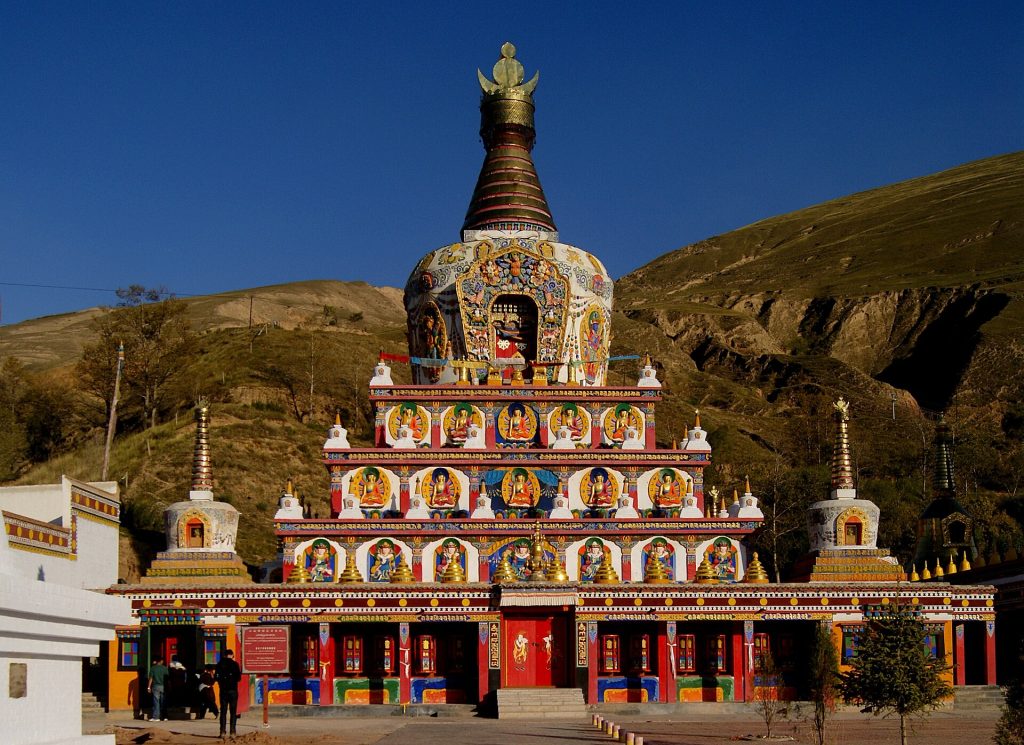
Longwu Monastery sits on the ridge above the river, its assembly hall rebuilt after the upheavals of the late 1960s. The main chapel holds a fifteen‑meter Maitreya statue flanked by rows of butter lamps that never go out. Monks in crimson robes debate philosophy in the courtyard, their voices sharp against the scent of juniper incense. Visitors may walk the kora circuit clockwise around the complex; keep your voice low and step aside when a lama passes. Photography inside the chapels is usually forbidden — ask the attendant at the door, and expect a polite shake of the head.
Wutong Monastery, twenty minutes by motorbike taxi up a switchback dirt road, is quieter and, for many, the real reason to come. Its Thangka painting school occupies a two‑story building behind the prayer hall. Apprentices grind mineral pigments — lapis lazuli for blue, cinnabar for red, malachite for green — on stone slabs, then apply them to cotton canvas stretched on wooden frames. You can watch through the open windows; if a master notices genuine interest, he may invite you to sit on a cushion and explain the iconometry of a Green Tara. Do not touch the paintings. Do not use flash. A small donation box sits by the threshold; twenty yuan is respectful.
Above Wutong, the Upper Village clings to a shelf of pasture. Families here still winter their herds in stone corrals. In the fifth lunar month, the village hosts a horse‑racing festival: riders in silk vests gallop bareback across the meadow, throwing khata scarves to the crowd. If your dates align, hire a local driver the night before — the track is unmarked and the parking area turns into a mud bog after rain.
Eating: Noodles, Yak, and Hui Bread
Food in Tongren sits at the intersection of two kitchens. Tibetan households serve thukpa — thick wheat noodles in a broth boiled with yak bones, radish, and a spoonful of fermented bean paste. Hui halal stalls turn out nang, sesame‑crusted flatbread baked in a clay tandoor, and yangrou paomo, shredded bread soaked in mutton soup with glass noodles and chili. The best meals happen in home kitchens, but a few storefronts welcome outsiders.
- Thukpa (home style): Simmer yak femur bones for six hours with ginger, star anise, and a handful of dried tangerine peel. Add hand‑rolled wheat noodles, julienned daikon, and a spoonful of doubanjiang. Finish with chopped scallion and a drizzle of yak butter.
- Nang: Mix high‑gluten flour, water, yeast, and salt. Knead until elastic. Let rise two hours. Divide, stamp with a patterned press, sprinkle sesame and cumin seeds. Slap onto the inner wall of a 300 °C tandoor. Bake ninety seconds.
- Yangrou paomo: Tear day‑old nang into fingertip‑sized pieces — smaller than you think. Ladle boiling mutton broth over them. Add glass noodles, sliced lamb, cilantro, and a spoonful of chili oil. Eat immediately before the bread dissolves.
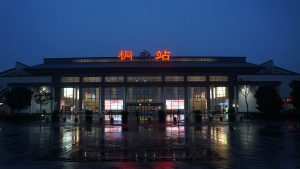
At the night market near the bus station, skewers of yak heart and liver appear after dark. They are grilled over charcoal, brushed with cumin salt, and served on a square of wax paper. One skewer, a cup of sweet milk tea, and you have dinner for the price of a city bus ride. Vegetarians should look for the stall selling cold tossed mung‑bean jelly with garlic, vinegar, and chili — it’s the only reliably meat‑free option after 8 p.m.
Thangka Workshops and Buying Without Regret
Every alley off the main square seems to have a sign for a Thangka studio. Some are genuine cooperatives where monks and lay artists split profits; others are showrooms for factory prints mounted on silk. The difference shows in the pigment: mineral colors catch the light like crushed gemstone; synthetic ones lie flat. Ask to see the back of the canvas — hand‑painted works have visible brushstroke ridges; prints are smooth. A genuine 60 × 40 cm piece painted by a senior student takes three months and costs what a mid‑range laptop does. If the price feels like a souvenir shop bargain, it probably is.
If you want to try painting, the Wutong school runs a half‑day workshop in the warmer seasons. You sit on a low stool, hold a brush made from goat hair, and learn to outline a lotus petal using the “one stroke” method — no corrections allowed. The master will correct your posture: shoulders relaxed, elbow anchored, breath slow. You leave with a palm‑sized practice sheet on paper, not canvas. Book through your guesthouse; walk‑ins are turned away when a pilgrimage group is in residence.
Altitude, Weather, and the Rhythm of the Town
Tongren sits at 2,600 meters. Most visitors feel a mild headache the first night; drink the butter tea your host offers — salt and fat help more than aspirin. The sun burns hard even when the air is cold; a wide‑brim hat and SPF 50 are not optional. Rain comes in sudden bursts during the seventh and eighth lunar months, turning dirt lanes to slurry. Waterproof boots with ankle support save you from twisted ankles on the monastery steps.
The town wakes at 5 a.m. with the first horn from Longwu. By 7 a.m., the market is stacked with yak yogurt in blue plastic tubs, piles of dried apricots, and bundles of wild rhubarb. Shops close for a long lunch between 12 and 2 p.m.; use those hours to nap or sort photos. Evening prayer at the mosque and the monastery overlap around 7 p.m. — stand at the crossroads and you hear both. That overlap is the clearest map of Tongren: two faiths, one valley, neither asking the other to leave.
Common Missteps
- Arriving on the first day of the Thangka festival without a room booked. The town’s capacity triples; even floor space in the monastery guesthouse disappears.
- Treating monks as photo props. Ask before you raise a camera. A nod and a smile are not consent.
- Buying “antique” Thangkas from street sellers. Export of cultural relics over a certain age is illegal; the certificates offered are often printed the same morning.
- Assuming all food is halal or all food is Tibetan. Look for the green halal placard or the Tibetan script menu. When in doubt, ask “niúròu ma?” (beef?) or “yángròu ma?” (mutton?) — pork never appears on either table.
- Skipping the upper valleys because the road looks rough. A hired 4×4 and a local driver open meadows where snow leopards have been tracked; the cost splits four ways and buys a day you won’t forget.
When the minibus pulled away on my last morning, the driver honked at a herd of sheep blocking the hairpin. The shepherd, a woman in a felt hat, waved without turning. The monastery horns faded behind us, then the mosque’s call, then only the river and the wind. I still have the practice Thangka sheet folded in my notebook — lotus petal, one stroke, imperfect. It reminds me that Tongren does not perform for visitors. It simply continues, and lets you walk beside it for a while.