The riverboat’s horn cut through the morning mist as we pulled away from the dock, the gray water swallowing the reflection of apartment blocks stacked up the steep hills. On deck, an old man in a Mao jacket lit a cigarette and nodded at the Three Gorges peaks rising ahead, their tops lost in cloud. This is Wanzhou: a city that moved itself, brick by brick, to make room for rising water, and still carries the energy of a place that refuses to sit still.
Getting There Without the Headache
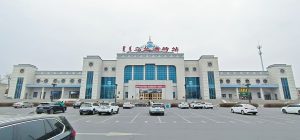
Most travelers arrive by high-speed train. The ride from Chongqing North takes about two hours, slicing through tunnels and over viaducts that make the old bus journey feel like a different century. Trains run frequently from early morning until late evening. If you are coming from Wuhan or Xi’an, direct services drop you at Wanzhou North station, a massive glass hall that feels oversized for the current crowds. From the station, a taxi to the riverfront costs roughly thirty yuan and takes ten minutes, but the local bus network — especially routes 101 and 302 — connects the station to the old town and the cruise terminals for pocket change. Avoid the unlicensed drivers loitering at the station exit; they will quote double the meter rate before you finish saying your destination.
Where to Sleep: River Views vs. Alley Life
The choice is simple. If you want to wake up watching barges push upstream against the current, book a room in one of the mid-range hotels along Binjiang Road. The windows face the Yangtze directly, and the night lights of the bridge stretch across the water like a necklace. For a grittier, cheaper stay, head inland to the lanes behind Xishan Park. Guesthouses here occupy renovated shikumen-style courtyards. You will hear mahjong tiles clacking from the courtyard next door and smell chili oil from the noodle stall downstairs at 6 a.m. Most places take cash or WeChat Pay; bring your passport for registration, and do not expect English at the front desk beyond “hello” and “wifi.”
Two Days on the Ground
Start day one at the Three Gorges Migration Memorial. The museum sits on a hill overlooking the new city. Inside, black-and-white photos show entire villages dismantled, ancestral halls moved stone by stone, and families loading furniture onto trucks. It is not a polished exhibition — captions are mostly in Chinese — but the scale of the relocation hits harder than any placard. Walk down to the river afterward and find the “Old Street” reconstruction near the cruise terminal. The buildings are new, built in a faux-traditional style, but the vendors sell real things: smoked tofu skewers, hand-rolled cigarettes, and plastic combs carved with dragons. Eat lunch at a stall selling liang mian — cold wheat noodles tossed in sesame paste, vinegar, chili oil, and crushed peanuts. The sauce should cling, not drown.
Afternoon means the cruise. Three Gorges tourist boats depart from the main pier near the Yangtze River Bridge. The standard downstream run to the Three Gorges Dam site takes four hours one way. Sit on the starboard side for the best view of Qutang Gorge’s narrow mouth, where the cliffs pinch the river to barely a hundred meters. The boat passes the “Ghost City” of Fengdu on the return leg; most tours stop for an hour so you can climb the hill to the temples. Wear flat shoes — the stone steps are slick with moss. If you have an extra day, hire a private driver (negotiate around 400 yuan for the day) to reach the Xiaozhai Tiankeng sinkhole and the nearby Difeng cave system. The sinkhole swallows the sky; a spiral staircase drops you into a subterranean forest where ferns grow waist-high and water drips from limestone ribs.
Eating: What Lands on the Table
Wanzhou cuisine sits at the intersection of Chongqing fire and Hubei sourness. The signature dish is Wanzhou grilled fish (kao yu). A whole grass carp, butterflied and scored, arrives on a cast-iron tray still sizzling over a Sterno flame. The skin is charred crisp, the flesh white and flaking. The sauce is a dark pool of fermented broad bean paste (doubanjiang), pickled mustard greens, dried chilies, Sichuan peppercorns, garlic, ginger, and a splash of black vinegar. You pick the meat with chopsticks, dip it in the sauce, and chase it with bites of raw cucumber and steamed buns to cool the burn.
- Fish: One whole grass carp, about 1.5 kg, scaled and gutted, head on.
- Marinade: Salt, white pepper, Shaoxing wine, sliced ginger — rub inside and out, rest twenty minutes.
- Aromatics: Three tablespoons doubanjiang, two tablespoons pickled mustard greens (chopped), ten dried chilies (halved), one tablespoon Sichuan peppercorns, six garlic cloves (smashed), thumb of ginger (julienned).
- Liquid: Half cup hot water or light stock, one tablespoon black vinegar, one teaspoon sugar.
- Finish: Scallions, cilantro, crushed peanuts, sesame seeds.
Home method: Heat a wok until it smokes. Add oil, then the aromatics except scallions. Stir-fry until the oil turns red and fragrant. Add liquid, bring to a boil. Slide in the fish, skin side down. Spoon sauce over the top. Cover, lower heat, simmer eight minutes. Flip carefully. Simmer five more. Transfer to a serving tray with a heat source underneath. Garnish heavily.
In restaurants, order “half-spicy” (zhong la) your first time. “Full spicy” (te la) is not a challenge — it is a commitment. Avoid places that pre-cook the fish and reheat it; the skin turns rubbery. Look for the raw fish displayed on ice near the kitchen. Another staple: liang fen, mung bean jelly cut into thick ribbons, drowned in the same chili-vinegar-garlic dressing as the noodles. Eat it cold from a plastic bowl while standing at a night market table. Breakfast is xiao mian — thin alkaline noodles in a clear broth with pickled mustard stems, minced pork, and a spoonful of chili oil. The broth should be sweet from pork bones, not MSG.
What Locals Expect (And What You Will Get Wrong)
Wanzhou people move fast. On sidewalks, they walk on the right; stand on the left of escalators. If you block the flow, someone will tap your shoulder and say “rang yi xia” — not rude, just efficient. In restaurants, the bill goes to the person who invited. Splitting item by item marks you as a tourist. Tipping does not exist; leave the change if you feel generous, but the server will chase you down to return it. When drinking baijiu at a banquet, never pour your own glass. Fill your neighbor’s, they fill yours. Tap two fingers on the table when they pour for you — a silent thank you. Refusing a toast is awkward; take a tiny sip instead.
Language is the wall. Mandarin here carries a thick local accent — “shi” becomes “si,” “chi” becomes “ci.” Learn three phrases: “bu yao la” (no chili), “mai dan” (the bill), and “wo bu hui” (I don’t understand). Show the characters on your phone screen. Taxi drivers rarely read English addresses; have your hotel write the destination in Chinese. And the biggest mistake: assuming the city is just a transit point. The travelers who only see the cruise terminal miss the 6 a.m. tofu vendor, the elderly men flying kites shaped like centipedes over the riverbank in autumn wind, and the way the bridge lights ripple on the water when the winter fog rolls in. Stay a night. Walk the alleys. Let the city show you the version that does not fit on a postcard.