
The bus from Xiaguan rattles along the Erhai plain, then climbs into hills where the air smells of pine and woodsmoke. Two hours later the driver pulls into a lot off Kainan Road, and the noise of the highway drops away. Ahead, the stone arch of the Gongchen Gate stands under a tiled roof, its red lanterns unlit in the late afternoon. Inside the gate, West Street stretches straight and narrow, lined with two‑story wooden storefronts whose upper balconies lean out over the cobbles. No tour buses idle here. A few elders play xiangqi on a stone table beside a well; a vendor fans charcoal under a wok of rice noodles. The town feels like it has simply kept going, unhurried, since the Nanzhao kings rode these lanes.
Getting There
Most travelers arrive from Dali’s Xiaguan South‑West Bus Station. Buses leave every forty minutes or so from the early morning until late afternoon; the ride takes about two hours and costs roughly thirty yuan. The Weishan terminal sits on Kainan Road, a ten‑minute walk from the ancient town’s south gate. If you are coming from Kunming, the overnight sleeper bus drops you at the same station around dawn. A handful of private drivers wait outside the station — negotiate before you load luggage; a ride to a guesthouse inside the old town should not exceed twenty yuan.
Moving Around the Old Town
The pedestrian core is compact enough to cross in fifteen minutes, but the pleasure lies in not crossing it quickly. Cobblestones are uneven; wear shoes with grip. Motorcycles are banned inside the gates, so the only wheels you’ll hear are hand‑carts and the occasional electric tricycle delivering firewood. Pick up a free map at the tourist kiosk just inside Gongchen Gate — it marks the three main north‑south lanes (West, Middle, East) and the handful of east‑west alleys that connect them. If you wander past the mapped area, you’ll find residential courtyards where laundry hangs over lanes and grandmothers shell peas on low stools. No one minds a respectful pause for a photo, but step aside when a family carries a steaming pot through the narrow passage.
What to See
Weibao Mountain rises ten kilometers northeast of town. A minibus from the square beside the bus station runs every half hour; the ride winds through eucalyptus plantations before reaching the protected slope where ancient Taoist temples cling to cliffs. The main complex, Wenyuan Hall, dates to the Tang dynasty and still hosts incense ceremonies at dawn. Admission is fifty yuan. Birdwatchers bring binoculars for the laughingthrushes and nuthatches that flick through the oak understory. Allow three hours round‑trip if you hike the ridge trail to the Jade Emperor Pavilion; the path is steep in places but paved with stone steps.
Nanzhao Museum occupies a restored courtyard compound on Housuo Street, a short stroll west of the Gongchen Gate. The exhibits trace the rise of the Nanzhao kingdom from a tribal confederation to a regional power that once challenged Tang armies. Look for the bronze drum with its frogs cast in relief — each frog represents a clan. The museum is closed on Mondays; otherwise it opens at nine and closes at five. Entry is free, but you must show a passport or ID at the gate. The adjacent Dengjue Temple, included in the same compound, holds a Ming‑era bronze bell that still rings on festival mornings.
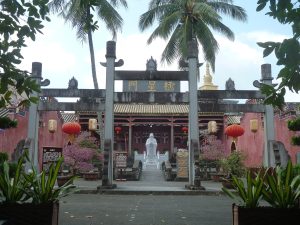
Weishan Confucian Temple sits on West Street, its roof ridges curled like the eyebrows of a scholar. The main hall houses a spirit tablet of Confucius flanked by disciples carved from camphor wood. Students once gathered here for the imperial examinations; today, local high‑schoolers tie red ribbons to the ancient cypress in the courtyard before the college entrance exam. The temple is open daily from eight to six; a donation box sits by the incense burner. No ticket, but a ten‑yuan note is customary if you light a stick.
Where to Eat and What to Order
Breakfast means a bowl of mi xian — rice noodles in a clear broth scented with star anise, topped with pickled mustard greens, minced pork, and a spoonful of chili oil. The best stall sits at the corner of West Street and the first cross alley; the broth has simmered since midnight. For lunch, follow the scent of cumin to a courtyard restaurant behind the Confucian Temple. Their signature dish is Weishan roast chicken: a whole bird rubbed with salt, Sichuan pepper, and wild mint, then slow‑roasted over pear wood until the skin turns lacquer‑brown and the meat falls from the bone. Order a side of stir‑fried wild mint leaves with garlic — bitter, aromatic, and cooling after the richness.
- Mi xian broth base: pork bones, star anise, cassia bark, ginger, spring water
- Toppings: pickled mustard greens, minced pork, fried soybeans, chili oil, cilantro
- Roast chicken rub: coarse salt, Sichuan peppercorns, dried wild mint, garlic paste
- Wild mint stir‑fry: fresh wild mint leaves, garlic, dried chili, light soy, pinch of sugar
Home method for the chicken: pat the bird dry, rub the cavity and skin with the salt‑pepper‑mint mixture, let rest uncovered in a cool place for four hours. Roast at 180 °C for fifty minutes, basting once with rendered fat. Rest ten minutes before chopping. The skin should crack like glass; the meat stays juicy.
Vegetarians can ask for the temple’s su cai platter at the small kitchen beside Dengjue Temple — tofu skin rolls, braised bamboo shoots, and a bowl of clear mushroom soup. Arrive before eleven; the kitchen closes when the monks finish their midday meal.
Where to Sleep
Guesthouses cluster along Middle Street and the alleys behind East Street. Most occupy restored courtyard homes with grey‑tile roofs and wooden lattice windows. A standard double with private bathroom runs 150‑250 yuan in the off‑season; weekends and the third lunar month festival can double that. Book by phone or WeChat a day ahead — few list on international platforms. Ask whether the room faces the lane (quieter) or the back courtyard (brighter). Hot water is solar‑heated; showers run strongest after noon. Hosts often speak only Southwestern Mandarin; a translation app helps for check‑in, but a smile and a few words of local dialect — “ni hao, lao ban” — go far.
Seasonal Rhythms and Local Etiquette
The town wakes properly in the third lunar month, when the Nanzhao Culture Festival fills the streets with horse‑dance troupes, drum circles, and stalls selling hand‑woven Yi embroidery. Accommodation fills weeks ahead. Autumn, after the Mid‑Autumn Festival, brings crisp mornings and the persimmon harvest — trees in every courtyard heavy with orange fruit. Winter is quiet; some stalls close, but the noodle broth tastes richer in the cold.
Locals value discretion. Speak softly inside temples; photography is allowed in museum halls but not during active worship. If an elder offers you a cup of tea, accept with both hands. Tipping is not expected, but rounding up a restaurant bill by a few yuan is appreciated. When you leave, the gatekeeper at Gongchen Gate may press a persimmon into your palm — a wish for a sweet return. Eat it before the bus pulls away; the sugar lingers on your fingers long after the cobbles disappear behind you.