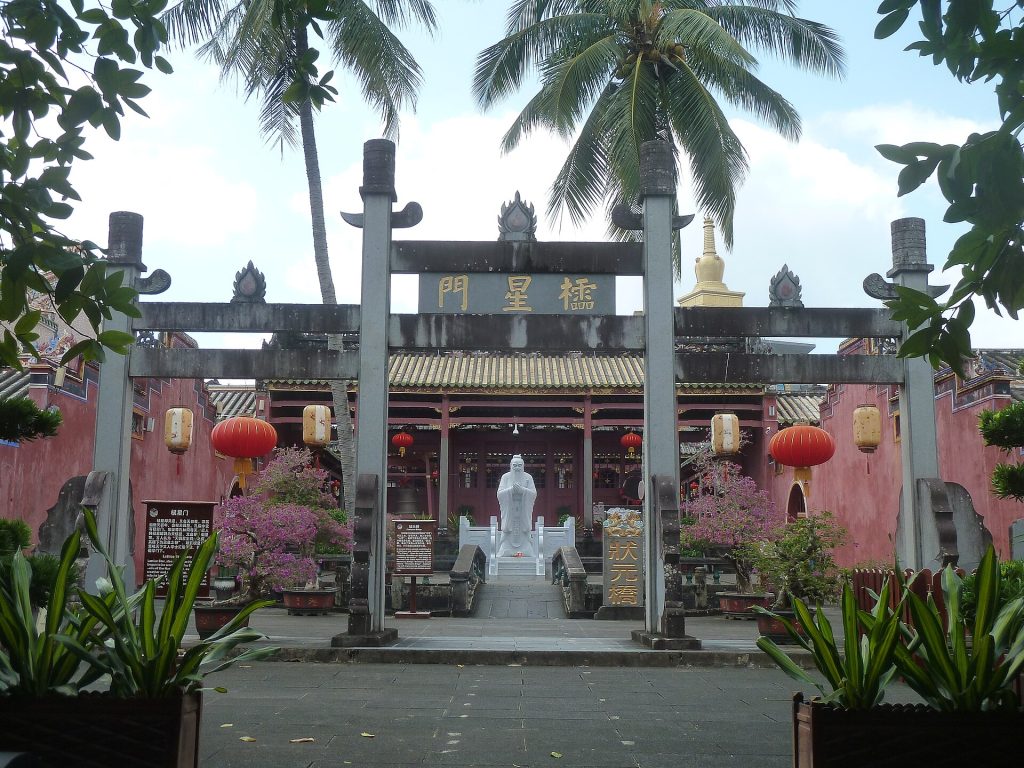
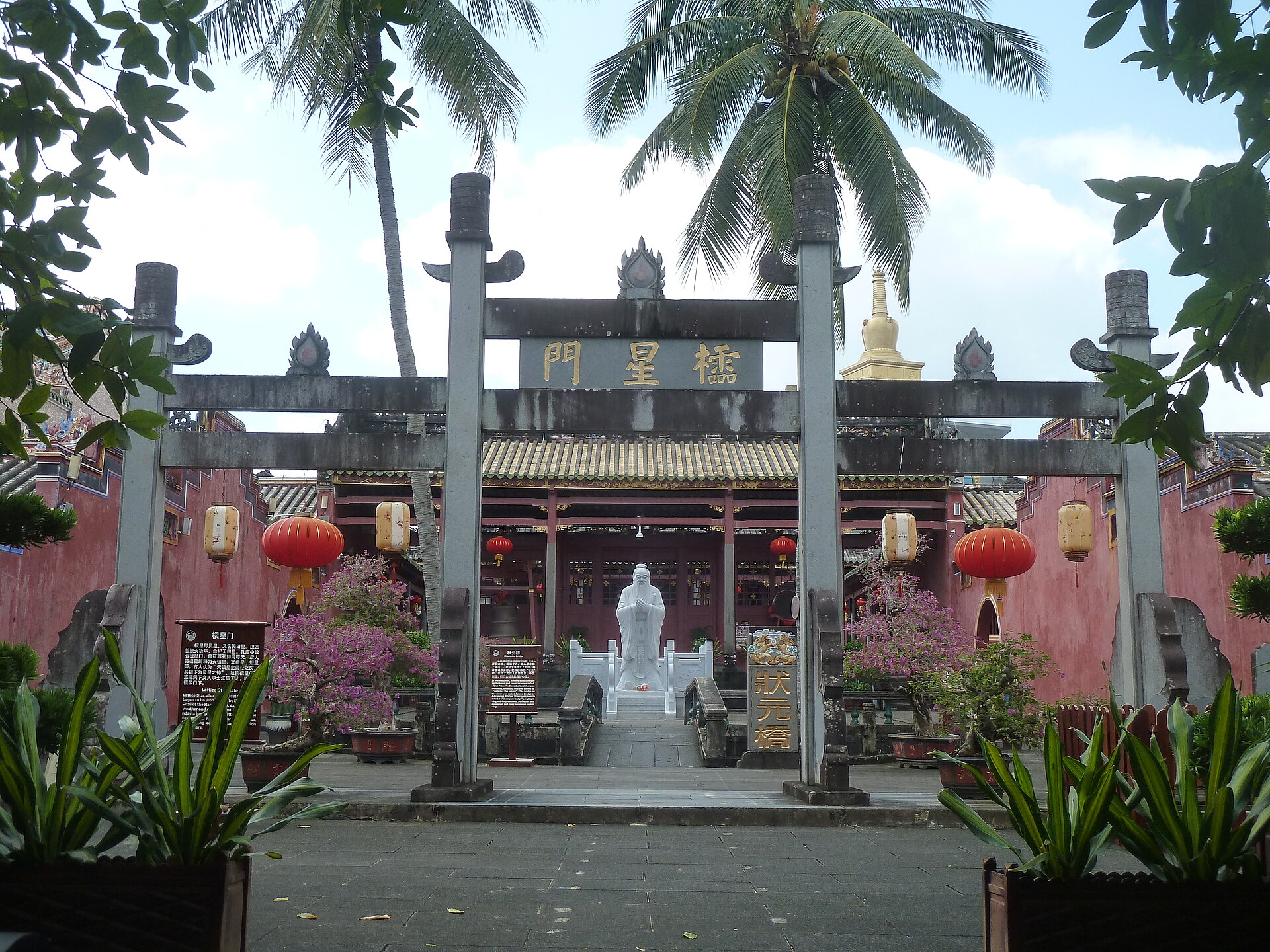
The motorbike sputters to a halt at a red light on Wenqing Avenue. Beside me, an auntie in a floral visor balances a bamboo basket of just-peeled pineapple on her electric scooter. The air smells of salt, fried dough, and the sweet exhaust of two-stroke engines. Across the intersection, a banner flaps above the Confucius Temple’s grey brick wall, welcoming home the overseas Chinese who built the schools and hospitals that give this city its quiet pride. Wenchang does not shout for attention. It simply carries on, one bowl of rice noodles at a time.
Getting There and Getting Around
The high-speed rail station sits a few kilometers inland from the old town. Trains from Haikou take twenty minutes; from Sanya, about ninety. Step onto the platform and you are met by a phalanx of blue-shirted drivers offering rides to the coast. Negotiate a flat rate before you climb into a Didi or a licensed taxi — thirty to forty yuan covers the run to Qinglan or Dongjiao. If you prefer two wheels, every hotel courtyard has a row of electric scooters for rent at roughly forty yuan a day. Helmets are theoretical; bring your own if you value your skull. The coastal road, Haiwen Avenue, runs straight as a ruler between coconut groves. Traffic is light outside holiday weeks, but watch for trucks hauling aerospace parts toward the launch center.
Old Town Rhythms
Start at the Confucius Temple before the tour buses arrive. The main hall dates to the Ming dynasty, its roof ridges curled like dragon whiskers. Students still press foreheads to the stone steps before exams, leaving red envelopes tucked into the incense burner. Walk east along Wenhua Road and the storefronts shift: a herbal tea shop steaming with luohanguo, a bakery stacking coconut tarts beside mooncakes stamped with the character for “longevity.” Locals sit on low stools, fanning themselves with folded newspapers while they sip qingbu liang — a chilled broth of mung beans, barley, and coconut jelly. No menu, no English. Point at the bowl the woman next to you is eating. She will nod. That is how you order.
Coastal Stretches and Coconut Groves
Dongjiao Coconut Plantation spreads five hundred thousand trees along a crescent of beige sand. The water here turns milky green after a typhoon, but on a calm autumn morning you can see your toes in knee-deep surf. Fishermen haul nets at dawn, sorting threadfin and pomfret into styrofoam boxes. Rent a canvas chair from the shack at the northern end — ten yuan for the day — and order a whole coconut hacked open with a machete. The meat is thick enough to scrape with a spoon. Lunch arrives on a plastic tray from the same shack: steamed garlic scallops, stir-fried water spinach with fermented bean curd, and a mound of rice. Eat with your fingers. The tide erases the mess.
Space Coast Detour
Twenty kilometers south, the Wenchang Space Launch Site rises from the same coconut flats. Rockets roll out on slow transporters before the winter launch window. The visitor center shows a short film on the Long March 5, then buses you to a viewing platform three kilometers from the pad. If a launch coincides with your stay, book the platform ticket the moment dates are announced — they vanish in minutes. Even without fire, the drive through the casuarina windbreak is worth it. The road ends at a lighthouse where elderly couples fly kites shaped like centipedes. Vendors sell grilled squid on skewers brushed with chili-garlic paste. Stand downwind unless you want your shirt to carry the scent for days.
Night Markets and Park Life
When the sun drops, Wenchang Park fills. Retirees cluster around portable speakers, dancing tango in polyester tracksuits. Teenagers smash table-tennis balls on concrete tables bolted to the pavement. The perimeter road becomes a night market: carts flipping rice batter into crisp jian dui, others ladling beef brisket stew into paper bowls. Find the stall with the longest queue — usually the one doing Hainanese chicken rice, the rice cooked in broth and pandan until each grain glistens yellow. A bowl costs twelve yuan. Sit on a plastic stool, splash chili oil from the communal jar, and watch a grandfather teach his granddaughter to shuffle a mahjong set. The tiles click like rain on tin.
Practical Missteps to Avoid
- Assuming every restaurant takes mobile payment. The best noodle stalls still prefer cash, small bills only.
- Booking a “beachfront resort” on the east coast without checking satellite view. Many sit across a four-lane highway from the sand.
- Visiting the Confucius Temple during the autumn exam rush unless you want to queue behind three hundred nervous parents.
- Ordering “Wenchang chicken” at a tourist restaurant. The real dish — poached, ice-bathed, served with ginger-scallion dip — appears only at family-run spots where the chef knows the bird’s hatch date.
- Renting a scooter without a Chinese license. Police checkpoints appear on holiday weekends; fines start at two hundred yuan.
Seasonal Pulse
The city breathes with the lunar calendar. The ninth day of the ninth month brings the Double Ninth Festival; families climb the hill behind the Confucius Temple, carrying chrysanthemum wine and steamed cakes. Winter solstice sees every kitchen rolling tangyuan — glutinous balls stuffed with peanut paste — boiled in ginger syrup. Spring Festival empties the streets as migrants return from Shenzhen and Guangzhou; the coconut groves go quiet, the night market stalls shuttered. Come in the third month, when the kapok trees flame red along Haiwen Avenue, and you will find the city at its most generous: mangoes piled like cannonballs, lychees sold by the branch, and enough space on the beach to hear the waves break.