The river mist clung to the grey tiles of the ancient town before the first tour bus rolled in. I stood on the stone slab bridge watching a single wooden boat push off from the Jialing bank, the poleman’s chant echoing off the whitewashed walls. No horns, no electric scooters — just the slap of water and the creak of oarlocks. That half-hour before the gates officially open is the only time the place feels like it belongs to the people who actually live here.
Getting There and Getting In
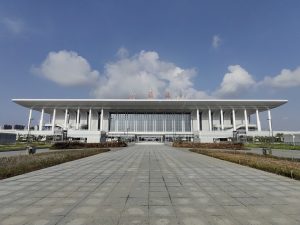
Most visitors arrive by high-speed rail to Langzhong Station, a clean modern box about twenty minutes by car from the old town. A taxi costs roughly forty yuan; a shared minibus leaves from the station forecourt when full and drops you at the north gate for ten. If you drive, park at the lot outside the south gate — the narrow lanes inside cannot handle anything wider than a handcart. The ancient town itself has no entry ticket, but individual courtyards and temples charge twenty to sixty yuan each. Buy a combined pass at the visitor center near the east gate if you plan to hit more than three sites; it saves fumbling for change at every turnstile.
Where to Sleep Without Waking Up to Karaoke
Guesthouses cluster in two zones. The lanes around Zhangfei Temple are lively until midnight — good if you want snacks and noise, bad if you value sleep. I prefer the quieter courtyards near the west gate, where family-run inns occupy restored Ming-era quadrangles. Look for a place with a tiled courtyard, a working well, and a host who offers to wake you with tea instead of an alarm. Book directly through the host’s WeChat a week ahead during Golden Week or the spring lantern festival; walk-ins get the damp rooms facing the alley.
Walking the Lanes Without a Map
The ancient town sits on a finger of land where the Jialing makes a sharp bend. Three main streets run roughly north-south, crossed by a dozen alleys that steepen toward the river. Start at the Bell Tower at dawn; the bronze bell still sounds at six, a low vibration you feel in your soles. From there drift south along Jinlong Street past woodcarvers blowing sawdust off dragons, then duck left into the lane of shadow-puppet makers. Their workshop smells of tung oil and pigskin. Ask the old man to demonstrate — he’ll flick his wrist and a leather general rides a paper horse across the screen in two seconds flat.
Midday heat drives everyone into the teahouses. Order a pot of jasmine, a plate of salted peanuts, and a round of mahjong tiles if you know the game. Locals play for toothpicks, not cash, and they’ll teach you the Sichuan rules — three suits, no flowers, fast discard. Lose gracefully and you’ll be invited to the evening baijiu toast.
Temples, Generals, and the Scholar’s Shadow
Zhangfei Temple anchors the south end. The general’s statue stares down the central axis, beard frozen in stone rage, but the side halls hold the real treasure: a Ming dynasty drum the size of a bathtub and a calligraphy scroll allegedly brushed by the man himself. Incense coils hang from the rafters; light one, bow three times, and tuck the stub into the sand tray — don’t wave it around like a sparkler.
Ten minutes north, the Imperial Examination Hall recreates the cage-like cells where scholars sweated through three-day exams. Wooden planks serve as desk, seat, and bed. Run your fingers over the carved graffiti: poems, complaints about the food, a sketch of a cat. The guide will tell you Zhuge Liang studied here as a boy; historians argue he never set foot in Langzhong, but the story persists because the town needs a strategist as much as a warrior.
Eating Where the Smoke Is
Skip the restaurants facing the main square — their menus are laminated in three languages and the mapo tofu arrives swimming in red oil with zero numbing heat. Follow the delivery tricycles instead. They converge on a lane behind the Confucian Temple where four stalls share a communal courtyard. The owner of the corner stall, a woman with a cleaver tattoo on her forearm, makes the best beef noodle soup in town.
- Hand-pulled wheat noodles, thickness of a chopstick
- Braised beef shank, sliced paper-thin against the grain
- Broth simmered since midnight with star anise, cassia bark, and dried orange peel
- Pickled mustard greens, chili oil, and a spoon of raw garlic paste stirred in at the table
Eat fast while the noodles still have bite. Slurp loud — silence insults the cook. A bowl costs eighteen yuan. Add a side of cold smashed cucumber with fermented black beans and you’ve spent less than a taxi ride from the station.
River Time and Hill Time
Late afternoon, walk the river promenade upstream past the ancient town’s west wall. The path climbs to Jinping Mountain, a gentle ridge crowned with a pagoda. The hike takes forty minutes at a steady pace; the steps are uneven limestone worn smooth by centuries of sandals. At the summit the Jialing unfurls below — a silver ribbon stitching the grey rooftops to the green hills beyond. Vendors sell plastic fans and bottled water at triple the town price. Bring your own.
If you have a second day, hire a boat at the north gate dock for a two-hour loop downstream to the Seven Star Caves. The boatman steers with a single oar, pointing out heron rookeries and a cliff face carved with Tang dynasty sutras. No commentary unless you ask. The caves themselves are cool, damp, and smell of bat guano — bring a headlamp, the installed lights flicker.
What Newcomers Get Wrong
First, they treat the ancient town as a theme park. It’s a living neighborhood. The grandmother hanging laundry across the alley is not a prop; her grandson does homework on the threshold. Step over the basin, don’t photograph the underwear.
Second, they pack high heels or stiff leather shoes. The paving stones are irregular, slick with moss after rain, and the alleys climb at angles that punish ankles. Wear broken-in trail runners or cloth shoes with rubber soles.
Third, they assume everyone speaks Mandarin. The local dialect swallows tones and swaps vowels. Learn three phrases: “Duōshǎo qián?” (how much), “Bú yào là” (no chili), and “Xièxie” (thank you). Say them with a smile and the vendor will switch to calculator mode, tapping numbers for you to confirm.
Fourth, they leave before the lanterns rise. At dusk the red paper globes flicker on along Jinlong Street, reflected in the canal that bisects the town. The crowds thin. The air cools. That’s when the old men bring out their erhus and the scent of roasting sweet potatoes drifts from the corner cart. Stay for that. It’s the only part of Langzhong you can’t photograph — you have to breathe it.