The rickshaw driver pulled up beside a steaming pot of beef noodles on a back lane behind the Salt History Museum. Steam curled around the red lanterns strung between the shophouses. I handed him a five-yuan note, watched him ladle broth over hand-pulled strands, and realized I had spent the whole morning underground staring at dinosaur femurs the length of my arm. Zigong does not announce itself. It feeds you, then shows you the receipts of two thousand years of brine and bone.
Getting oriented in the salt capital
The city spreads along the Fuxi River where the Sichuan Basin folds into low hills. Most visitors cluster around two zones: the Dinosaur Museum in the northeast suburbs and the Salt History Museum inside the old Xiqin Guild Hall near the river bend. Buses 301 and 302 link them in twenty minutes. Taxis start at eight yuan and rarely top twenty across town. If you arrive on the high-speed line at Zigong North, a Didi ride to the dinosaur halls takes half an hour through industrial parks that still smell of chemical salt works.
When the light hits the fossils right
Spring arrives with the peach blossoms in the third lunar month. The museum courtyard fills with school groups sketching Mamenchisaurus necks against blue sky. Summer brings monsoon humidity that fogs the glass cases by noon; go at opening, nine sharp, before the tour buses unload. Autumn, the eighth and ninth lunar months, is the sweet spot — cool mornings, clear light for the outdoor excavation pit, and the night market on Jiefang Road serving grilled rabbit heads until midnight. Winter is quiet. The brine wells steam in the cold, and you can have the guild hall’s wooden corridors to yourself.
Walking the guild hall like a merchant’s ghost
The Salt History Museum sits inside the Xiqin Guild Hall, a compound of gray brick and glazed tile built by Shaanxi salt traders in the Qianlong reign. Enter through the screen wall carved with dragons chasing pearls. The main hall’s columns are whole nanmu trunks, darkened by centuries of incense. Upstairs, the exhibition follows the drill bit: bamboo cable tools, iron percussion bits, the moment they hit pressurized brine at three hundred meters. A diorama shows workers hauling brine in wooden buckets up a zigzag staircase — each bucket weighed forty catties. I stood there until a guard tapped my shoulder; the hall closes at five, but the courtyard teahouse stays open for mahjong.
Dinosaur hill: what the signs don’t tell you
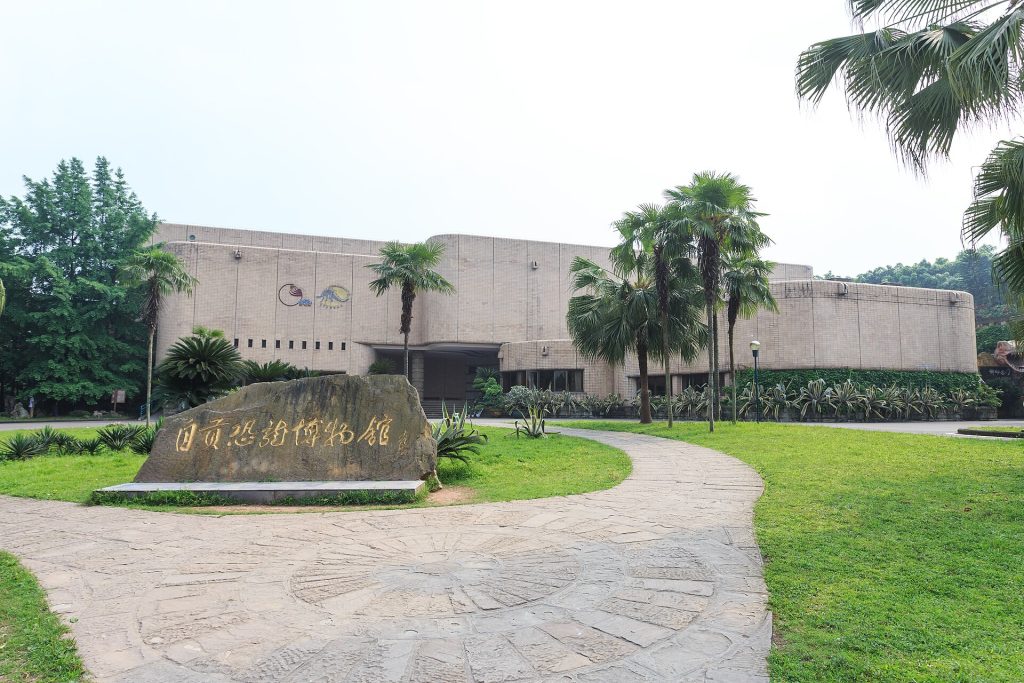
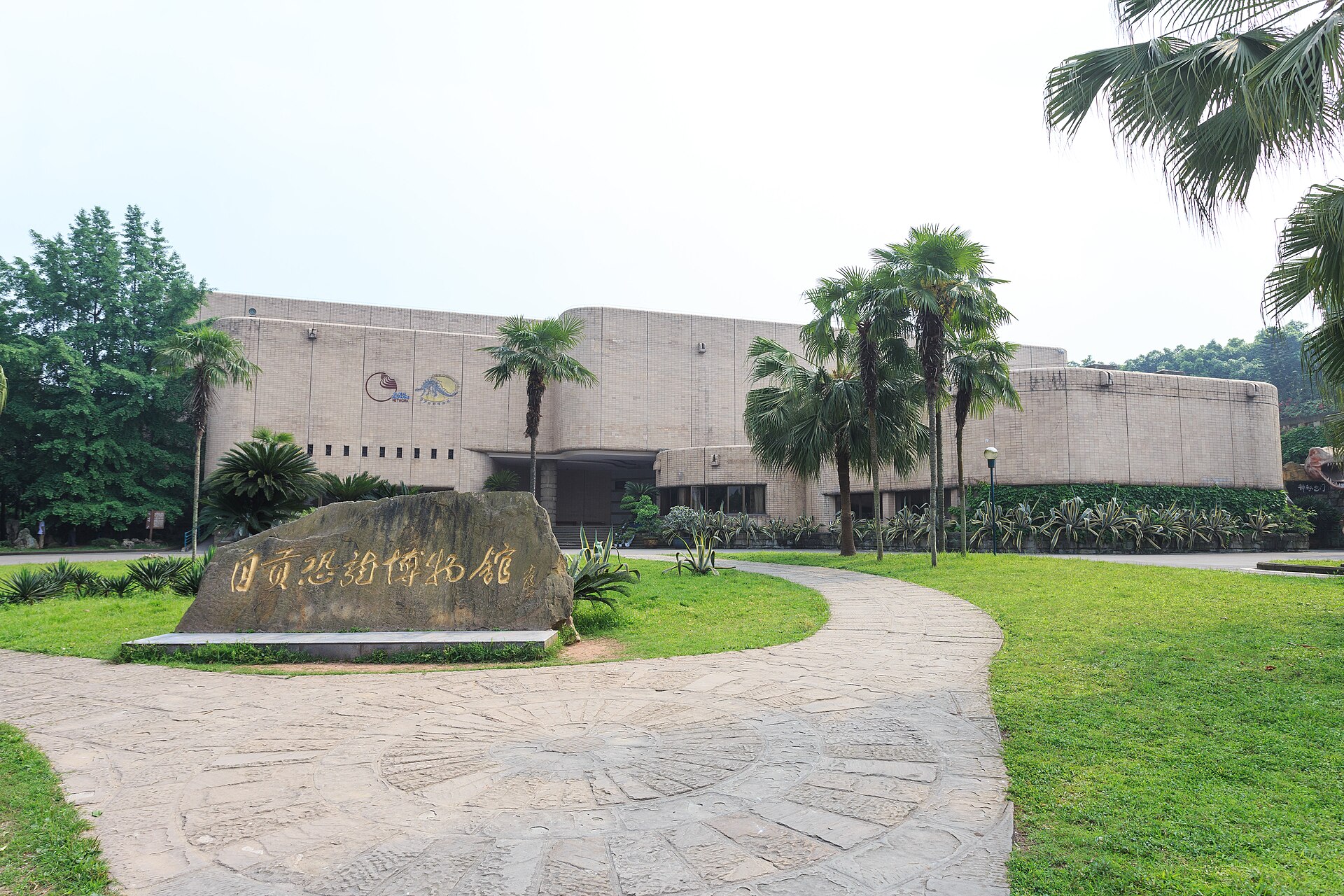
The Zigong Dinosaur Museum sits on the actual Dashanpu fossil bed. The main hall covers a quarry where skeletons lie half-excavated in red sandstone. Walk the raised platform clockwise. First you meet Yangchuanosaurus, jaws open, then the wall of Huayangosaurus plates. The real prize is the basement lab where technicians pick matrix off a new Omeisaurus vertebra. Ask the docent in the blue coat — she’ll let you hold a fossilized coprolite if no school group is watching. Outside, the hillside trail loops past exposed bone beds. Wear shoes with grip; the shale slides when it rains.
Eating where the brine workers ate
Zigong cuisine is salt, chili, and fire. The signature dish is yanbang cai — salt-bang vegetables — originally cooked in the iron pots beside the wells. Order the cold rabbit head at Lao Ma Tou on Jiefang Road. The skull arrives split, meat picked clean, tossed with Sichuan pepper, garlic, and fermented bean paste. Suck the brains from the cranial cavity; that’s the test. Next, huiguorou twice-cooked pork belly, the fat translucent, edges curled like old letters. For breakfast, hunt down a stall selling dandan mian with pickled mustard greens and a spoonful of ground peanut. The broth remembers every hand that stirred it.
- Cold rabbit head — split skull, Sichuan pepper, fermented bean paste, garlic
- Twice-cooked pork belly — skin on, broad bean paste, green garlic shoots
- Dandan noodles — alkaline wheat noodles, pickled mustard, peanut, chili oil
- Salt-bang cabbage — napa cabbage, brine, dried chili, quick-fried in lard
Mistakes that mark you as a stranger
First, assuming the dinosaur museum is only for children. The research wing publishes papers on Jurassic paleoecology; the gift shop sells monographs beside plush toys. Second, skipping the Shenhai Well site three kilometers west of the city center. The original derrick is gone, but the brine pool still bubbles behind a locked gate — ask the gatekeeper for a peek; he’ll wave you in if you speak a few words of Sichuanese. Third, eating only on the pedestrian street near the railway station. The real kitchens hide in the alleys behind the guild hall where the delivery tricycles park. Fourth, trying to photograph the guild hall’s ceiling frescoes with flash. The pigment is mineral; light bleaches it. Put the phone away. Look up. The dragons have watched merchants count copper coins for three hundred years. They can wait for you.