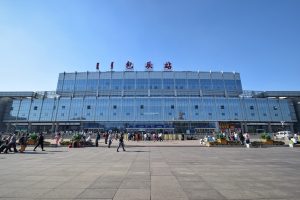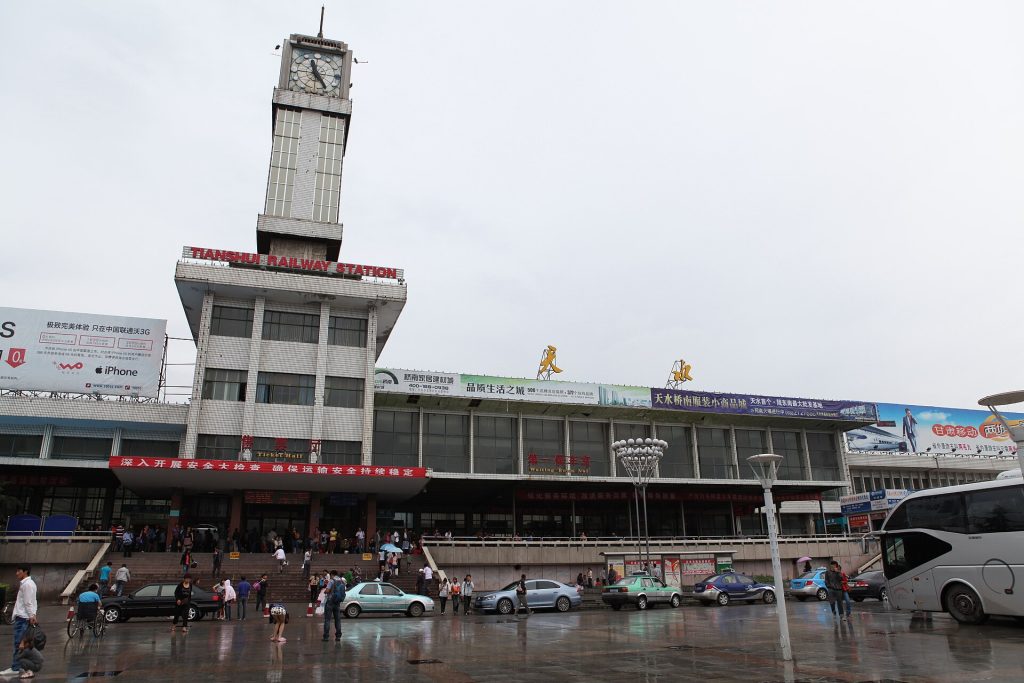
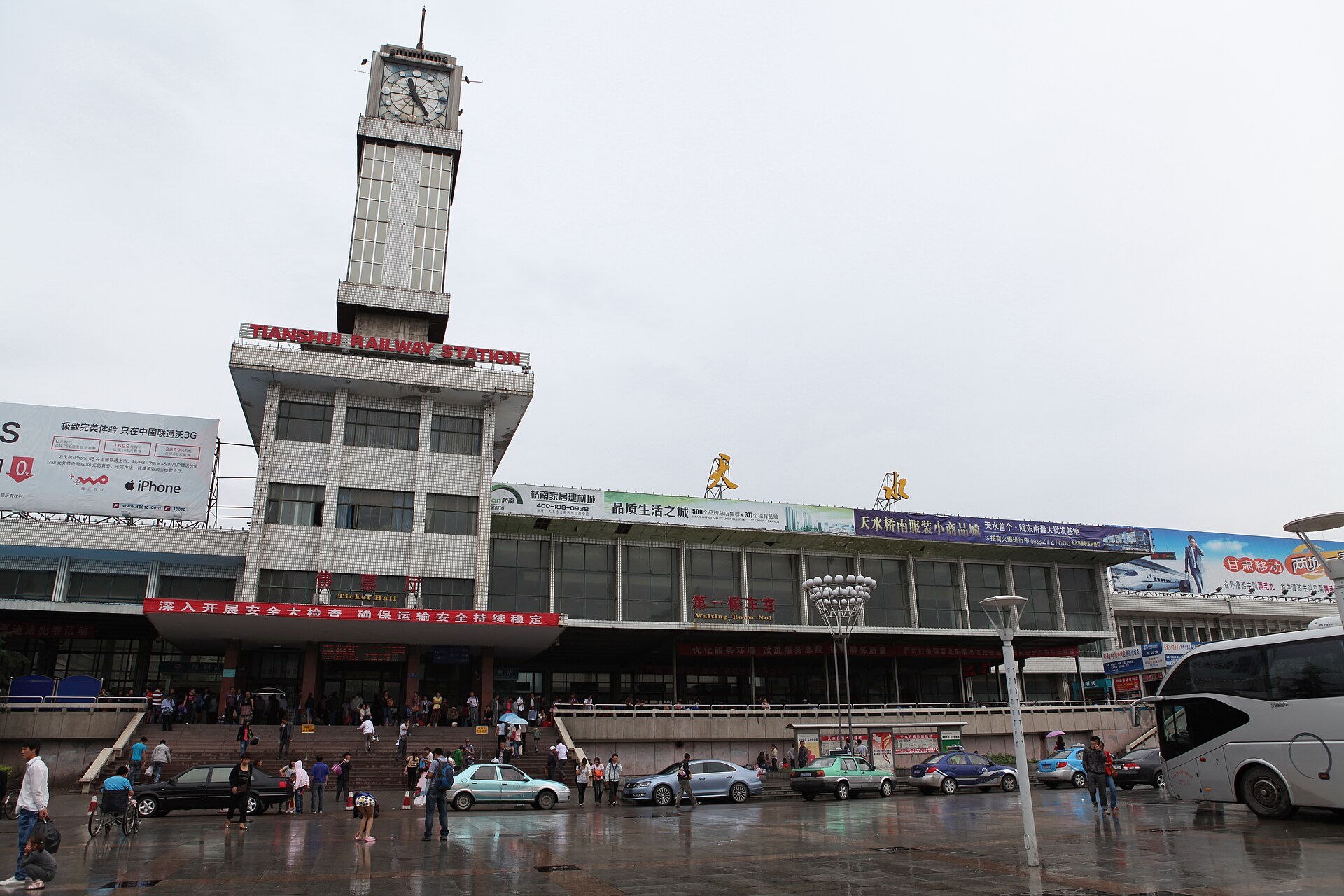
The bus from Xi’an deposits you at the long-distance station in Qinzhou District just as the morning fog lifts off the Wei River. Outside, a row of electric three-wheelers waits, drivers shouting destinations: Maijishan, Beidao, Gangu. You hop on one heading east along Longcheng Road, watching the city unfold — first the broad commercial spine of Dazhongzhong Road with its department stores and noodle shops, then the industrial stretch where cement trucks kick up dust, and finally the greener, quieter streets of Maijishan District where the mountains press close. Eighteen kilometers separate the two hearts of Tianshui, and that ride gives you the measure of the place before you’ve even dropped your bag.
Getting Oriented
Tianshui sprawls along a northwest-southeast axis, pinned between the Qinling Mountains to the south and the Loess Plateau rolling north. The western hub, Qinzhou District, holds the train stations, the main bus terminal, and the commercial core around Central Square. The eastern hub, Maijishan District, clusters around the grottoes and the Fuxi Temple. Longcheng Road stitches them together — a straight, wide artery lined with plane trees that turn gold in autumn. Most visitors base themselves in Qinzhou for transport links and nightlife, then day-trip east. If you prefer waking up near stone Buddhas and mountain trails, book a guesthouse in Maijishan instead. The high-speed station, Tianshui South, sits well south of both districts; a taxi to Qinzhou takes twenty minutes, to Maijishan thirty-five.
Maijishan Grottoes: The Cliffside Gallery
You arrive at the scenic area gate before the tour buses, the air cool and scented with pine. The path climbs through cypress forest, then opens onto the sheer sandstone cliff where 194 caves have been carved over sixteen centuries. Wooden walkways cling to the rock face, swaying slightly when the wind picks up — your thighs tighten on the steeper stair sections. Inside the caves, the light is deliberate: a slant through a high window catches a bodhisattva’s face, or a reflected glow from the cliff opposite illuminates a row of seated monks. Cave 133, the Great Buddha Hall, holds a sixteen-meter seated Maitreya, ears long, lips curved in a smile that has survived earthquakes and iconoclasm. The earlier Northern Wei figures are lean, robes clinging; Tang sculptures grow rounder, more sensual. Bring a flashlight for the dimmer recesses. Wear shoes with grip — the walkways are metal grating, slick after rain. Allow three hours minimum. The last shuttle down the mountain leaves at 5:30 p.m. in winter, 6:30 in summer.
Fuxi Temple: Where the Dragon Begins
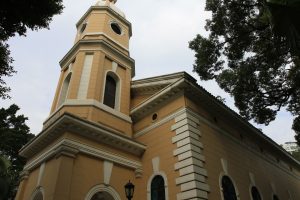
In the old town of Maijishan District, the Fuxi Temple compound sits behind a screen wall painted with the Eight Trigrams. Legend says Fuxi, the culture hero who invented writing, fishing, and the I Ching, was born nearby. The current buildings date to the Ming and Qing, rebuilt after war and fire. You enter through the Lingxing Gate into a courtyard where ancient cypresses tower — one, they say, was planted by Fuxi himself, its trunk so wide three people cannot encircle it. The main hall holds a statue of Fuxi with a serpent’s body and human head, holding the yin-yang symbol. Locals come to burn incense and toss coins into the bronze tripod, praying for children or exam success. On the sixteenth day of the first lunar month, the temple swells with a temple fair: stalls selling sugar paintings, shadow puppets, and steamed buns shaped like dragons. If you visit then, arrive early and keep your wallet in a front pocket.
Water Curtain Cave and the Mountain Loop
Ten kilometers north of Maijishan, the Water Curtain Cave (Shuiliandong) cuts a different rhythm. A stream disappears into a limestone cavern, re-emerging as a veil of mist that catches sunlight in rainbow bands. The trail follows the gorge for two kilometers — wooden boardwalks bolted to cliffs, stone steps worn smooth by centuries of pilgrims. Temples cling to ledges: a Guanyin shrine, a Three Pure Ones hall. Monks still live in the upper caves; you’ll hear chanting before you see the saffron robes. The full loop takes two hours at a steady pace. Bring water; there are no vendors inside. In the seventh lunar month, the Ghost Festival draws crowds who float lotus lanterns on the underground river — a sight worth timing a visit for, though the narrow paths grow tight.
Eating in Tianshui: Noodles, Skewers, and Night Markets
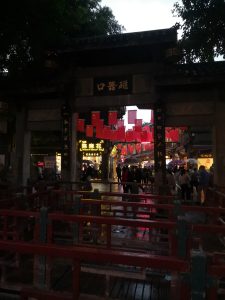
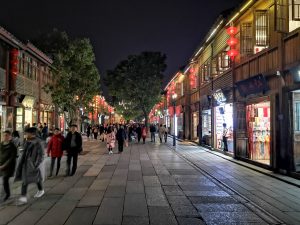
Tianshui’s signature dish arrives in a wide porcelain bowl: hand-pulled wheat noodles in a vinegar-chili broth, topped with shredded cucumber, bean sprouts, and a tangle of chili oil. The noodles have bite — not soft, not chewy, but a resistance that makes you work for each mouthful. Locals call it guagua mian or jiangshui mian, depending on whether the sour base comes from fermented wheat water or vinegar. Order at a stall near Central Square: watch the cook slap dough against the board, stretch, fold, slap again, then drop strands into boiling water. Thirty seconds later it’s in front of you. Add a spoonful of garlic paste from the communal jar. Pair with tianshui guokui — a sesame-crusted flatbread baked in a clay oven, cracked open and stuffed with minced lamb, cumin, and scallions. At night, the alley behind Jiefang Road fills with skewer stands: lamb kidney, chicken hearts, tofu skin, lotus root slices, all brushed with chili powder and cumin. Beer comes in small bottles, warm in summer, cold in winter. Eat standing, elbows out, shouting for another round.
- Guagua mian: wheat flour, fermented wheat water (jiangshui), chili oil, garlic, cucumber, bean sprouts, cilantro
- Guokui: wheat flour, yeast, sesame seeds, lamb mince, cumin, scallions, salt
- Night market skewers: lamb, chicken offal, tofu skin, lotus root, green peppers — brushed with chili-cumin mix
Home method for guagua mian: Mix flour with water to a stiff dough; rest thirty minutes. Pull into long strands; boil until they float. Meanwhile, whisk fermented wheat water (or rice vinegar with a pinch of sugar) with chili oil, minced garlic, soy sauce, and salt. Toss noodles in broth; top with raw vegetables. Eat immediately — the texture dies in five minutes.
Beginners order “not spicy” and get a bland bowl; the chili oil carries the soul of the dish. Ask for wei la (slightly spicy) your first time. Another mistake: eating guokui cold. It hardens into a brick. Ask the vendor to reheat it on the oven wall. And don’t skip the garlic paste — it cuts the oil and wakes the vinegar.
Moving Around: Buses, Taxis, and Your Own Feet
City buses connect the districts every fifteen minutes — Route 34 runs the full length of Longcheng Road. Pay with a transport card or exact change; drivers don’t carry small bills. Taxis start at eight yuan, but many drivers refuse the Maijishan trip during peak season, claiming the return is empty. Ride-hailing apps work reliably. For the grottoes, the scenic-area shuttle runs from the Maijishan District bus hub every twenty minutes; the ride up the winding mountain road takes fifteen minutes. If you rent a bicycle in Qinzhou (several shops near the university), the ride east along Longcheng is flat and shaded — ninety minutes one way, a good morning if you leave at dawn. Walking the old streets of Maijishan District rewards slowness: courtyard gates with carved lintels, a tofu shop where the owner still grinds beans by stone, an alley where elderly men play xiangqi on a stone slab. Don’t rush. The city reveals itself in the pauses.
Seasonal Rhythms and Local Expectations
Spring brings the Fuxi Temple fair and the peach blossoms in the valleys around Maijishan — weekends clog the mountain roads. Summer is hot in the basin, cool in the caves; Chinese tour groups peak in the seventh and eighth lunar months. Autumn paints the plane trees gold and the persimmons orange on courtyard walls; this is the sweet spot for hiking Water Curtain Cave. Winter is quiet, temperatures dropping below freezing at night, but the grottoes are empty and the light inside the caves turns golden at noon. Locals dress in padded coats and drink hot sour soup from thermoses. If you visit a home, you’ll be offered tea and sunflower seeds; spit the shells into the tray provided, not on the floor. At temples, step over the threshold, never on it. Photography inside active worship halls requires a nod to the attendant monk. And when a vendor hands you a skewer with two hands, receive it with two hands — a small gesture that marks you as someone who pays attention.