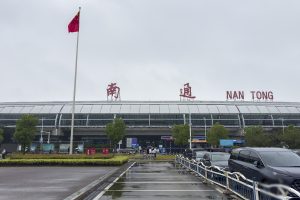
The minibus shudders to a halt on a gravel shoulder just outside the high-speed rail station. Through the open door comes the smell of wet coal and hot asphalt, the kind that settles in the back of your throat. A driver leans out, shouting for passengers headed to Xijiang or Zhaoxing, his voice competing with the rumble of a cement truck grinding up the hill. This is Kaili: a working city that wears its industry on its sleeve, yet serves as the gateway to the silver-headdress festivals and drum towers of the surrounding Miao and Dong villages.
Reading the City Before You Leave It
Most travelers arrive in Kaili with a village name already booked. They treat the city as a transfer point, and that is the smart play. The center is a grid of wide boulevards lined with concrete towers wrapped in scaffolding, their bases crowded with noodle shops and phone-repair stalls. The Qingshui River cuts through the middle, its banks reinforced with stone against the summer floods. You will not find a polished old town here. What you will find is a logistics hub that runs on minibuses, shared taxis, and a railway station that links Guiyang to the coastal lines in under three hours.
The air carries a fine gray dust, especially in the dry months before the monsoon. Locals wear masks not for fashion but because the coal-fired power plant on the western fringe and the cement kilns to the north push particulate matter into the valley. If your lungs are sensitive, spend the night in a village homestay instead of a city hotel. The difference in air quality is immediate once you climb into the Miaoling foothills.
Moving Out: Station to Village
Kaili South Railway Station sits on the southeastern edge. High-speed trains from Guiyang North arrive every forty minutes. From the station forecourt, you have three real options to reach the minority villages.
- Direct minibus to Xijiang. Look for the blue-and-white vans parked in the designated lot behind the taxi queue. Drivers leave when full, usually twelve passengers. The ride takes about ninety minutes on the S65 expressway, then a winding county road that climbs through terraced paddies. Cost runs roughly sixty yuan per seat.
- Shared taxi to Zhaoxing or Congjiang. These are sedans or SUVs waiting near the station exit. Drivers quote a per-car price — expect three hundred to four hundred yuan — and split it among four strangers. Faster than the bus, but you negotiate hard.
- Local bus from Kaili General Bus Station. Take a city bus or taxi ten minutes north to the old station on Beijing Road. Departures for smaller villages like Langde or Datang leave hourly. Slower, cheaper, and you ride alongside grandmothers carrying baskets of indigo-dyed cloth.
Buy a ticket at the window if you can read the destination characters. If not, show a screenshot on your phone. Drivers rarely speak English. Have small bills; nobody breaks a hundred for a sixty-yuan fare.
Where to Sleep If You Must Stay Overnight
Business hotels cluster around the railway station and the government district on Wenhua Road. Rooms are clean, hot water works, and wifi handles video calls. A standard double runs two hundred to three hundred yuan. Avoid the cheapest places near the long-distance bus station — thin walls, shared bathrooms, and the 5 a.m. departure roar.
For a quieter night, look at the newer chain hotels near the Wanda Plaza on Kaiyuan Avenue. They sit above a mall with a reliable hotpot basement and a supermarket that stocks cold Beerlao and imported oat milk. Walking distance to the high-speed station is twenty minutes, or a five-yuan bus ride on Route 1.
Eating in the City: Fuel, Not Destination
Kaili’s signature dish is suan tang yu — sour soup fish. The broth is a fermented tomato-chili base, lip-puckering and deep red, simmered with river fish, pickled cabbage, and wild herbs. In a proper Miao household, the starter culture has been passed down for generations. In city restaurants, they often shortcut with vinegar packets. You can taste the difference.
Order it at a place called Lao Kaili Suan Tang Yu on Shuiyun Street. The dining room is loud, tables sticky with chili oil, and the fish arrives whole, head intact, floating in a stone pot kept boiling by a butane canister. You dip the meat in a sauce of minced garlic, cilantro, and raw chili rings. Eat with plain rice to reset your palate between bites.
- Home-style sour soup base (makes 4 servings): 500 g ripe tomatoes, crushed; 200 g fermented chili paste (laojiao); 1 liter pork bone broth; 50 g pickled mustard greens; 10 g wild mint leaves (huiteng); salt to taste.
- Steps: Simmer tomatoes in broth twenty minutes until broken down. Stir in chili paste and pickled greens. Add fish slices, cook ninety seconds. Finish with mint. Serve in a heated stone bowl.
If you want breakfast, follow the steam to a stall selling fen — thick rice noodles in a clear broth topped with fried soybeans, pickled long beans, and a spoonful of chili oil. Cost: eight yuan. Eat standing at a metal counter. The vendor will not ask what you want; she will hand you a bowl and point to the condiment jars.
Culture Shock Checklist: What Newcomers Get Wrong
First-time visitors often assume Kaili itself is the attraction. They spend half a day wandering the pedestrian mall near the prefecture government building, taking photos of a bronze drum sculpture, then complain the city is ugly. The mistake is category error. Kaili is a tool. Use it to buy train tickets, withdraw cash, replace a broken phone charger, and eat one solid meal before you climb into the hills.
Another error: showing up at a village festival without checking the lunar calendar. The big gatherings — Sisters’ Festival in the third month, Lusheng Festival after the autumn harvest — shift every year. If you arrive on a random Tuesday in the sixth lunar month, the drum tower is quiet, the silver headdresses are locked in wooden chests, and the only music is a grandmother’s radio playing Guizhou opera. Ask your homestay host or check the prefecture tourism WeChat account two weeks before you travel.
Money catches people out. Village guesthouses and minibus drivers take cash only. The ATMs in Kaili dispense hundred-yuan notes. Break them at a convenience store or the hotel front desk before you leave town. In the villages, a fifty-yuan note for a twenty-yuan meal can stall a transaction for ten minutes while the host walks to three neighbors looking for change.
Language is the final trap. Mandarin works in the city. In the villages, elders speak Miao or Dong. Younger people understand Mandarin but may answer in dialect. Learn three phrases: “Duo xie” (thank you), “Bu yao” (I don’t want it — useful for persistent souvenir sellers), and “Ce suo zai na li” (where is the toilet). The last one saves you more dignity than any phrasebook.
Seasonal Rhythm and the Monsoon Factor
The region runs on two clocks: the Gregorian one for trains, and the lunar one for life. Spring tea harvest in the fourth lunar month turns the hills neon green. Summer monsoon arrives in the fifth month, turning county roads into red mud slides. Landslides delay minibuses for hours. Pack a poncho that covers your backpack, not a compact umbrella.
Autumn, the eighth and ninth lunar months, is the sweet spot. Rice terraces gold out, the air clears, and festival season peaks. Winter is cold and damp — indoor heating is rare — but the tourist crush vanishes. If you can handle ten-degree days and a charcoal brazier under the dinner table, you get the drum tower performances almost private.
One last thing: the train back to Guiyang leaves Kaili South at 7:30 a.m., 11:40 a.m., and 4:15 p.m. (times shift slightly each timetable change). If your village homestay is two hours away, you need the 4 a.m. shared taxi to catch the midday train. Confirm the departure time with the driver the night before. He will nod, sip his tea, and say “Mei wen ti.” No problem. He means it.