The minibus rattles west from Haikou, coconut palms blurring into a green wall. After ninety minutes the highway drops toward the coast, the air thickens with salt, and the skyline of Nada rises — blocky apartment towers, a cluster of construction cranes, and the broad estuary of the Nandu River flashing silver in the late afternoon. This is Danzhou, Hainan’s northwest shoulder, a place that still feels like a working island rather than a resort brochure.
Getting There and Moving Around
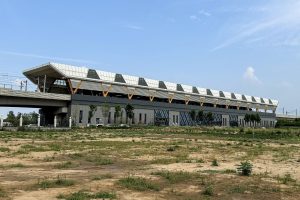
No commercial airport serves the city yet, so most travelers arrive on wheels. High‑speed trains from Haikou East pull into Nada Station in roughly forty minutes; second‑class seats cost about the price of a bowl of beef noodles. Buses leave Haikou’s West Station every half hour, cheaper but slower once traffic thickens near the Yangpu Bridge. Once in Nada, the public bus network radiates to the 17 towns under Danzhou’s jurisdiction, though headways stretch to an hour on rural routes. Ride‑hailing apps work reliably in the urban core; for the salt fields and volcanic parks farther out, hiring a driver for the day — usually a few hundred yuan — saves hours of waiting.
- Train: Haikou East → Nada Station, ~40 min, frequent departures.
- Bus: Haikou West Station → Nada, ~90 min, leaves every 30 min.
- Car hire: Negotiate a flat day rate before departure; confirm fuel and tolls are included.
Where to Sleep: Nada vs. Yangpu–Baimajing
Nada’s city center clusters around Renmin Avenue and the riverfront. Mid‑range hotels here put you within walking distance of the night market, the river promenade, and the bus station for onward hops. Rooms in the 200–350 yuan bracket typically include a decent breakfast spread of steamed buns, pickled vegetables, and strong Hainan coffee. Across the bridge, the Yangpu Economic Development Zone and Baimajing have merged into a single industrial‑coastal conurbation. Lodging there skews newer — business hotels catering to port workers — and quieter after sundown. Choose Yangpu–Baimajing if your itinerary leans toward the ancient salt flats, the lighthouse, or the volcanic rock coast; stay in Nada for food alleys and easier transport links.
Eating Like a Local
Danzhou’s cuisine leans salty, sour, and fiercely fresh. The signature dish is Danzhou mian — thin wheat noodles in a broth simmered with dried shrimp, pork bones, and a splash of fermented bean paste. A proper bowl arrives steaming, topped with shredded ginger, scallions, and a spoonful of chili oil that blooms red on the surface. Breakfast stalls along Zhongxing Road serve it in melamine bowls from 6 a.m.; lunchtime queues spill onto the sidewalk. Another staple is suanye, a sour soup thick with pickled mustard greens, tofu skin, and slices of river fish. The acidity cuts the humidity; locals swear it prevents heatstroke.
- Danzhou mian: wheat noodles, pork‑shrimp broth, fermented bean paste, ginger, scallion, chili oil.
- Suanye: pickled mustard greens, tofu skin, river fish, ginger, garlic, white pepper.
- Grilled oysters: brushed with garlic‑chili paste, cooked over charcoal until the shells pop.
For a sit‑down meal, head to the alleys behind the Nada People’s Hospital. Family‑run spots scribble daily specials on whiteboards — steamed crab with garlic, stir‑fried water spinach with fermented tofu, braised pork belly with preserved plum. Order by pointing; the boss will wave a ladle and shout the price. Avoid restaurants facing the main boulevard with picture menus in three languages — they reheat frozen packets and charge double.
Salt, Stone, and Sea: The Sights Worth the Detour
Yangpu Ancient Salt Field spreads across the peninsula like a patchwork quilt. Rows of shallow stone pans, some dating to the Song dynasty, catch the sun and wind. Workers still rake brine by hand, the rhythm unchanged for centuries. Visit mid‑morning in the dry season — winter through early spring — when evaporation peaks and the crystals glitter. Wear rubber sandals; the pans are slippery, and the reflected glare burns bare skin fast. A narrow lane behind the field leads to a small museum housed in a restored warehouse; the curator, a retired salt‑tax officer, will pour you a cup of bitter tea and explain how the tax once funded the imperial navy.
Twenty minutes north, the volcanic coast at Shihua Water Cave twists into sea arches and blowholes. Basalt columns, hexagonal and black, stack like organ pipes. At high tide the waves thunder through the caves, spraying mist fifty meters inland. A paved boardwalk loops the headland; allow an hour for the full circuit. Vendors at the entrance sell grilled squid on skewers and plastic ponchos — buy both. The poncho pays off when a rogue wave catches the unwary.
Inland, the Songtao Reservoir dams the Nandu’s upper reaches. The dam face is a concrete monolith; the reservoir behind it stretches into forested hills. Fishermen in wooden skiffs cast nets at dawn. A lakeside trail, unpaved but flat, follows the shore for ten kilometers. Rent a bicycle from the kiosk near the visitor center — single‑speed, heavy frame, bell that barely works — and ride until the heat forces you back.
Culture on the Ground: Dialect, Festivals, and Daily Rhythms
Danzhou dialect sounds like a separate language to Mandarin ears — vowels stretch, tones flip, and the vocabulary borrows heavily from ancient Min and Yue roots. In the market, grandmothers haggle in rapid Danzhou; switch to Mandarin and they’ll reply in kind, but the warmth returns only when you attempt a phrase. Ho lo (good), m ho (no), do xia (thank you) — three words earn a smile and sometimes an extra lychee.
The lunar calendar governs the rhythm. During the eighth month, the Mid‑Autumn Festival lights up the riverfront with lantern boats. Families gather on the promenade, slicing mooncakes filled with salted egg yolk and lotus paste, while children chase battery‑operated rabbits. Two weeks later, the Double Ninth Festival sends elders up Songtao’s hills to drink chrysanthemum wine and avoid bad luck. If you’re invited to a family table, leave a little food on your plate — cleaning the bowl signals the host didn’t provide enough.
Common Missteps and How to Sidestep Them
- Assuming English works. Outside high‑end hotels, menus and signage are Chinese only. Carry a translation app with offline packs.
- Skipping sun protection. The latitude is 19° north; UV index hits extreme by 10 a.m. even in winter. Wide‑brim hat, reef‑safe sunscreen, long sleeves.
- Treating Yangpu and Baimajing as separate trips. The bridge connects them seamlessly; plan a single half‑day loop covering the salt field, the lighthouse, and the seafood strip in Baimajing harbor.
- Expecting nightlife. Nada’s bars close by 11 p.m.; Yangpu’s by 10. The night market is the real after‑dark action — grilled skewers, fruit smoothies, and mahjong tables spilling onto the pavement.
- Ignoring the tide table. Shihua Water Cave and the salt pans transform completely between high and low water. Check the local fishing cooperative’s posted schedule or ask your driver.
Danzhou doesn’t hand itself over on a postcard. It reveals itself in the steam rising from a noodle bowl, the clang of a salt‑worker’s rake, the dialect floating across a crowded bus. Stay long enough to learn the rhythm of the tides, and the city stops feeling like a stopover and starts feeling like a place you know.