The minibus from Tagong shuddered to a halt beside a prayer-flag-draped chorten at 3,750 meters. My temples throbbed in rhythm with the diesel engine, and the cold air tasted of pine smoke and yak dung. A woman in a crimson apron thrust a steaming tin mug through the window — butter tea, thick and salty — before the driver had even cut the ignition. That first sip, burning the lips and settling heavy in the stomach, was the real welcome to Daocheng.
Reading the altitude before you arrive
Daocheng sits higher than Lhasa but lower than Litang, a fact that matters more than any guidebook rating. Travelers rolling in from Yunnan’s Shangri-La (3,200 m) often feel fine for the first hour, then find themselves gasping on the stairway to their guesthouse. The smart move is to sleep one night in Daocheng town before pushing on to the Yading Nature Reserve, where trailheads start above 3,800 m. If you fly straight into Daocheng Yading Airport — perched at 4,411 m, the world’s highest civilian runway — plan two idle nights in town. No hikes, no heavy packs, just short walks to the monastery and the market. Headaches that linger past the second morning mean you descend, not push higher.
Choosing your season and your window
Autumn, roughly the eighth and ninth lunar months, paints the valley gold. Larch needles turn the color of melted butter against snow-capped peaks, and the sky stays a hard, cloudless blue. Tour groups swell the town’s few streets, and guesthouse prices double. Late spring, the fourth lunar month, brings rhododendron thickets in bloom and fewer beds booked, but afternoon thunderstorms can ground flights for days. Winter is brutally cold — night temperatures drop below minus twenty — yet the airport keeps running, and you’ll share the monastery courtyard with maybe three other foreigners. Summer monsoon turns the access roads to mud slides; landslides frequently close the highway from Kangding for weeks at a time.
Getting there without losing a day
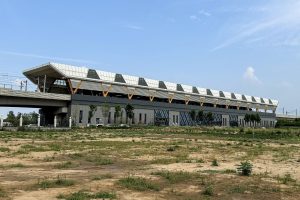
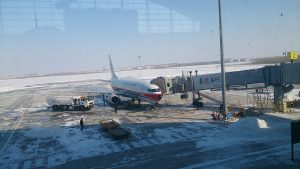
Flights from Chengdu take just over an hour, but the schedule is fickle. In peak autumn, carriers add a second daily departure; in winter, they may cancel for days if crosswinds howl across the runway. Book the earliest morning flight — it has the best shot at clear visibility — and keep your Chengdu return ticket flexible. The airport shuttle bus meets every arrival and drops passengers at the Daocheng bus station in the town center; the ride is fifty minutes of hairpin turns past prayer flags and yak herds. A private taxi costs around 150 yuan and can stop at the Sangdui viewpoint if you ask.
Overland from the east, the paved highway from Kangding stretches 380 kilometers and takes twelve to fourteen hours in a shared minivan. The road climbs over Zheduo Pass (4,298 m) and Kazila Pass (4,718 m) before dropping into the Daocheng basin. Motion sickness tablets are mandatory; the driver will not stop for vomiting. From the south, the route from Shangri-La in Yunnan crosses the Yangtze at Benzilan, then climbs through Tibetan hamlets where the only fuel is a hand-pumped diesel drum. That journey eats two full days with an overnight in Xiangcheng (3,200 m), which softens the altitude jump.
Moving around once you’re in the valley
Daocheng town is walkable — twenty minutes from the bus station to the farthest guesthouse — but the real destinations lie outside. To reach Yading Reserve, catch the 7:30 a.m. park shuttle from the square in front of the county government building. The bus costs 20 yuan, runs only when full, and deposits you at the visitor center forty minutes later. Return buses leave the reserve at 4:30 p.m. sharp; miss it and you’re hitching a ride on a supply truck or paying 300 yuan for a private car. Electric sightseeing cars ferry visitors from the visitor center to Luorong Pasture (4,100 m) — buy the round-trip ticket, 80 yuan, unless you’re acclimatized enough to hike the two-hour climb. Horses and porters wait at the pasture entrance; negotiate the price before you mount, and insist the handler walks beside you, not ahead.
Sleeping, eating, and the small courtesies
Guesthouses cluster around the main intersection. Look for a sign reading “氧气” (oxygen) — most rooms have a portable canister by the pillow. Beds are firm, blankets heavy, and hot water runs only between 7 and 10 p.m. when the solar tank is full. Dinner is communal: a tin tray arrives with steamed barley buns, a bowl of yak meat stewed with radish, and a dish of stir-fried wild greens gathered from the slopes. Eat the greens first; they cool fast. Butter tea refills are free, but alcohol is discouraged at this elevation — one beer hits like three at sea level.
When you enter a family’s kitchen area, step over the threshold, not on it. Accept the offered tea with both hands, sip, then set the cup down gently. Never point your feet toward the stove or the altar. If a monk passes on the street, step aside and lower your voice. These gestures cost nothing and open doors — literally. The keeper of the town’s small Sakya monastery once invited me up to the roof to watch the lanterns lit for the fifteenth day of the lunar month, a view no ticket buys.
Mistakes that cost time or comfort
- Booking a non-refundable flight into Daocheng Yading Airport without a buffer day in Chengdu; weather cancellations are routine.
- Assuming the park shuttle runs on a fixed timetable — it departs only when seats fill.
- Skipping the acclimatization night in town and heading straight to the reserve’s high trails.
- Carrying a heavy suitcase on the cobblestone lanes; porters with handcarts wait at the bus station for ten yuan a load.
- Expecting ATMs to dispense cash after 6 p.m.; the single machine often runs dry by afternoon.
- Photographing monks or elders without asking; a nod and a smile usually earn permission, but silence is taken as rudeness.
On my last morning, the woman who served butter tea at the chorten pressed a red string into my palm — a blessing for safe travel. The minibus engine coughed to life, the prayer flags snapped, and the valley fell away behind us. Daocheng doesn’t hand out postcard moments; it hands you altitude, silence, and the space to notice both.