The rickshaw driver didn’t speak English, and my Mandarin was stuck on “hello” and “thank you.” I held up a screenshot of the Oilfield Museum on my phone. He nodded, kicked the pedal brake loose, and we rattled down a wide boulevard lined with pine trees, past a cluster of pumpjacks nodding slowly in the evening light. That short ride — costing maybe twenty yuan — was the moment Daqing stopped being a name on a map and started feeling like a place with a pulse.
Arriving Without a Fuss
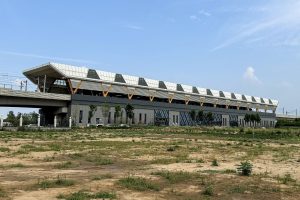
Most visitors fly into Harbin Taiping International Airport first. From there, the high-speed train to Daqing East takes just over an hour and runs frequently throughout the day. The station is modern, clean, and easy to navigate even if you cannot read Chinese — follow the blue signs for “Exit” and you will find the taxi queue and the metro entrance side by side. If you land at Daqing Sartu Airport, the shuttle bus to the city center runs every thirty minutes or so, but a taxi is faster and still cheap by Western standards. Long-distance buses from Harbin’s main terminal drop you near the old railway station, which puts you closer to the older neighborhoods and the main university campus.
Moving Around the Grid
Daqing was planned on a Soviet-style grid, so the main roads are wide, straight, and numbered rather than named. That makes orientation simple once you realize the even numbers run east-west and the odds run north-south. The metro currently has one line slicing diagonally across the urban core, connecting the high-speed rail station, the government district, and the main shopping hub at Walmart Plaza. Buses fill the gaps, but the stops are announced only in Mandarin. Taxis are plentiful and metered; a cross-town ride rarely exceeds thirty yuan. For short hops, the electric scooters you unlock with a phone app are everywhere — just scan the QR code on the handlebar, wear the helmet hanging from the mirror, and stay in the bike lane.
What to See: Oil, Water, and Wetlands
The city exists because of oil, and the Daqing Oilfield Museum is the logical first stop. The outdoor exhibition park displays a forest of retired derricks, pumpjacks, and a massive drill bit the size of a dining table. Inside, wax figures recreate the 1959 discovery well, and a darkened theater shakes violently to simulate the moment the gusher blew. Allow two hours. A short taxi ride north brings you to Lianhuan Lake, a chain of reservoirs linked by causeways. In summer, families rent paddle boats and grill lamb skewers on the grassy banks; in winter, the ice thickens enough for trucks to drive across, and you will see locals drilling holes for ice fishing while sipping baijiu from thermoses. For birdwatchers, the Zhalong Nature Reserve lies about an hour southeast by car. Red-crowned cranes dance in the marshes from spring through autumn. The reserve runs a breeding center where you can watch chicks being hand-fed — go early, before the tour groups arrive.
Eating Like a Local
Daqing cuisine leans heavily on northeastern staples: hearty stews, hand-pulled noodles, and pickled vegetables that cut through the oil. The signature dish is guo bao rou — pork tenderloin sliced thin, battered, fried twice, and tossed in a sweet-sour sauce that clings like glaze. Order it at any mid-range restaurant; the best versions arrive sizzling on a cast-iron plate, the crust still cracking when you bite. Another staple is tie gu dun, a clay-pot stew layered with pork ribs, potatoes, vermicelli, and cabbage, slow-cooked until the broth turns gelatinous. For breakfast, hunt down a stall selling shao bing — flaky sesame flatbreads stuffed with scallions and a smear of fermented bean paste — eaten standing up with a cup of hot soy milk.
- Guo bao rou ingredients: pork tenderloin, potato starch, egg white, ginger, garlic, vinegar, sugar, soy sauce, oil for deep-frying.
- Home method: Slice pork 3 mm thick. Marinate ten minutes with salt, white pepper, and ginger water. Coat in starch-egg batter. Fry at 160 °C until pale gold, rest two minutes, then flash-fry at 190 °C until crisp. Toss instantly in sauce made from vinegar, sugar, soy, minced garlic, and a splash of the hot oil.
- Tie gu dun ingredients: pork ribs, potatoes, sweet potato vermicelli, napa cabbage, star anise, cinnamon, soy sauce, rock sugar.
- Home method: Blanch ribs. Layer cabbage, ribs, potato chunks, and soaked vermicelli in a clay pot. Add spices, soy, sugar, and water to cover. Simmer ninety minutes over low heat. Do not stir; let the layers meld.
- Restaurant ordering tip: Point to the picture menu and say “yī fèn” (one portion). Ask “là bu là?” if you want less chili. Portions are large — two people share three dishes comfortably.
- Beginner mistake: Ordering only rice. The starch here is noodles, dumplings, or steamed buns. Rice is an afterthought.
Seasons and Local Rhythms
Winter arrives early and stays late. By the ninth lunar month, the Songhua River freezes solid, and the city builds an ice-and-snow festival park near the river bridge — slides carved from crystal blocks, a maze of illuminated sculptures, and a market selling roasted sweet potatoes from drum ovens. Temperatures drop to minus twenty Celsius, but indoor heating is centralized and fierce; you will peel down to a T-shirt inside any mall or restaurant. Spring is brief and windy, kicking up dust from the surrounding plains. Summer is the sweet spot: long daylight, temperatures in the mid-twenties, and the wetlands at their greenest. The Dragon Boat Festival (fifth day of the fifth lunar month) brings races on Lianhuan Lake and sticky rice dumplings wrapped in reed leaves sold from tricycle carts. Autumn cools fast; by the ninth lunar month, the birch forests along the highway to Zhalong turn gold, and the crane migration peaks.
What Newcomers Get Wrong
First, assuming everyone speaks English. Outside the high-speed rail station and the four-star hotels, English is rare. Download an offline translation app and save screenshots of your hotel address and key destinations in Chinese characters. Second, skipping the bathhouse. The local yu chi is not a spa — it is a social institution. Men and women bathe separately, scrubbing each other’s backs with coarse mitts, then soaking in pools ranging from forty to forty-two degrees. It is where deals are made and gossip flows. Go late evening, bring your own toiletries, and do not wear a swimsuit. Third, underestimating distances on the map. The urban districts — Sartu, Ranghulu, Longfeng, Honggang — are separated by industrial zones and patches of forest. A “short” drive can take forty minutes. Plan one major sight per half-day and use the metro for the backbone of your route. Finally, ignoring the oil workers. They are proud of the city’s nickname, “Iron Man City,” named for the 1960s model worker Wang Jinxi. If you sit next to a retired driller on the bus and ask about the early days, you will hear stories no guidebook prints.