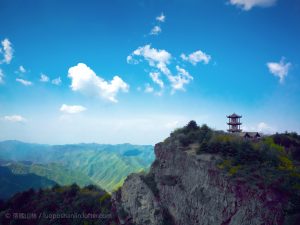
The minivan’s suspension groans as we crest the pass into Chongli, pine scent cutting through the heater vents. Below, the Olympic rings still glow white against a slope that held World Cup races last season. My driver, Lao Chen, taps the dashboard. “Snow holds until Qingming,” he says, meaning the Tomb Sweeping Festival in early spring. “After that, the wine grapes wake up in Huailai.” Hebei spreads out from this ridge — imperial gardens to the north, the Wall diving into the sea to the east, a new city rising from a lake to the south — all of it reachable before the dumplings get cold.
Chengde: Walking the Emperor’s Summer Escape
Arrive before the tour buses unload at nine. The Mountain Resort’s outer wall stretches farther than you expect — a morning’s walk if you follow the full circuit. Start at the main palace complex where Qianlong received Mongol princes; the throne room smells of sandalwood and old paper. Then slip toward the lake district. Paddle a rented rowboat past the lotus beds toward the Rehe River inlet. No motorboats allowed here. The water reflects the green tiles of Wenjin Pavilion, its library shelves empty since the Boxer Rebellion but the building intact.
Outside the resort walls, the Eight Outer Temples fan out along the hills. Putuo Zongcheng — the “Little Potala” — climbs in terraces of copper-gold roof tiles. Climbing the 400-odd steps to the main hall leaves your calves burning, but the view takes in the entire valley: the resort’s lakes, the city’s gray rooftops, the Great Wall’s distant snake along the ridgeline. Stay for the late afternoon light hitting the gilt stupas. The ticket covers all temples; buy it at the main resort gate, not from the touts at the temple parking lots.
Qinhuangdao: Where the Wall Meets the Sea
Laolongtou — Old Dragon’s Head — juts into the Bohai like a stone tongue. The Wall’s eastern terminus was rebuilt in the 1980s using original foundations, but the Chenghai Pavilion atop it dates to the Kangxi reign. Walk the battlements at dawn when the tide is out; you can see the foundation stones barnacled and green. Fishermen cast nets from the beach below, indifferent to the history overhead. Bring a thermos. The wind off the water cuts through a down jacket by midmorning.
South along the coast, Beidaihe’s villa district hides behind pine windbreaks. This is where the leadership summers. The beaches are public but the compounds are not. Walk the pigeon-nesting cliffs at Pigeon Nest Park instead — migratory birds stack the trees in spring and autumn. Eat at the open-air stalls near the train station: steamed hairy crabs dipped in ginger vinegar, grilled squid brushed with chili oil, bowls of seafood noodle soup with hand-pulled strands thick as shoelaces.
Chongli: Snow, Then Grapes
The ski season runs from first snow — usually late November — through the spring thaw. Four major resorts cluster here: Thaiwoo, Genting Secret Garden, Wanlong, and Cloud Peak. Thaiwoo’s village base has the most apres-ski: a microbrewery, a Sichuan hotpot place that stays open until midnight, a bakery turning out rye loaves that survive the altitude. Genting’s gondola accesses the longest vertical. Wanlong’s night skiing keeps the lifts humming until ten. Cloud Peak feels quieter, more family-oriented.
When the lifts close, the valley doesn’t sleep. Huailai County, forty minutes south by car, sits on the same latitude as Bordeaux. The Great Wall Cabernet vineyards offer tastings in a stone chateau overlooking rows of vines trained low against winter kill. Their reserve red spends eighteen months in French oak. The ice wine — harvested at minus twenty — comes in slender bottles that cost a week’s wages but taste like concentrated apricot and honey. Book the cellar tour ahead; the winemaker walks you through the fermentation tanks himself if he’s not in Beijing.
Baiyangdian: The Lake That Remembers
Xiong’an New Area rises on Baiyangdian’s northern shore — cranes, scaffolding, the skeleton of a high-speed rail station. But the lake itself, three hundred square kilometers of lotus, reed, and open water, moves at its own rhythm. Hire a flat-bottomed boat from a village dock in Anxin County. The boatman poles through channels where the water chestnuts grow thick enough to walk on. Egrets stalk the margins. In summer, the lotus flowers open pink and white across acres; the seed heads rattle in the wind like dry bones.
Eat at a farmhouse on one of the artificial islands. The menu writes itself: stewed carp with pickled mustard greens, lotus root stuffed with glutinous rice and steamed sweet, cold salad of shredded lotus stem with garlic and vinegar. The rice comes from paddies you passed on the boat. No menu cards — the auntie cooking asks how many bowls you want. Pay cash. There’s no signal for mobile payment out here.
Shijiazhuang and the Rail Artery
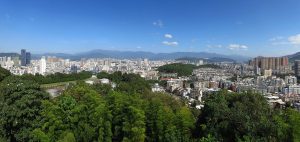
The provincial capital feels like a transit hub that grew into a city. High-speed lines fan out in six directions: Beijing in fifty minutes, Taiyuan in two hours, Zhengzhou in three. Use it as a base if you’re stitching together Chengde, the Taihang Mountains, and the western Great Wall sections without backtracking. The Hebei Museum holds a Han dynasty jade burial suit — two thousand plates of nephrite sewn with gold wire — that justifies an hour indoors. For dinner, follow the office workers to the night market behind the railway station: lamb skewers dusted with cumin and chili, hand-rolled noodles in beef broth, persimmon cakes pressed flat and fried until the sugar caramelizes.
Taihang Mountains: The Wall’s Wild Spine
West of Shijiazhuang, the Taihang range lifts the Great Wall into terrain that defeated the Ming builders. Sections like Jiaoshan and Xiao Wutai see maybe a dozen hikers a week in the off-season. The stone is loose, the watchtowers roofless, the stairs uneven as broken teeth. Hire a local guide from a village at the mountain’s foot — they know which towers have collapsed inward and which ridgelines connect. Carry two liters of water, a headlamp, and a paper map. Phone GPS fails in the deep valleys.
Spring brings wild apricot blossoms white against the gray rock. Autumn lights the maples scarlet along the stream beds. Summer thunderstorms roll up the valleys fast; lightning loves the Wall’s high points. Winter buries the trails under waist-deep drifts. The sweet spot is the week after the Mid-Autumn Festival: stable weather, thin crowds, the persimmons ripening in village courtyards.
Moving Between: Trains, Cars, and Timing
- High-speed rail connects Shijiazhuang, Baoding, Dingzhou, and Handan on a north-south spine. Chengde requires a transfer at Beijing or a slower direct line from Tianjin.
- Qinhuangdao and Beidaihe sit on the coastal line; trains from Beijing take two and a half hours.
- Chongli has its own high-speed station now — direct from Beijing North in fifty minutes, from Shijiazhuang in two hours.
- Baiyangdian villages need a car. Didi works from Xiong’an station; negotiate a day rate with the driver for island hopping.
- Taihang trailheads demand private transport. The mountain roads are paved but narrow; tour buses cannot turn around at the upper parking areas.
Avoid the Golden Week holidays in early autumn and the week around Spring Festival. The Wall sections become conga lines. The ski resorts sell out. The lake boats queue at the docks. The shoulder seasons — late spring after the peonies bloom, early autumn before the persimmons drop — give you the province nearly to yourself.
What Newcomers Get Wrong
- Treating Hebei as a day trip from Beijing. The distances look short on a map; the mountain roads and security checkpoints add hours.
- Assuming English signage exists beyond the major resort hotels. Learn the characters for “entrance,” “exit,” “toilet,” and “police.”
- Packing only city shoes. The Wall’s Ming bricks are polished smooth by centuries of feet; the mountain paths are scree and mud.
- Expecting Western breakfast in county towns. The morning spread is congee, pickles, steamed buns, and maybe a soy milk stall.
- Photographing military installations near the coast or the new area. The signs are small, the penalties are not.
Lao Chen drops me at the Chongli station as the evening train pulls in. Snow dusts the platform. “Next time,” he calls through the window, “come for the apricot blossoms. The valleys turn white as the Wall.” The doors hiss shut. Through the glass, the mountains hold their shape against the dusk — patient, layered, waiting for the season to turn.