The train from Beijing slows to a crawl somewhere past Shenyang. Outside the window, the birch forest stands black against a white that goes on for kilometers. By the time the announcement for Harbin sounds, the air inside the carriage has turned dry and sharp. You step onto the platform and your breath turns visible before your boots hit the concrete. This is Heilongjiang in the deep cold: a place where the temperature dictates the schedule, where Russian onion domes catch the low sun, and where the best meals are eaten steaming hot at a table shared with strangers.
When the Cold Sets the Calendar
Locals measure the year in “jiu,” nine-day cycles that start at the Winter Solstice. The coldest stretch usually falls in the third and fourth nine, roughly late January to mid-February on the Gregorian count. That is when the Songhua River freezes thick enough to drive a truck across, and when the Ice and Snow World opens its gates. If you arrive during the Spring Festival week, every hotel within three subway stops of Central Street will be full, and the line for the slide at Stalin Park stretches for an hour. Come in the first lunar month, after the lanterns come down, and the crowds thin by half. The ice sculptures stay lit, the hotels drop their rates, and the wind still bites at minus twenty-five.
Summer is a different province entirely. By the sixth lunar month, the snow is a memory. The Songhua banks fill with beer gardens and pop-up grills. Up north near Mohe, the sun barely sets in June. That is the window for the “Midnight Sun” train tourists, but also the season for mosquitoes the size of fingernails. Autumn arrives fast — golden birch leaves in late September, first frost by the Double Ninth Festival. The shoulder seasons are short, but they offer the only comfortable weather for hiking the volcanic fields of Wudalianchi without either sweating through layers or risking frostbite on exposed knuckles.
Moving Across the Ice
Harbin Taiping Airport sits forty minutes from the city center by airport bus, but in a blizzard that bus can take ninety. The high-speed rail station in the west district connects to Beijing in eight hours and to Mudanjiang in ninety minutes. For the far north — Mohe, Beiji Village — the only reliable ground option is the overnight K7041 from Harbin. It leaves in the early evening, rattles through the Greater Khingan Range all night, and deposits you at the terminus near the Arctic Village scenic gate around noon the next day. Book a hard sleeper; the soft sleeper compartments sell out to tour groups weeks ahead.
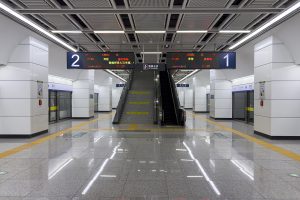
Inside the cities, the metro in Harbin runs two lines that cover the main sights: Central Street, the Flood Control Monument, and the Tiger Park. Taxis are plentiful until a heavy snowfall, when every driver switches to “reserved” mode. Download the local ride-hailing app (the green one, not the orange one) and set your destination in Chinese characters. Drivers rarely speak English, and the address “Ice and Snow World” confuses them — use the Chinese name “冰雪大世界” or the nearby landmark “Sun Island.” For day trips to Yabuli ski resort or Jingpohu, hire a private driver for the day. The resort shuttle buses run on a fixed schedule that assumes you are staying at a slope-side hotel; if you are in a city homestay, you will miss the last return bus by 4 p.m.
What Arrives on the Table
Heilongjiang cuisine (Dongbei cai) is built for calorie survival. The portions are massive, the oil heavy, the flavors salty-sour from pickled cabbage and vinegar. A typical family-style spread in a Harbin alley restaurant looks like this:
- Guo Bao Rou (锅包肉) — pork tenderloin sliced thin, battered with potato starch, double-fried until the crust shatters, then tossed in a syrup of rice vinegar, sugar, and ginger. The authentic version is amber, not neon orange, and the sauce clings rather than pools.
- Di San Xian (地三鲜) — potato, eggplant, and green pepper deep-fried separately, then braised in garlic, soy, and a splash of water starch. The potato edges should be crisp, the eggplant creamy, the pepper still snapping.
- Tie Gu Dun (铁锅炖) — a cast-iron pot set over a coal stove at the table. Chicken, pork ribs, or goose simmers with vermicelli, potato chunks, and cornmeal pancakes stuck to the rim. You eat the meat first, then tear the steam-softened pancakes to soak up the broth.
- Hong Chang (红肠) — Harbin red sausage, smoked over pine and birch, dense with garlic and pepper. Slice it cold with raw garlic cloves and a shot of chilled vodka.
- Suancai (酸菜) — napa cabbage fermented in earthenware jars for months. It appears in dumplings, stir-fries, and the broth for hand-pulled noodles.
Home method for Guo Bao Rou:
- Slice pork tenderloin against the grain into 3-cm strips. Marinate ten minutes with salt, white pepper, and a splash of Shaoxing wine.
- Coat each strip in a batter of potato starch, a pinch of baking powder, and cold water — consistency of heavy cream.
- Heat oil to 170°C. Fry strips in small batches until pale gold, ninety seconds. Drain on a rack.
- Rest oil two minutes. Return all strips for a second fry, thirty seconds, until the crust crackles when pressed.
- Sauce: rice vinegar, white sugar, minced ginger, a drop of dark soy for color. Simmer until syrupy. Toss meat once, plate immediately.
Restaurant ordering traps: Menus often list “Sweet and Sour Pork” as a translation for Guo Bao Rou, but the kitchen may serve the Cantonese version with pineapple and ketchup. Point to the characters 锅包肉. Ask for “bu yao tai tian” (not too sweet) if you want the vinegar forward. “Tie Gu Dun” requires a minimum of two people; solo diners get a small clay pot version that lacks the pancake rim. At breakfast, skip the hotel buffet. Walk to a street stall for “ma doufu” (麻豆腐) — fermented tofu slurry with chili oil, scallions, and a side of millet congee. It wakes the stomach better than coffee.
Sleeping Where the Heat Stays
Harbin central district has three tiers. The five-star chains on Central Street (Zhongyang Dajie) charge premium rates for radiators that barely keep up with the draft off the Songhua. Mid-range business hotels near the railway station offer reliable 24-hour hot water and thick quilts — check the bathroom window seals before you book. The real find is a “kang” room in a family courtyard house in Daowai district. The kang is a brick bed heated by a firebox underneath; you sleep on a straw mat and cotton batting, fully clothed. The host will wake you at 6 a.m. with a thermos of hot water and a bowl of steamed buns. Cost is a fraction of the chain hotels, but you need a Chinese-speaking friend to negotiate the WeChat booking.
At Yabuli, the slope-side hotels are ski-in/ski-out but the rooms are often converted shipping containers with thin walls. Book a room in the village at the base of the mountain instead — a ten-minute shuttle ride, half the price, and the owner’s wife makes dumplings from scratch every evening. In Mohe, the “Arctic Village” guesthouses are basically heated shipping containers with shared squat toilets. Bring your own towel, toilet paper, and a power bank; the grid trips out when every room runs a space heater at midnight.
Rituals, Mistakes, and the Unwritten Rules
At the Ice and Snow World, the ticket scanner reads your ID card or passport. Foreign passports sometimes fail the facial recognition gate. Carry a printed copy of the visa page and a screenshot of the QR code from the official WeChat mini-program. Enter at 2 p.m. for daylight photos, stay for the 5 p.m. light show, but leave before the 7 p.m. exodus or you will wait forty minutes for a taxi in wind that freezes eyelashes together.
Visiting a Russian Orthodox church (St. Sophia or the smaller Protection Cathedral on Tongjiang Street): women cover heads with a scarf, men remove hats. No flash photography during liturgy. The candle stand accepts only cash — small denominations. If you light a candle, place it in the sand tray with the others; do not blow out a neighbor’s flame.
In the far north, the reindeer herders near Aoluguya are Ewenki, not performers. Do not walk into their camps uninvited. The legitimate cultural center in Genhe arranges guided visits where you sit on a stool, drink milk tea, and listen. Tip the guide, not the family. Photograph the reindeer only after asking the herder holding the lead rope.
Common newcomer errors: wearing fashion boots with smooth soles on Central Street’s polished ice — one slip and you crack a tailbone. Buy the rubber-studded overshoes sold at every corner kiosk for twenty yuan. Carrying a phone in an outer pocket; the battery dies in ten minutes. Keep it in an inner chest pocket against your skin. Ordering “beer” at a northeast restaurant without specifying “Harbin Beer” (哈啤) — you will get a warm generic lager. Harbin Beer must be served ice-cold in a thick glass mug; if the mug isn’t frosted, send it back.
At the Zhalong wetland reserve, the red-crowned crane release happens at 10 a.m. and 2 p.m. only. The birds fly to the feeding platform, not the parking lot. Bring binoculars. The boardwalk is wooden and slick; the railings are waist-high but the gaps between slats will swallow a glove. In summer, the marsh smells of rot and blooming lotus — wear long sleeves and tuck pants into socks. The leeches here are not a legend.
A Five-Day Winter Loop
Day 1 — Harbin Arrival. Land midday. Check into Daowai kang room. Walk Central Street at dusk: Russian bakery for a slice of lieba (rye bread) thick as a fist, dipped in kvass. Dinner at a hole-in-the-wall for tie gu dun goose. Sleep under three quilts.
Day 2 — Ice City. Morning: St. Sophia interior, then Flood Control Monument for the river view. Lunch: guo bao rou and di san xian at Lao Chu Jia (老厨家) — queue starts at 11 a.m. Afternoon: Sun Island snow expo (separate ticket from Ice World). Sunset at Stalin Park watching locals kick shuttlecock on the frozen Songhua. Night: Ice and Snow World, enter 2 p.m., stay for lights.
Day 3 — Yabuli Ski. Private driver 07:30 departure. Three hours on the expressway. Rent gear at the base village shop (better fit, cheaper than resort). Ski the beginner bowl until lunch — lamb hotpot at the village restaurant. Afternoon: take the gondola to the top for the view, even if you don’t ski down. Return to Harbin by 19:00. Late-night hong chang and vodka at a bar on Baroque Street.
Day 4 — North to Mohe. Catch K7041 at 18:30 from Harbin. Hard sleeper lower berth. Pack instant noodles, thermos, oranges, wet wipes. Train food cart sells only lukewarm rice boxes. Sleep to the rhythm of the rails crossing the permafrost.
Day 5 — Arctic Village. Arrive 12:30. Check into heated container guesthouse. Walk to the “Northernmost Point” obelisk for the certificate stamp. Afternoon: dog sled ride (negotiate 200 yuan for fifteen minutes, cash). Dinner: stewed fish with suancai and wild mushroom at the host’s table. If the sky clears after 22:00, step outside the light pollution — the aurora here is a pale green smear, not the neon curtains of Tromsø, but it is yours alone.
The train south carries the smell of pine smoke and dried fish. You watch the birch forest blur past, the white giving way to grey, then to the brown of early spring earth. The cold stays in your fingers for weeks after you land — a souvenir no customs officer can confiscate.