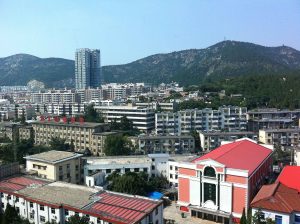
The minibus rattled over the last switchback before the Hakka village of Huangyao, the tires hissing on wet asphalt. Through the open window came the smell of damp bamboo and woodsmoke, thick enough to taste. An old woman in a blue headscarf waved from a doorway where cured pork hung in neat rows, the fat gleaming amber in the afternoon light. I had come for the stone forests and the tea terraces, but the first lesson of Hezhou arrived before I even shouldered my pack: this place moves at the pace of the mist, not the schedule.
Getting There and Moving Around
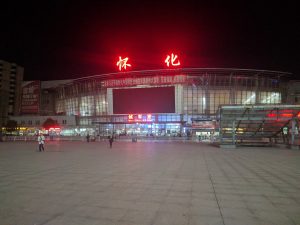
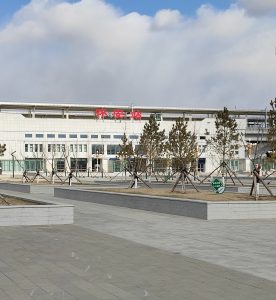
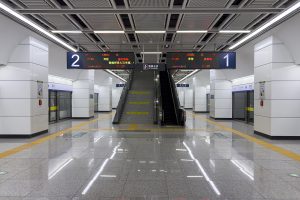
High‑speed rail is the spine of travel here. The station sits on the edge of Babu District, a clean modern box that feels dropped in from another province. Trains from Guilin take about forty minutes; from Guangzhou, just over two hours. Step onto the platform and you are immediately funneled into a scrum of electric‑bike taxis and black‑plate Didi cars. Negotiate a flat fare before you climb on the back of a scooter—twenty yuan usually covers the ride to a downtown hotel, thirty if you are heading to the hot‑spring resorts on the eastern fringe.
For the stone forests and tea mountains, rent a car or hire a driver for the day. The roads are good, but signage switches between Chinese and Zhuang script without warning. A local driver knows which gravel turnoff leads to the Guposhan viewing platform and which dead‑ends at a locked forestry gate. If you insist on self‑driving, download an offline map that shows forest‑service tracks; the 4G signal vanishes the moment you climb past the orange groves.
Where to Sleep: Riverside vs. Mountain
Two neighborhoods define the night. The He River promenade in central Babu has a string of mid‑range chains—Home Inn, Jinjiang, a few boutique conversions in renovated shophouses. Rooms face the water, and the morning chorus of square‑dance music drifts up from the plaza below. It is convenient for late‑night noodle runs and early trains.
The alternative is a courtyard guesthouse in Huangyao or a timber‑frame lodge near Guposhan. These places rarely appear on international booking sites; you message the owner on WeChat, send a deposit via Alipay, and trust the photo of the tiled roof and the promise of a wood‑fired heater. The payoff: waking to the sound of a mountain stream and a breakfast of sticky‑rice dumplings steamed in bamboo tubes, served on a stone table while the valley fills with white cloud.
Stone Forests, Tea Terraces, and the Ancient Road
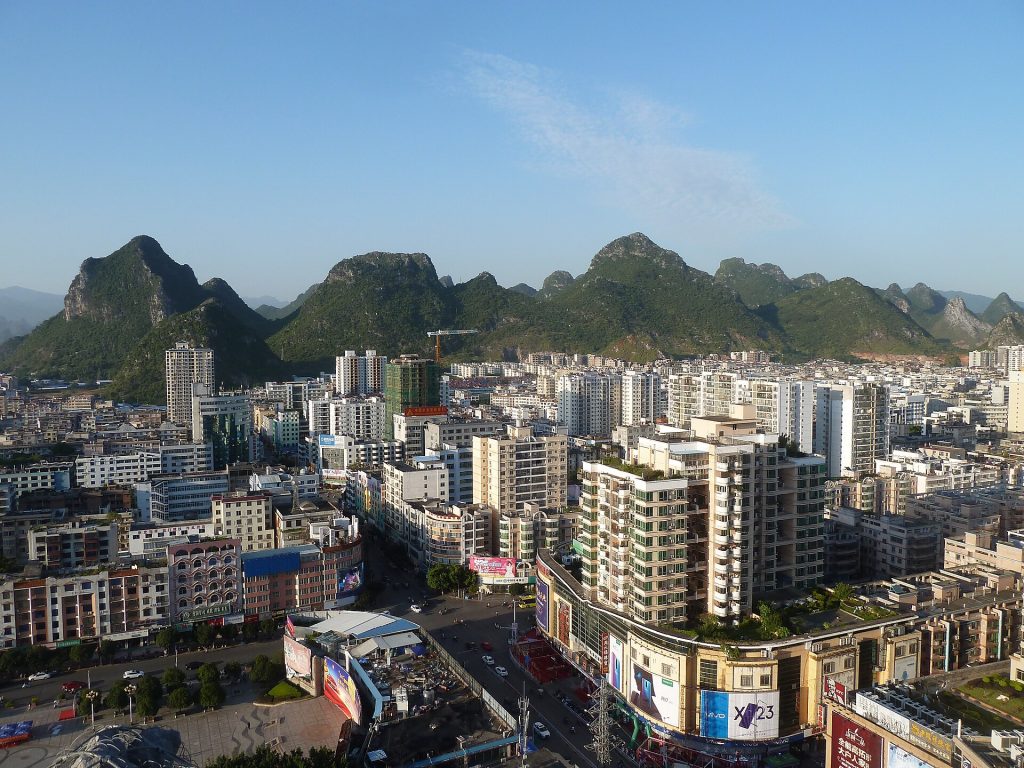
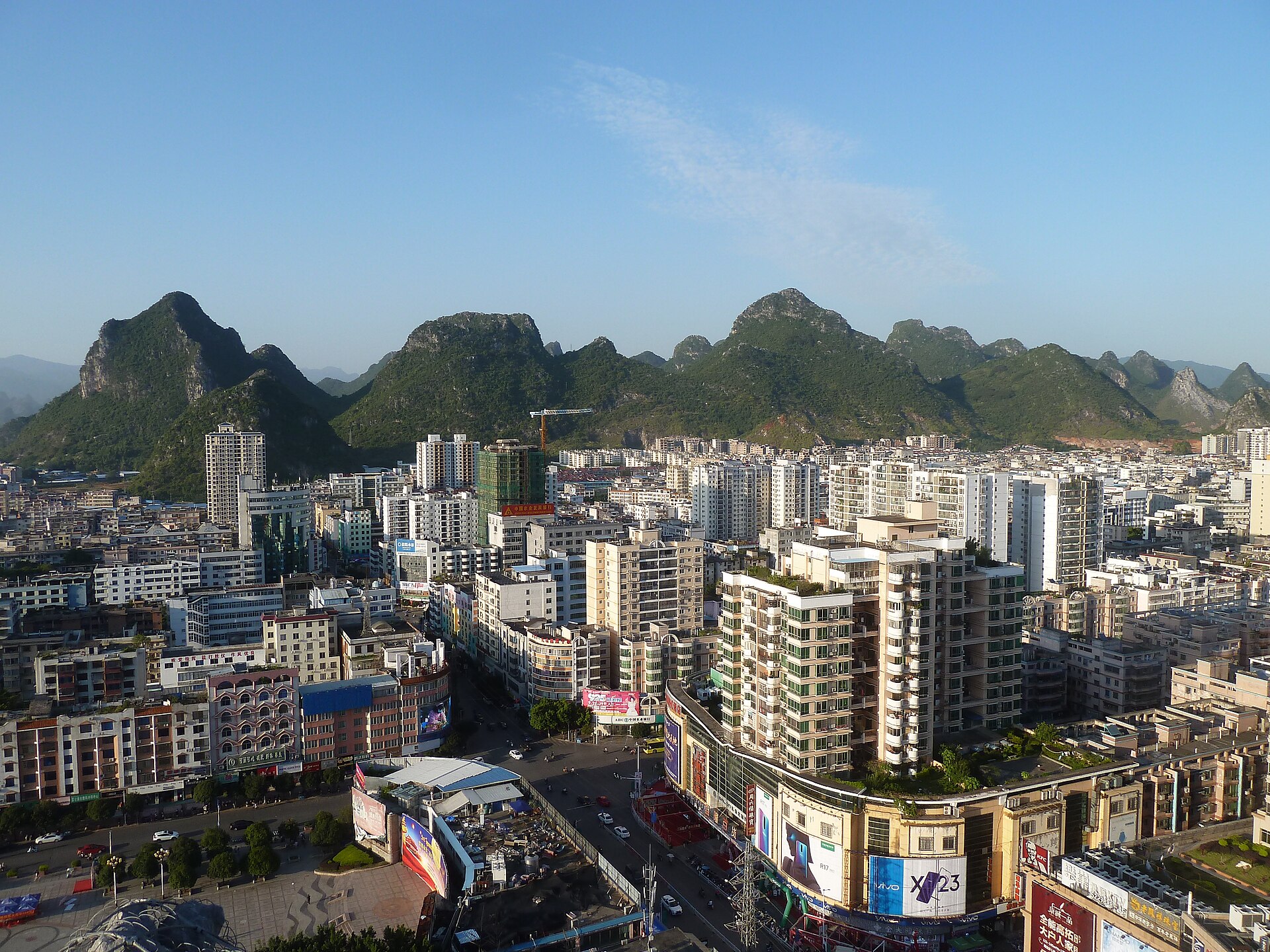
Hezhou’s signature landscape is karst, but softer than the needles of Yangshuo. At Guposhan, the peaks wear caps of pine and rhododendron. A boardwalk climbs through a canyon where the rock walls are etched with calligraphy from the Qing dynasty—poems about exile and tea. Allow three hours for the loop; the steps are uneven and slick after rain. Wear shoes with grip, not sandals. I watched a tourist in flip‑flops slide sideways into a fern bed, her phone skating across the moss.
East of the city, the tea terraces of Fuchuan roll like green quilts stitched along the ridges. In the spring harvest, the air smells of crushed leaf and dew. Farmers work in pairs, one snipping the bud-and-two-leaves, the other spreading them on bamboo trays. You can join a half‑day picking session arranged through the village committee—twenty yuan buys a basket, a hat, and the right to keep whatever you pluck. The tea you process yourself, hand‑fried in a wok over charcoal, will taste different from anything in a tin: grassy, sweet, with a finish that lingers like incense.
The Xiaohe Ancient Road threads through the same hills. Once a mule track for tin and salt, it is now a cobbled footpath linking half‑abandoned villages. Walk the section from Shizhai to Longtang in the late afternoon. The light slants through the banyan roots, and you pass shrines where villagers still leave tangerines and incense for the mountain god. No ticket booth, no audio guide—just the sound of your own breath and the occasional bark of a village dog.
Eating: Hakka Salt, River Fish, and Orange Fire
Hezhou food is Hakka at its core: preserved, salty, built for labor. The table fills with dishes that have traveled generations in clay jars.
- Salt‑baked chicken (盐焗鸡) — A whole bird buried in coarse salt inside a clay pot, slow‑cooked until the skin turns paper‑thin and the meat pulls clean from the bone. Order it at any Hakka family restaurant; the best ones crack the pot tableside, releasing a cloud of steam that carries the scent of star anise and ginger.
- Stuffed tofu (酿豆腐) — Blocks of soft tofu hollowed and packed with minced pork, shiitake, and chopped scallion, then pan‑fried until the edges lace brown and finished in a light soy broth. Eat it hot with a bowl of plain rice; the broth is for drinking, not wasting.
- River snail stew (田螺煲) — Freshwater snails simmered with perilla leaf, fermented bean curd, and plenty of chili. You suck the meat out through the shell’s aperture—messy, loud, essential. Pair with a cold beer on a riverside stall.
- Navel‑orange glazed pork ribs (脐橙排骨) — A local twist: the juice of Hezhou’s famous navel oranges reduced with rock sugar, soy, and five‑spice into a sticky lacquer. The ribs come out caramelized, the fat rendered translucent. Ask for extra napkins.
- Horseshoe crab congee (马蹄蟹粥) — Not the Atlantic horseshoe; this is the local mangrove crab, small and sweet. The shells are pounded, boiled until the broth turns milky, then strained. Rice is added slow, stirred with a wooden paddle until each grain bursts. A sprinkle of white pepper and shredded ginger finishes it.
For a home‑style attempt at salt‑baked chicken, you need a heavy clay pot, coarse sea salt, a whole chicken (about 1.5 kg), ginger slices, scallion knots, star anise, and Sichuan peppercorns. Rub the cavity with salt and stuff the aromatics. Heat the pot dry, pour in a kilogram of salt, nestle the bird breast‑down, cover with the remaining salt, clamp the lid, and cook over low flame for fifty minutes. Crack the crust, brush off excess salt, and carve. The skin should shatter like glass; the juice runs clear, not pink.
In restaurants, point to the chalkboard specials rather than the picture menu. The daily catch—usually carp or catfish from the He River—arrives steamed with fermented black bean and julienned ginger. If the waiter suggests the “spicy hot pot,” clarify whether it is the Guangdong clear broth or the Chongqing red oil; the former lets the ingredients speak, the latter drowns them. And never order the “tourist set meal” advertised at the station; it is pre‑cooked, reheated, and priced for people who will not return.
Seasons, Festivals, and the Rhythm of the Place
Spring arrives with the Qingming rains. The tea bushes flush, and the orange blossoms perfume the valleys. This is the busiest week for domestic travelers; book transport and beds weeks ahead. Summer brings the monsoon—afternoon downpours that turn mountain paths into slurry. Locals carry straw hats and plastic stools; copy them. The Dragon Boat Festival in the fifth lunar month sees races on the He River, the drums audible from the riverside bars.
Autumn is the sweet spot. The air dries, the navel oranges swell to fist‑size, and the Hakka villages hold the “Fire Dragon” dance—straw dragons lit with incense sticks, paraded through narrow alleys to drive away damp spirits. If you are invited into a courtyard for the post‑dance feast, accept. You will eat moon‑shaped rice cakes stuffed with peanut and sesame, and drink rice wine from small porcelain cups. Refusing the first toast is polite; refusing the third is an insult.
Winter is quiet. The hot‑spring resorts at Wenquan fill with retirees from the north soaking in sulfur pools. The city slows to a hum of mahjong tiles and the clack of wooden looms. Prices drop, and you can have the stone forest nearly to yourself, the only sound the wind in the pines and the distant tap of a chisel on rough jade.
What Newcomers Get Wrong
First, they treat Hezhou as a day trip from Guilin. It deserves at least two nights—one for the mountains, one for the river town. Second, they pack only light clothing. Even in summer, the mountain tops run ten degrees cooler; a fleece and a rain shell belong in every pack. Third, they assume Mandarin works everywhere. In the villages, elders speak Hakka or Zhuang; a few phrases—“m̀h gōi” (thank you), “sik6 faan6” (eat rice/meal)—earn smiles that English never will.
Fourth, they photograph people without asking. The woman curing pork, the tea picker wiping sweat, the old men playing chess under the banyan—they are not scenery. Lower the camera, make eye contact, nod. Often they will wave you closer, pour a cup of tea, and tell you which trail avoids the landslide zone. That knowledge is worth more than any guidebook.
Finally, they leave without buying a sack of navel oranges. The fruit travels well; the skin is thick, the segments separate like jewels. Eat one on the train heading north, and the juice on your fingers will taste like the mist on Guposhan—proof you were here, not just passing through.