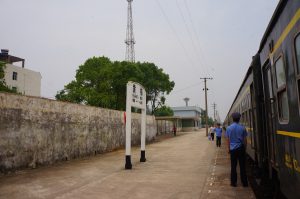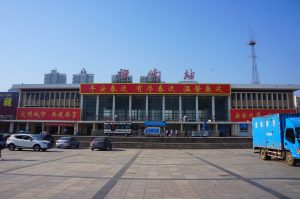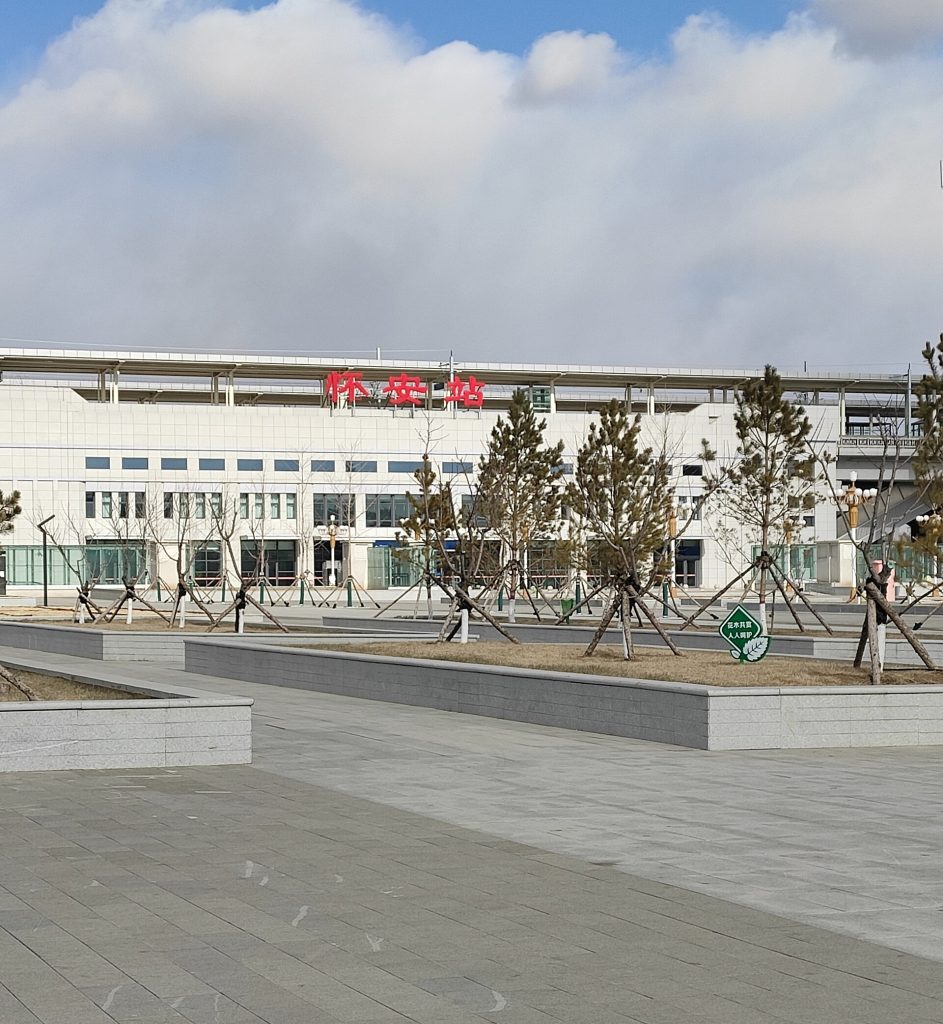
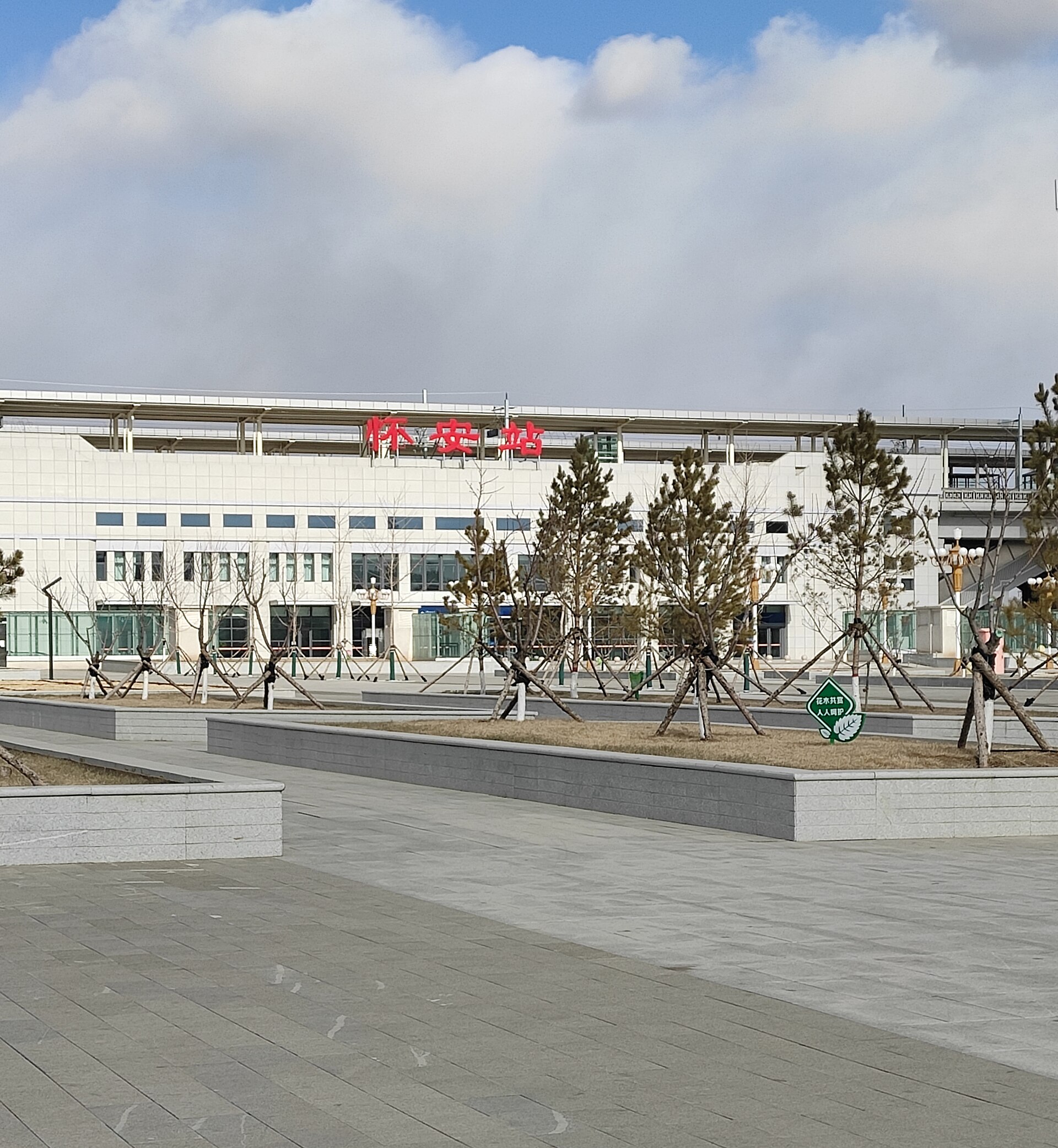
The minibus from Nanjing Lukou Airport pulls into the parking lot behind Huai’an East Station just as the sky turns the color of bruised plum. Steam rises from a vendor’s cart near the exit — pork dumplings, their pleats pinched tight, sitting in a bamboo steamer the size of a truck tire. I buy three, burn my fingertips peeling one open, and watch the broth spill onto the paper wrapper. That first bite, salty and hot against the cold night air, is the only orientation I need.
Arriving without a plan
Huai’an does not announce itself. The high-speed rail station sits in a district of wide boulevards and half-finished towers, but the city’s pulse is older, tucked along the Grand Canal and the ancient Huai River. If you fly into Lianshui Airport, the express bus to Dingli International Hotel takes forty minutes through flat fields broken only by poplar windbreaks. A taxi from the same airport costs roughly the same as a decent dinner for two — negotiate before the meter starts if the driver pretends it’s broken.
Trains are simpler. Huai’an East handles the high-speed lines from Shanghai, Nanjing, Xuzhou, and Beijing. The older Huai’an Station, closer to the canal, still sees conventional services. I once arrived on the overnight K-train from Hangzhou at 3 a.m. The platform was empty except for a woman selling roasted sweet potatoes from a metal drum. She handed me one wrapped in newspaper, no words exchanged. That potato, sweet and flaky, was breakfast.
Moving around the grid
The city center follows a rough grid. Buses numbered in the teens and twenties run along the main arteries — Jiefang Road, Xiangyu Avenue, Chengde Road. Fares are one or two yuan, cash or transit card. Drivers rarely speak English. Have your destination written in characters on your phone. The 101 loops the old canal district; the 26 connects the railway station to the government quarter.
Didi works, but drivers sometimes cancel short rides during shift change, around 5 p.m. and midnight. Shared e-bikes — Meituan’s yellow frames, Hellobike’s blue — cluster near subway entrances and university gates. Scan the QR, unlock, ride. Helmets are not provided. I learned this the hard way when a pothole near the Grand Canal sent me over the handlebars. My elbow still clicks when it rains.
Taxis start at eight yuan for the first three kilometers. After 11 p.m., the flag drop jumps to ten. Most drivers know the major hotels and the canal scenic area. For anywhere else — a specific lane in the old town, a factory canteen in the development zone — show a map pin.
Where to sleep: canal walls or conference carpets
The Dingli International and the Jinling Hotel anchor the business district near the municipal buildings. Rooms are predictable: blackout curtains, reliable hot water, English-speaking front desk. You pay for the address.
For texture, walk the lanes north of the Grand Canal. Courtyard guesthouses hide behind high gray brick walls. My favorite, a place called He Xia Ju, occupies a restored Qing merchant house. The owner, a woman in her sixties who once taught middle-school history, serves tea in the courtyard at dawn. No elevator. The stairs creak. The bathroom shares a solar water heater with the room next door — showers are a negotiation with the sun.
Book through Ctrip or Meituan. Foreign cards sometimes fail at check-in; carry enough cash for the first night. Registration with the local police station is automatic at licensed hotels. At smaller inns, the owner may ask for your passport to scan. Hand it over. It comes back in five minutes.
Eating: the table decides
Huai’an cuisine — Huaiyang, the grand name — is famous for knife work and gentle heat. But the daily table is simpler: river fish, fermented beans, wheat noodles, and whatever vegetable the market brought in that morning.
- Soft-shell crab stewed in soy and ginger — shell so tender you eat it whole, meat sweet as chestnut
- Pingqiao tofu — silken cubes the size of dice, swimming in chicken broth with diced ham, mushroom, and coriander
- Wenlou tangbao — soup dumplings the size of a walnut, skin translucent, vinegar-ginger dip mandatory
- Stir-fried river shrimp — live until the wok, shells crisp, heads sucked clean
- Cold wheat noodles with sesame paste, cucumber matchsticks, and a spoonful of chili oil
Ordering in a local restaurant: point at the picture menu if there is one. If not, say “suibian lai liang ge xiao cai” — bring two small dishes, chef’s choice. The server will nod and disappear. Dishes arrive when ready, not in courses. Rice comes last, or not at all if you’re eating noodles.
Home method for Pingqiao tofu: cut soft tofu into centimeter cubes. Blanch thirty seconds in salted water, drain. Simmer superior chicken stock with diced Jinhua ham, rehydrated shiitake, and a splash of Shaoxing wine. Slide in tofu. Heat through — do not boil. Finish with white pepper, chopped coriander, and a drizzle of rendered chicken fat. Serve in deep bowls.
Mistakes beginners make: asking for “less oil” — the kitchen will simply omit the final ladle of scallion oil that carries the flavor. Ordering steamed fish with soy sauce on the side — the fish steams in the sauce. Refusing the shrimp heads — the roe inside is the point. Leaving before the noodles — the broth, enriched by everything eaten before, is the dessert.
Walking the old canal at the right hour
The Grand Canal section through Huai’an is UNESCO-listed, but the designation matters less than the light. Go at first light in late spring, when the willows hang green threads into water the color of weak tea. Old men practice tai chi on the stone quay. A woman washes vegetables in a wooden basin, the rhythm of her knife unchanged for generations.
By midmorning, tour groups arrive with amplified guides. The museums — the Canal Transport Museum, the Zhou Enlai Memorial — fill with schoolchildren in matching caps. If you want quiet, slip into the side lanes behind the west bank. There, a tofu shop presses blocks by hand. A barber shaves an old customer with a straight razor. No signage. No tickets.
Evening brings the food stalls to the canal promenade. Grilled squid on skewers, stinky tofu fried black, candied hawthorn on sticks. Families claim plastic stools. Children chase bubbles. The air thickens with cumin, chili, and coal smoke. Stay long enough and someone will offer you a sip of their baijiu. Accept. It burns clean.
What locals expect and what trips you up
Huai’an people speak a dialect that sits between Mandarin and Wu. They understand standard Putonghua but answer in their own tones. Don’t mimic. Smile. Nod. “Hao” works for yes, “bu yao” for no thanks.
Queueing is theoretical. At the bus stop, at the dumpling window, at the hospital registration desk — bodies cluster. Elbows out. Step in. Hold your ground. It’s not rude. It’s the system.
Cash is fading but not dead. Small restaurants, market stalls, and taxi drivers prefer notes. WeChat Pay and Alipay work everywhere else. Link your foreign card before you arrive; the verification SMS sometimes fails on roaming.
Public toilets: carry tissue. Soap is rare. The best ones are in the newer malls — Wanda, Injoy — or the high-speed rail station. In the old town, look for the blue sign with the white “WC.” Squat. Breathe through your mouth.
Internet: hotel Wi-Fi blocks the usual suspects. Install a reliable VPN before you cross the border. Pocket Wi-Fi rentals at the airport cost about fifty yuan a day. Data-only eSIMs from Airalo or Ubigi activate in minutes.
Leaving without regret
The last morning, I walk the canal one more time. Mist clings to the water. A cargo barge pushes upstream, its diesel cough echoing off the stone. The tofu shop is already open — steam rising, the press groaning. I buy a block still warm, wrapped in lotus leaf. It sits in my backpack all the way to Nanjing, fragrant and heavy, a proper souvenir.