The minibus rattles to a halt on a dusty shoulder of the coastal highway, doors folding open onto a blast of salt air and the scream of kites overhead. Ahead, the Great Wall doesn’t climb a ridge — it marches straight into the Bohai Sea, its brick ribs disappearing under whitecaps. An old fisherman mends a net beside a concrete pillar marked “Jiumenkou,” barely glancing at the tourists spilling onto the sand. This is Huludao: no polished ticket booths, no rope lines, just the wall, the water, and the wind off the Korean Peninsula.
Reaching the Coast
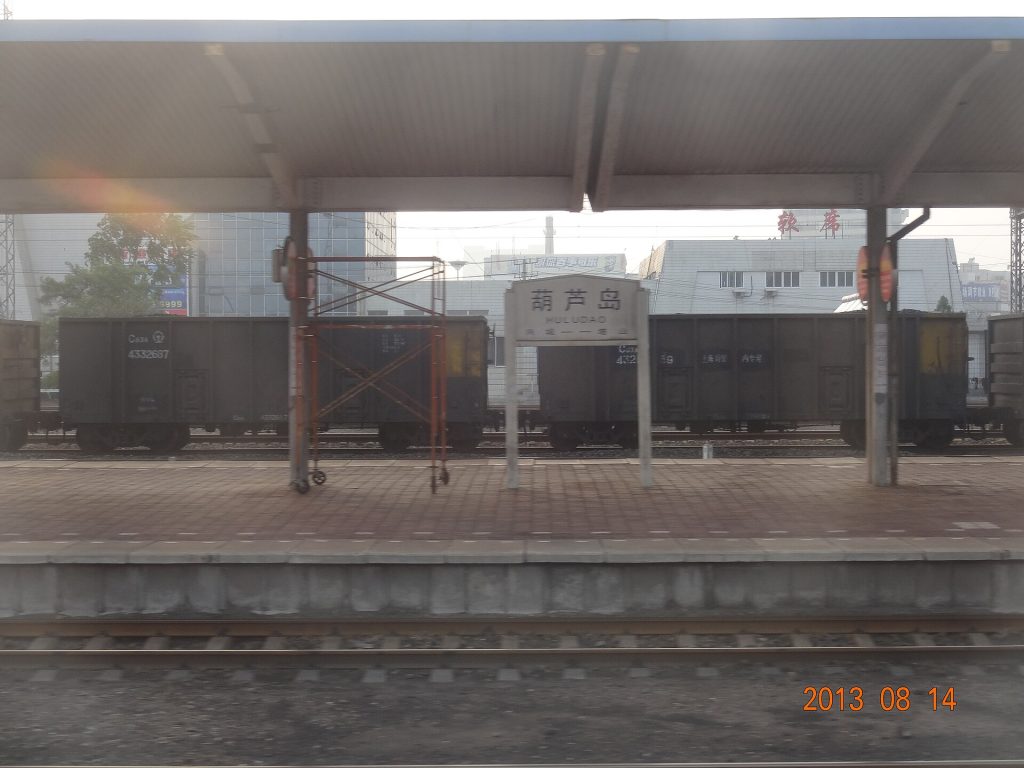
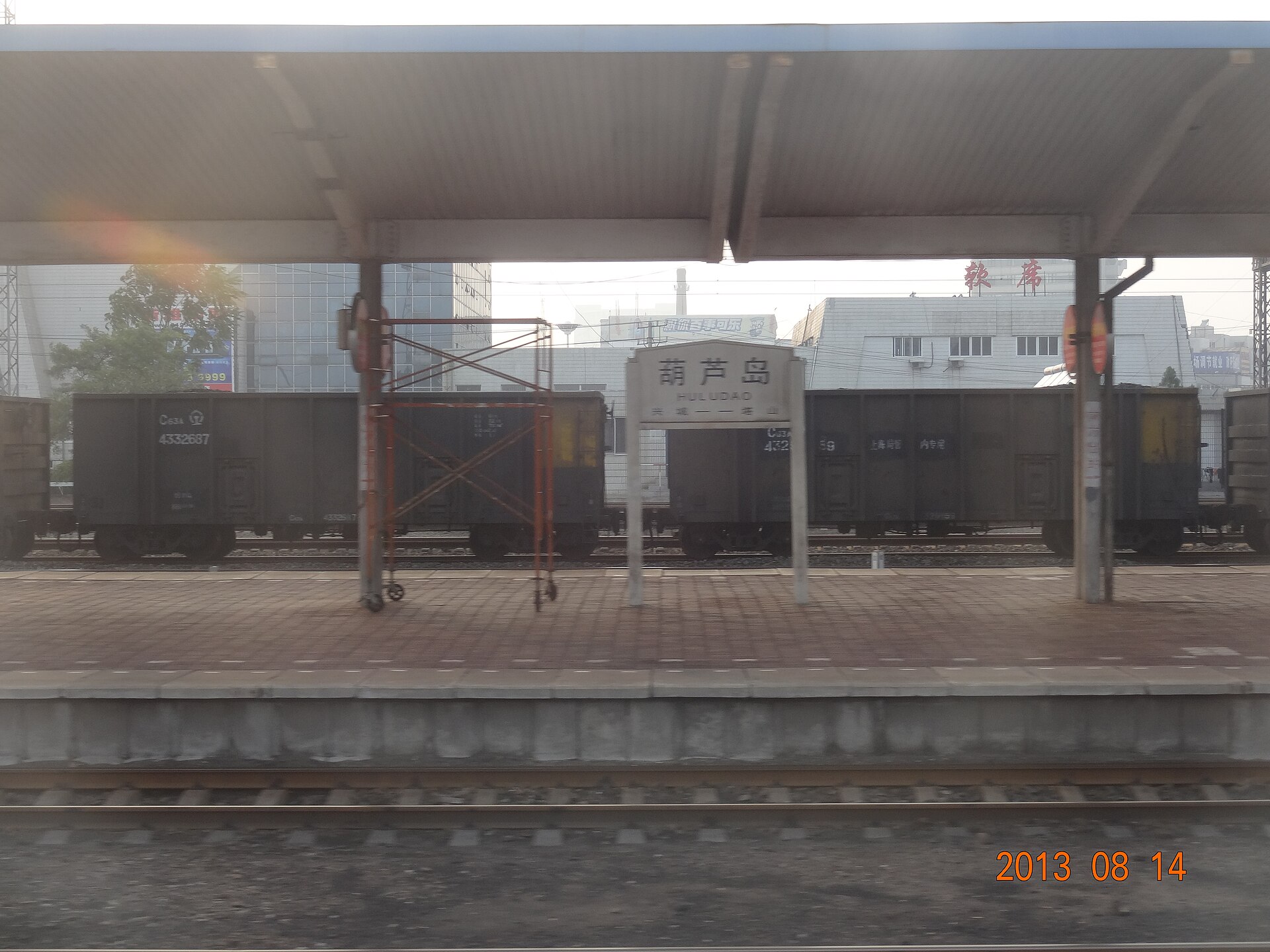
High-speed trains slice the journey from Beijing to Huludao North in under three hours, depositing you in a modern station surrounded by taxi touts and shared-ride minivans. The slower conventional rail stops at Huludao Station, closer to the old city center and the ferry pier. If you drive, the G1 Jingha Expressway runs the length of the coastline; exit at Xingcheng for the ancient city or at Suizhong for the sea-entry wall. Long-distance buses from Shenyang or Dalian pull into the south-side hub near the naval base — cheap, frequent, and smelling of dried squid and engine oil.
Once on the ground, the city stretches thin along the shore. Public buses numbered 101, 102, and 103 link the train stations, the downtown shopping spine, and the main beach strips. They run early and late, but schedules evaporate on holidays. Taxis start around eight yuan and most drivers know “Jiumenkou” and “Xingcheng Gucheng” by heart. For the outer sites — Dongdaihe’s quieter coves or the mountain pass at Shanhaiguan’s back door — hire a private car for the day; three hundred to four hundred yuan gets you a driver who waits while you climb watchtowers.
Where the Wall Meets the Sea
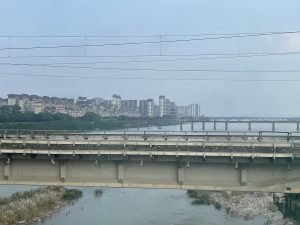
Jiumenkou Great Wall is the only section built over water. Nine arched sluice gates span the Jiujiang River, letting the current pass beneath brick vaults before the wall dives into the Bohai. At low tide, the riverbed reveals centuries of silt and the occasional Ming-era anchor stone. Walk the restored parapet eastward: the bricks under your palms are rough, grooved by centuries of boot nails and typhoon grit. The view north catches the jagged silhouette of Jiaoshan Mountain; south, the sea flattens to a steel-gray line broken only by container ships waiting for Dalian port.
Arrive at dawn in the tenth lunar month. The tour groups haven’t arrived, the light rakes low across the merlons, and you can hear the water slapping the foundations. Bring a thermos of hot barley tea and a windproof jacket — the chill off the water cuts through fleece. Do not attempt the unrestored western spur alone; the bricks are loose, the footing treacherous, and the mobile signal dies two towers in. Locals tell of a hiker who spent a night sheltering in a collapsed guardhouse after twisting an ankle on the slick moss.
Inside Xingcheng Ancient City
Xingcheng’s Ming garrison town survives as a perfect square of gray brick, four gates aligned to the cardinal points, each topped by a double-eaved tower. Inside, the grid is intact: Drum Tower at the center, Confucian Temple to the east, City God Temple to the west, and the Governor’s Mansion — now a museum of coastal defense — occupying a full block near the south gate. Stone lions flank the mansion’s entrance, their noses worn smooth by generations of students rubbing them for exam luck.
Walk the ramparts at dusk. The parapet walk is wide enough for two horses abreast, paved with massive flagstones that radiate the day’s heat. From the north tower you see the whole layout: tiled roofs packed tight, a few solar water heaters glinting, the occasional satellite dish. Below, narrow lanes smell of frying dough twists and pickled cabbage. An elderly couple sells hand-rolled cigarettes from a window ledge; a tailor stitches Mao suits on a treadle machine powered by a bicycle wheel. No costumed performers, no souvenir stalls inside the walls — just residents living in houses their great-grandfathers built.
Jieshi Palace sits just outside the west gate, a Qing-era villa complex built by a warlord who loved Peking opera. The stage is intact, its lacquered columns carved with dragons swallowing pearls. In the courtyard, a ginkgo tree drops golden fans in the eleventh lunar month. The custodian, a retired schoolteacher, will unlock the back hall if you ask politely and show interest in the calligraphy scrolls — poems mourning the fall of the northeast to the Japanese. He refuses tips; accept his offer of a cup of weak green tea instead.
Beaches: Choose Your Crowd
Longwan Beach curves south of the city center, a wide crescent of coarse gold sand backed by a promenade of neon-lit seafood shacks and karaoke boats. In summer, every square meter holds a striped umbrella; the water is warm, shallow, and thick with inflatable rings. By the ninth lunar month, the crowds vanish, the umbrellas fold, and the beach belongs to dog walkers and shell collectors. The water stays swimmable until the first frost.
Dongdaihe, thirty kilometers east, markets itself as the “quiet alternative.” The sand is finer, the water clearer, and the backing hills are pine-clad rather than concrete. Resorts cluster at the western end; walk twenty minutes east and you find empty coves where hermit crabs scuttle over kelp holdfasts. A word of warning: the undertow here is no joke. Every autumn, a few swimmers ignore the red flags and get pulled past the breakers. The lifeguard station is staffed only in July and August.
For a working harbor atmosphere, head to Juhua Island’s ferry pier at 5 a.m. The boat loads crates of live crabs, crates of ice, and a handful of commuters. The crossing takes forty minutes. The island’s beaches are pebbly, the water cold even in summer, but the tide pools at the northern headland trap octopus, sea urchins, and the occasional abalone. Wear sturdy sandals — the rocks are barnacled and sharp.
Eating: From Market Stall to Banquet Hall
Huludao’s cuisine is Shandong-influenced: heavy on garlic, vinegar, and the pure taste of the catch. The signature dish is “menzi” — a savory jelly made from mung bean starch, cut into fingers, pan-fried until the edges lace crisp, then doused in a sauce of garlic paste, aged vinegar, chili oil, and fermented shrimp paste. Eat it standing at a stall near the south gate of Xingcheng, burning your fingers on the paper wrapper.
- Menzi batter: mung bean starch, water, pinch of salt — whisked smooth, poured into a tray, steamed twenty minutes until set.
- Sauce: three cloves garlic crushed to paste, two spoons aged black vinegar, one spoon chili oil, one spoon fermented shrimp paste, splash of light soy, pinch of sugar.
- Fry: oil hot enough to singe a chopstick tip; lay jelly fingers flat, don’t crowd the pan. Flip once when the bottom is golden lace.
- Serve: pile on a plate, spoon sauce over, scatter chopped cilantro and toasted sesame seeds.
At a proper restaurant, order the “whole steamed hairtail” — silver ribbon fish, scored diagonally, steamed on a bed of ginger matchsticks and scallion batons, finished with a pour of smoking-hot peanut oil. The meat lifts in translucent flakes, sweet and clean. Pair it with a bowl of “gaoliang” millet porridge, thick enough to stand a spoon upright. Avoid the “seafood platters” advertised with laminated photos; they arrive frozen-thawed, rubbery, and drowned in MSG broth.
Breakfast is a ritual. Join the line at the steamed bun shop opposite the Drum Tower before 7 a.m. The buns are fist-sized, pleated like tiny crowns, stuffed with pork, cabbage, and a spoonful of hot broth that bursts when you bite. Wash them down with a bowl of tofu pudding — silken curds swimming in savory soy sauce, chili oil, and minced pickled mustard greens. The vendor knows every regular by name; a newcomer who asks for “less spice” gets a sideways glance and the standard ladle anyway.
Sleeping: Where the Locals Stay
Chain hotels cluster near Huludao North Station — clean, predictable, and soulless. For character, book a courtyard guesthouse inside Xingcheng’s north gate. The rooms open onto a shared yard with a persimmon tree and a stone trough where the host washes vegetables. Heat comes from a kang — a brick bed fired from below by a wood stove. The hostess rises at 4 a.m. to stoke it; by bedtime the mats are radiating a deep, dry warmth. She serves breakfast on a lacquered tray: millet congee, salted duck eggs, fermented tofu, and a plate of the day’s pickled radish.
If you prefer the sea, the family pensions in Dongdaihe’s fishing village offer rooms with balconies facing the water. The mattresses are thin, the plumbing groans, but you fall asleep to waves and wake to the clatter of nets being hauled. The host, a retired trawler captain, will take you out on his son’s boat for a morning of pull-net fishing if the weather holds — fifty yuan, cash, no receipt. You keep whatever fits in the cooler.
What Trips Up Newcomers
First mistake: assuming English works. Outside the high-speed rail station, it doesn’t. Carry a screenshot of your destination in Chinese characters — “葫芦岛北站” for the bullet train, “兴城古城” for the ancient city, “九门口长城” for the sea wall. Second: trusting map apps for walking routes inside Xingcheng. The alley names changed in the nineties; the apps still show the old ones. Ask a shopkeeper. They’ll draw a map on a receipt with a ballpoint pen.
Third: packing only sandals. The ramparts, the mountain trails behind Jiumenkou, and the pebble beaches demand closed toes with grip. Fourth: expecting credit cards. Cash — small denominations — rules the markets, the food stalls, the guesthouses, and the ferry. The ATM at the Agricultural Bank branch on Xingcheng’s main street swallows foreign cards half the time. Withdraw in the city before you head to the coast.
Fifth: ignoring the tide tables. Jiumenkou’s river walk is underwater at high spring tide. The island ferry cancels when the swell exceeds force five. Check the posted board at the pier or ask your host — they track the lunar calendar like farmers track rain. Finally: rushing. Huludao rewards the traveler who sits on a sea wall with a bottle of local lager, watching the container ships queue for Dalian, the sun dropping behind the Liaodong Peninsula, the Great Wall fading into silhouette brick by brick.