The morning mist clings to the grey bricks of the ancient wall as I cycle through the east gate, the Yangtze a silver ribbon flashing beyond the moat. An old man practices tai chi near the drum tower, his movements slow enough to match the pace of the city waking up. There is no rush here, just the rhythm of a place that has watched dynasties rise and fall from the same riverbank.
Walking the Wall at Dawn
The city wall is not a reconstructed theme park; it is a working thoroughfare. Locals jog the ramparts with thermoses of tea strapped to their belts, and vendors set up portable stools to sell steamed buns from gaps in the crenellations. The current structure dates to the Ming and Qing dynasties, but the earth beneath your tires has held fortifications since the Warring States period. Start at the Binyang Gate (宾阳门) on the east side just after sunrise. The light hits the watchtowers at a low angle, picking out the moss in the mortar joints. Allow two hours to complete a full loop if you stop at every gatehouse museum display; one hour if you keep moving. Wear flat shoes—the brick surface is uneven and slick after rain.
Inside the Jingzhou Museum: Bronze and Bamboo
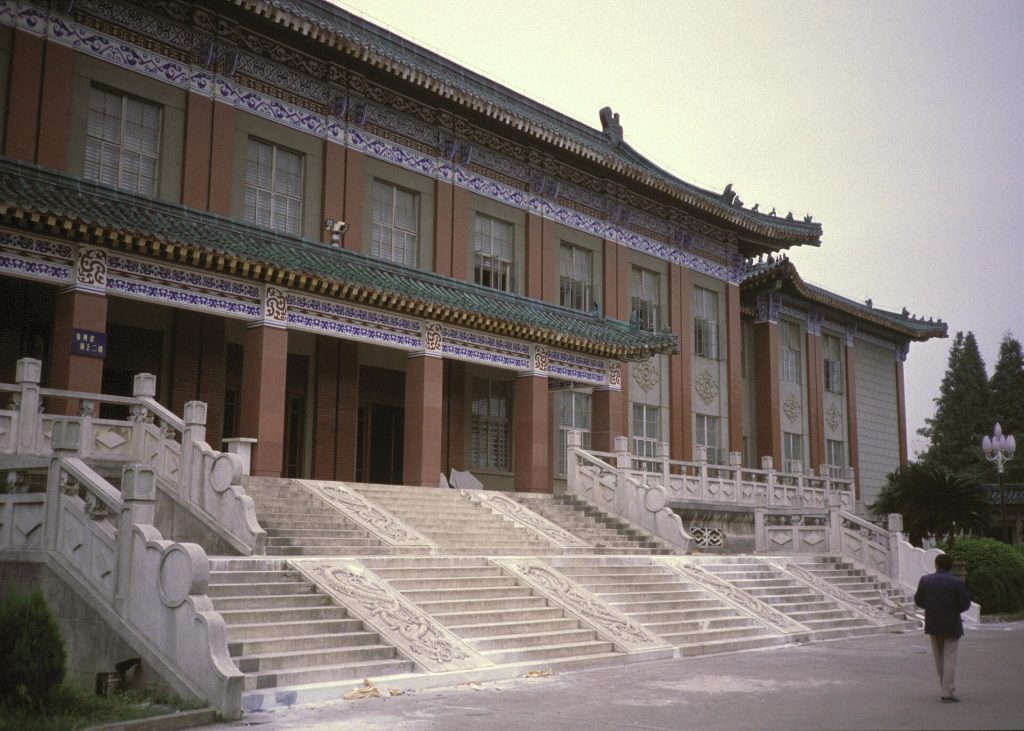
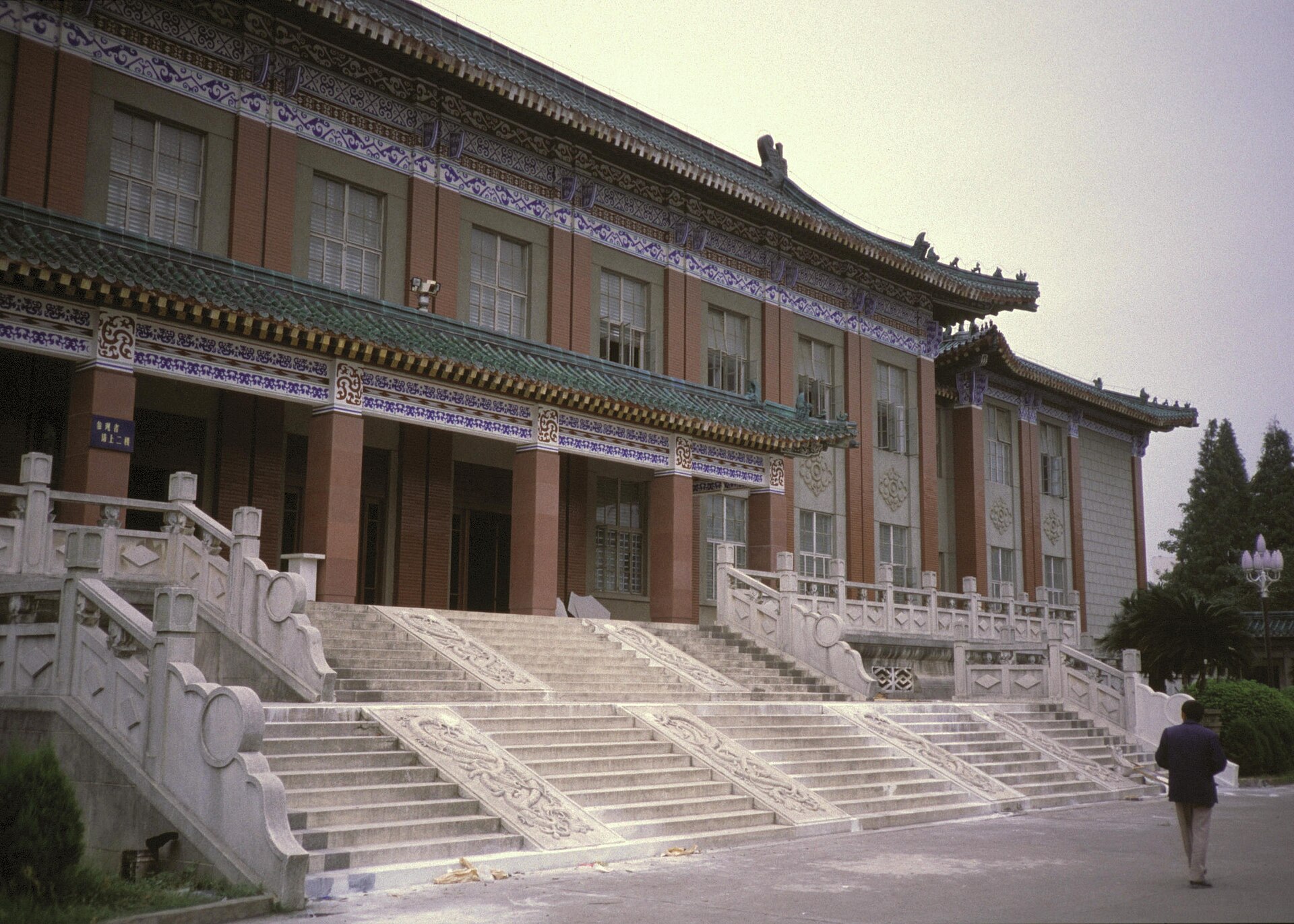
The museum sits inside the west gate, a modern building that does not announce itself. You enter for free with a passport, passing through a security scanner that beeps at belt buckles. The star exhibits are not behind velvet ropes. A set of bronze bianzhong chimes, excavated from a Chu noble’s tomb, hangs in a climate-controlled hall—each bell cast to produce two distinct tones depending on where it is struck. In the adjacent room, lacquerware survives in impossible reds and blacks, preserved by the waterlogged clay of the Jiangling tombs. Do not miss the bamboo slips: thousands of legal codes, medical prescriptions, and military rosters written in ink that has not faded in two millennia. English captions exist for major pieces, but the temporary exhibitions often lack translation. Budget ninety minutes; the air conditioning is a mercy in summer.
Three Kingdoms Pilgrimage: Guan Yu and the Iron Pot
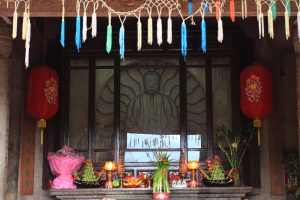
Guan Yu Temple (关庙) draws a different crowd—truck drivers, business owners, students before exams—all lighting incense to the god of loyalty and righteousness. The complex sits just outside the north wall, its roof ridges heavy with glazed beasts. Inside the main hall, a massive iron pot sits before the statue. Legend says Guan Yu washed his weapons in it; pragmatists say it was cast to fund temple repairs during the Qing. Either way, visitors toss coins into the dark water, aiming for the center. The surrounding streets specialize in Guan Gong iconography: wooden carvings, jade pendants, embroidered pendants for rearview mirrors. Bargaining is expected, but never haggle over the incense bundles sold by the temple gate—those prices are fixed by the monastery.
Where to Sleep: Inside or Outside the Gates
Staying inside the old city means waking to the sound of the morning bell from Xuanmiao Temple and walking to breakfast stalls before the tour buses arrive. The lanes near the Drum Tower host a cluster of renovated courtyard guesthouses—brick floors, wooden lattices, shared courtyards where neighbors hang laundry. Prices rise during the Dragon Boat Festival and the autumn chrysanthemum show. Outside the walls, near the high-speed rail station, chain hotels offer predictable beds and parking for self-drivers. If you arrive late on a high-speed train from Wuhan, the station-area hotels save a taxi ride across the city at midnight. Book a week ahead for weekends; walk-ins work on rainy Tuesdays.
Eating Like a Local: Fish, Noodles, and Lotus Root
Jingzhou cuisine leans on the river and the lake. The signature dish is steamed Wuchang fish (清蒸武昌鱼)—freshwater bream scored diagonally, topped with julienned ginger, scallion, and fermented soybeans, then steamed until the eyes turn white. The flesh should flake clean from the bone, sweet and clean, not muddy. Order it at a family-run place on Xueyuan Road where the tank in the corner holds live specimens. For breakfast, hunt down a bowl of hot dry noodles (热干面) tossed in sesame paste, chili oil, and pickled radish cubes—eat it fast while the noodles still have bite. Lotus root stuffed with glutinous rice (糯米藕) appears in winter: cross-sections reveal pink spirals, the rice sticky-sweet, the root crisp. A home method follows.
Peel and trim fresh lotus root; keep the sections connected at one end like a hinge.
Soak glutinous rice for four hours, drain, mix with a pinch of salt and a spoon of sugar.
Pack rice tightly into the root chambers, press the hinge shut.
Simmer in water with rock sugar, ginger slices, and a strip of orange peel for two hours until the root turns translucent amber.
Slice thick, drizzle with reduced cooking liquid, serve warm or chilled.
Beginners overcook the fish until it falls apart, or rinse the noodles in cold water—killing the starch that holds the sauce. Ask for “lao tang” (old broth) if you want the noodle shop’s deepest flavor.
Getting There and Moving Around
High-speed trains from Wuhan take ninety minutes; conventional trains double that. The station sits five kilometers north of the old city—taxis queue at the forecourt, ride-hailing apps work, and bus 14 runs every fifteen minutes to the Drum Tower. Inside the walls, shared e-bikes unlock via QR code; the wall loop has dedicated lanes. For the museum and Guan Yu Temple, city buses 19 and 21 connect the major gates. Drivers should note: the old city enforces license-plate restrictions on alternate days during peak season; check the local traffic app or ask your host. The Yangtze Bridge carries traffic south to Yueyang; the ferry still runs for pedestrians and cyclists, departing from the wharf below the west gate when the water level permits.
Seasonal Rhythms and Local Expectations
Spring brings the plum blossoms at the Confucius Temple and the dragon boat races on the moat—crowds thick, accommodation scarce. Summer is furnace-hot; locals retreat to air-conditioned teahouses for marathon mahjong sessions. Autumn is the sweet spot: the chrysanthemum exhibition at the Botanical Garden paints the lakeside in gold and crimson, and the air carries the scent of roasting sweet potatoes from street carts. Winter sees few foreigners; the wall is yours alone in the fog. Locals do not queue for incense at Guan Yu Temple on the first and fifteenth of the lunar month—expect a crush. If you visit a household, bring fruit or tea, never clocks or umbrellas (homophones for “end” and “separate”). Accept the first cup of tea offered; refusing signals disrespect. And when the bill arrives at a group dinner, the host pays—fighting for the check embarrasses everyone.