The mist over South Lake clings to the willow branches at dawn, turning the stone bridges into gray silhouettes. An old man in a blue Mao suit rows a wooden skiff past the lotus pods, his oars silent on water that holds the reflection of a pagoda roof. There is no tour group, no amplified guide, just the smell of wet earth and tea steam rising from a thermos on the bow. This is Tongxiang before the day trippers arrive — quiet, practical, and entirely itself.
Getting There Without the Hassle
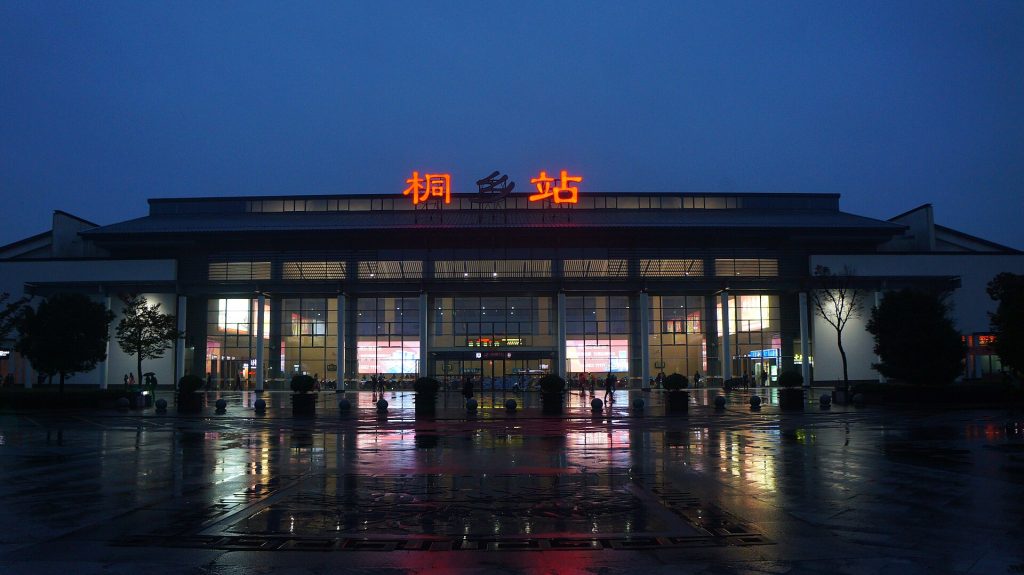
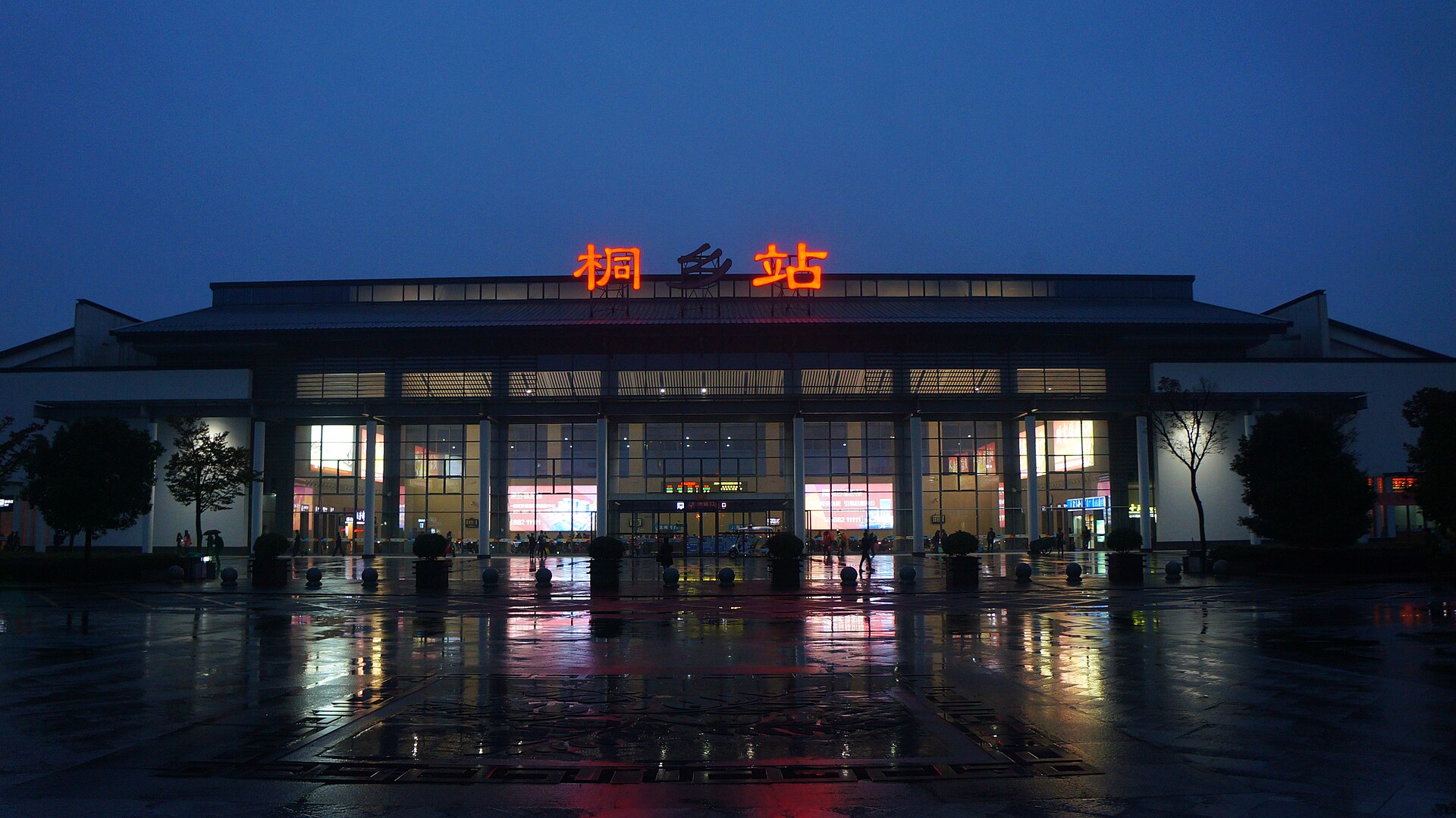
High-speed rail is the only sensible way to reach Tongxiang from Shanghai or Hangzhou. Trains leave Hongqiao and Hangzhou East every twenty minutes or so; the ride takes thirty-five minutes from Shanghai, twenty from Hangzhou. Step off at Tongxiang Railway Station and you are five minutes by taxi from the old town core. If you are coming from Pudong or Xiaoshan airports, the airport bus to Jiaxing South connects to a local bus that drops you at the Wuzhen visitor center — allow two hours door to door. Driving yourself sounds free until you hit the G60 expressway during a holiday weekend; the parking lots at the scenic zones fill by nine in the morning.
Moving Around the Water Towns
Wuzhen and Xizha are built for feet, not wheels. The main arteries are flagstone lanes barely wide enough for two shoulders; electric carts shuttle visitors between the east and west scenic zones, but the real texture is in the alleyways where carts cannot go. Buy a combined ticket at the gate — it covers the boat ride, the museums, and the night entry to Xizha. Keep the paper stub; the turnstiles scan it each time you cross a zone boundary. For the countryside beyond the towns — the mulberry ponds, the silk farms — rent a bicycle from a shop near the north gate of Wuzhen. A single-speed with a basket costs twenty yuan for the day; bring your passport as deposit.
What to See and When to See It
Start at the Mao Dun Former Residence in Wuzhen East before the crowds thicken. The courtyard house still smells of ink and camphor wood; the study desk holds a replica of the manuscript for Midnight, pages yellowed at the edges. Walk next to the Indigo Fabric Workshop where lengths of cotton hang like blue laundry against white walls — workers still stamp patterns with carved pear-wood blocks, the rhythm unchanged since the Qing dynasty. By mid-morning, drift toward the Shadow Puppet Theater; the twenty-minute show runs on the hour, and the puppeteer will let you try the rods afterward if you ask in dialect-accented Mandarin.
Lunch belongs to the West Scenic Zone. Cross the stone bridge at the south end of the canal — locals call it the “Bridge of Mistakes” because the steps are uneven on purpose, forcing you to watch your feet. On the other side, a lane of family kitchens serves braised mutton in brown sauce, hand-torn noodles, and steamed dumplings stuffed with shepherd’s purse and pork. Eat at a stool by the window; the broth remembers every hand that stirred it.
Afternoon is for the water. Hire a rowboat at the dock behind the Tea House of Ten Thousand Cups — twenty minutes, fifty yuan, no bargaining. The boatman poles you under arched bridges where swallows nest, past walls whitewashed last spring, past a grandmother rinsing rice in a wooden basin on a floating platform. He will point out the former silk filature, now a museum of rusted reeling machines, and the lane where the first communist cell in Tongxiang met in a back room above a tofu shop.
Stay for Xizha at night. The lanterns come on at dusk — red paper globes on bamboo poles, reflected double in the canal. The bars along the water serve yellow rice wine warmed in tin kettles; order a plate of drunken chicken and sip slow. The tour groups leave by nine; after that, the lanes belong to residents walking dogs, teenagers sharing earbuds on a stone bench, an erhu player tuning under a ginkgo tree.
Eating Like a Local
Tongxiang cuisine leans sweet and savory, heavy on soy, rice wine, and freshwater protein. The signature dish is Wuzhen mutton: shoulder cuts braised three hours with rock sugar, ginger, star anise, and a splash of Shaoxing yellow wine until the fat turns translucent and the meat falls from the bone. It arrives in a clay pot, lid sealed with dough, steam curling when the server cracks it at your table. Pair it with plain steamed buns to swipe the sauce.
- Mutton shoulder — 1 kg, cut into 4 cm cubes
- Rock sugar — 60 g
- Shaoxing yellow wine — 120 ml
- Ginger — 30 g, smashed
- Star anise — 3 whole pods
- Soy sauce — 2 tbsp light, 1 tbsp dark
- Water — enough to cover meat
Blanch cubes in cold water, bring to boil, drain. Heat wok, melt sugar until amber, toss meat to coat. Add wine, spices, soy, water. Simmer covered on lowest flame three hours. Remove lid last ten minutes to thicken.
Order the same dish in a canal-side restaurant and you will pay triple for half the portion. Look for the place where delivery drivers eat standing at the counter — that kitchen knows the fire. Avoid any menu with English translations laminated in plastic; the photos are usually three years old and the cook has changed twice since.
Culture You Can Touch
Silk is not a museum exhibit here — it is the reason the town exists. Visit the Silk Twisting Workshop in Xizha during the third lunar month when the mulberry leaves are tender. Women sit at wooden frames, fingers flying, turning raw filament into thread that catches light like liquid mercury. You can try the spindle; your first attempt will tangle, your second might hold. The master will not correct you — she will only smile and pour tea into a handleless cup.
The Blue Printed Cloth Museum smells of indigo and lime. Rolls of fabric dry in the courtyard, patterns white on blue: magpies on plum blossoms, carp leaping waves, the character for longevity repeated in a grid. Buy a meter of raw cloth from the back room — unhemmed, unstamped — and take it to the tailor on East Market Street. She will cut a shirt to your measure in an afternoon for less than a coffee in Shanghai.
If your visit falls during the Qingming festival, walk the family graves on the hills west of town. You will see paper money burning in tin cans, oranges and baijiu set on stone tablets, grandchildren bowing three times while elders whisper names. No one minds a respectful foreigner standing at the edge of the clearing. Do not photograph the faces. Do not step on the paper ash.
Mistakes That Mark You as a Novice
Booking a hotel inside the scenic zone sounds romantic until you drag a wheeled suitcase over cobblestones at midnight because the electric carts stop running at ten. Stay in the new town — clean business hotels near the railway station, ten minutes by taxi, half the price, and you wake to the sound of a real breakfast stall frying scallion pancakes instead of a buffet of cold dumplings.
Buying “antique” furniture from the shops along the main canal. The patina is applied with wire brushes and tea stain last week. Real pieces never leave the family compounds; if they do, they go to auction in Hangzhou, not a storefront with a neon sign.
Assuming the boatmen speak English. They do not. Learn three phrases: duo shao qian (how much), bu yao (don’t want), xie xie (thank you). Write your destination in characters on your phone — the dock has five landings, all look alike in fog.
Skipping the countryside. Ten kilometers north, the mulberry ponds form a grid of water and earth that feeds the silkworms. Farmers still pole flat boats between the rows, harvesting leaves by hand. No ticket, no fence, no guide. Just ask the bicycle rental man for the dirt road past the wastewater plant; he will draw a map on a napkin with a ballpoint pen.