Why the cup changes when the weather turns
Walk into a Chinese office in October and you will notice the cups change. The iced drinks of summer give way to thermos flasks, glass jars of floating flowers, and small cups of amber oolong. Autumn is a season when many people in China quietly adjust what they drink, guided by habit, family advice and a long tradition of eating and drinking “in season”.
This guide explains autumn tea habits in China for visitors and new residents: which teas and drinks you are likely to see, the ideas behind them, how to order them, and how to join in without fuss. It is a culture guide, not medical advice. Traditional beliefs about tea and health are described here as beliefs, not proven facts.
If you are new to tea in China, start with our overview of Chinese tea culture and our tea house etiquette guide.
The idea behind seasonal drinking
Many Chinese families grow up with the idea that each season asks for different food and drink. In traditional Chinese medicine (TCM) thinking, autumn is linked with dryness (秋燥, qiu zao): dry air, dry throats, chapped lips. You will hear older relatives say that autumn is a time to “moisten” the body and to move away from very cold drinks.
You do not have to accept the theory to understand the habit. In practice it means:
- More warm or hot drinks and fewer iced ones as the weather cools.
- More mellow, roasted or aged teas, and fewer of the very fresh green teas of spring.
- More flower teas and soups that people describe as soothing, such as chrysanthemum tea or pear soup.
The 24 solar terms also play a part. Cold Dew (Hanlu) falls on 8 October 2026, and Frost’s Descent (Shuangjiang) follows later in October. Our notes on Cold Dew and Frost’s Descent explain the calendar.
The teas you are most likely to see in autumn
Oolong (乌龙, wulong)
Oolong is partly oxidised tea, somewhere between green and black. It is a very common autumn choice, and many tea lovers say oolong suits the season because it is neither too “cooling” nor too heavy. Two names worth knowing:
- Tieguanyin (铁观音) from Anxi in Fujian. Tieguanyin is picked in more than one season, and the autumn harvest (秋茶) is prized for its fragrance. Tea sellers often quote the saying “spring for the liquor, autumn for the aroma” (春水秋香).
- Wuyi rock tea (岩茶) such as Da Hong Pao, a roasted oolong from the Wuyi Mountains. Its toasty flavour feels right on a cool evening.
You will often see oolong brewed gongfu style in small cups with many short steeps. Our guide to gongfu cha for tourists explains what to expect.
Chrysanthemum tea (菊花茶, juhua cha)
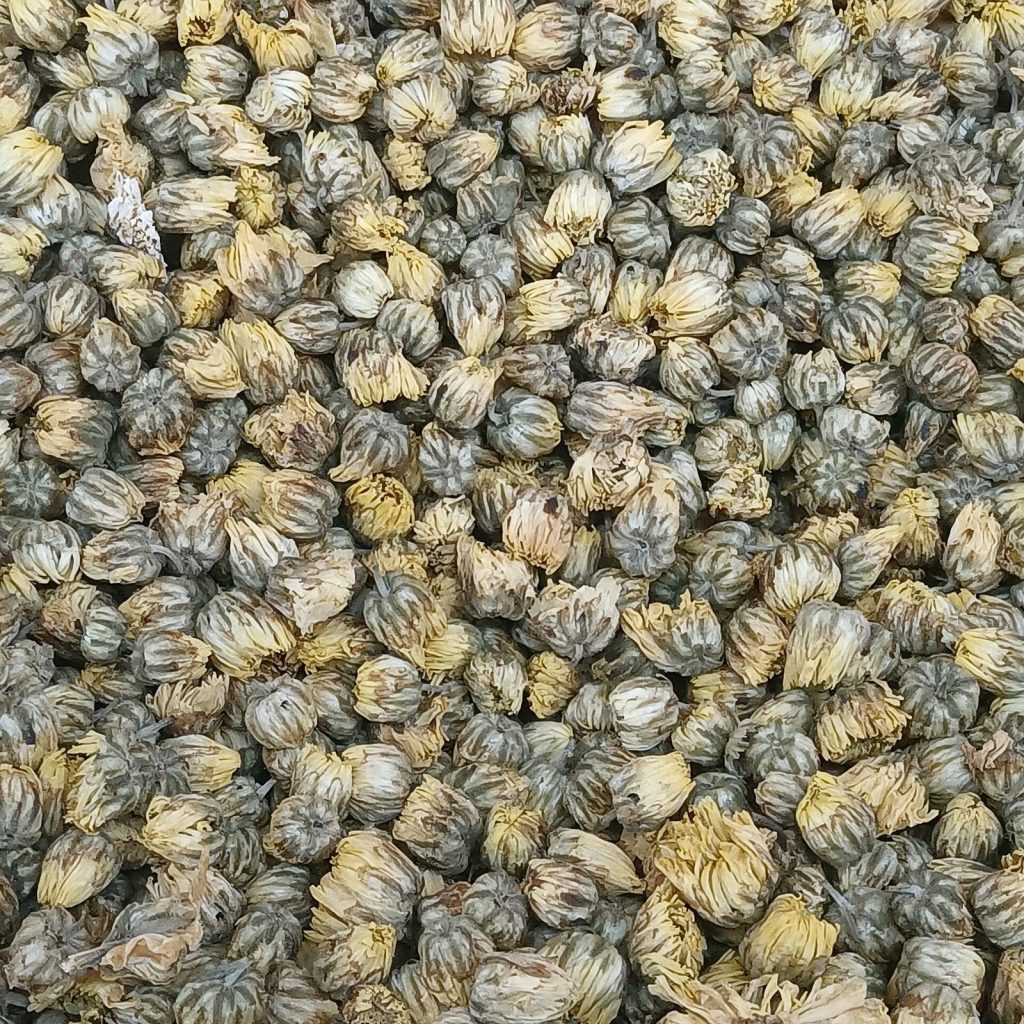
Chrysanthemums bloom in autumn, and chrysanthemum tea is one of the easiest seasonal drinks to find. It is made from dried flower heads or buds steeped in hot water, sometimes with rock sugar or goji berries. Hangzhou white chrysanthemum (杭白菊), grown around Tongxiang in Zhejiang, is a well-known variety.
Chrysanthemum is also tied to the Double Ninth Festival (Chongyang), which falls on Sunday 18 October 2026. Traditional customs include climbing heights and enjoying chrysanthemums. See our Double Ninth guide and the autumn chrysanthemum shows in Chinese cities.
Osmanthus (桂花, guihua)
Sweet osmanthus blooms from late summer into autumn in many southern and central cities. Its small golden flowers are dried and added to tea, often mixed with green or oolong tea, or steeped alone. Osmanthus also flavours desserts and wine. Our osmanthus season guide covers where the scent is strongest.
Aged white tea (老白茶)
White tea, especially from Fuding in Fujian, is lightly processed and can be stored for years. Aged white tea brews a mellow, slightly sweet cup, and some drinkers like it more as the weather cools. You may hear the sellers’ saying “one year it’s tea, three years it’s medicine, seven years it’s treasure” (一年茶,三年药,七年宝). Treat that as a slogan, not a health claim.
Dark teas and pu’er
Ripe (熟) pu’er from Yunnan and other dark teas have an earthy, smooth flavour. They are popular year-round, but many people drink more of them in late autumn and winter, often after heavy meals.
Not quite tea: other autumn drinks you will meet
Plain warm water
The most common “autumn drink” in China is simply warm or hot water. Restaurants often serve it without asking, offices have hot-water dispensers, and many people carry a thermos everywhere. If someone tells you to “drink more hot water” (多喝热水) when you have a cold, it is a kind gesture, even if it has become an internet joke.
Goji berries in a thermos
A thermos with goji berries (枸杞) or red dates (红枣) is a familiar sight in offices. It is a light, home-style drink rather than a medicine.
Pear soup and other “moistening” drinks
Rock-sugar pear soup (冰糖雪梨) is a classic autumn home remedy for dry throats in Chinese family tradition. Try it with our bingtang xueli guide. Honey water and luo han guo (monk fruit) tea are also common.
Milk tea
Young people have their own seasonal ritual. “The first cup of milk tea in autumn” (秋天的第一杯奶茶) became a social-media meme, and friends and partners send each other a hot milk tea, or a red packet to buy one, when the weather first cools. If you want to join in, our milk tea ordering guide covers sweetness and temperature options.
How to order seasonal tea as a visitor
- At a restaurant: many restaurants offer a pot of tea for the table. Ask for oolong (乌龙茶 wulong cha), chrysanthemum (菊花茶 juhua cha), or pu’er (普洱 pu’er). Prices and whether tea is charged vary, so check the menu or ask.
- At a tea house: you usually choose a tea from a menu and pay per pot or per person, sometimes with snacks. Ask whether the price is per person before you order.
- At a milk tea shop: choose re (热, hot) or wen (温, warm) and your sugar level. In autumn, hot drinks sell well.
- In the office: if a colleague offers you tea, accept with thanks. You do not need to finish it.
If you want to try a famous tea at the source, Hangzhou’s Longjing tea villages in autumn and Chengdu’s People’s Park tea gardens are relaxed places to start.
Buying autumn tea without getting ripped off
- Buy small. Try 50–100 grams before committing to a large tin or cake.
- Taste first. Reputable shops will usually let you taste before you buy.
- Be wary of the “tea ceremony” scam. In some tourist areas, friendly strangers invite visitors to a tea tasting that ends with a very large bill. Agree on prices before you sit down, and walk away if someone refuses to show a menu.
- Check customs rules at home if you plan to take tea abroad, especially loose flowers or herbal mixes.
- Store tea properly. Keep it sealed, dry and away from strong smells.
Sharing tea: small etiquette points
- When someone pours for you, a light tap of two fingers on the table is a common, informal thank-you in many places.
- Top up others’ cups before your own.
- Do not fill cups to the brim. A cup about seven-tenths full is considered polite.
- Hold small cups with both hands when offered by an elder.
- If you have had enough, leaving some tea in your cup is fine.
FAQ
What is the most popular tea in China in autumn?
There is no single answer. Oolongs such as Tieguanyin and Wuyi rock tea, chrysanthemum tea and aged white tea are all common autumn choices, alongside plain warm water.
Why do Chinese people avoid iced drinks in autumn?
Many people follow a traditional belief that warm drinks suit cooler, drier weather. It is a cultural habit; it is not a rule, and you will still find iced drinks.
Is chrysanthemum tea caffeine-free?
Pure chrysanthemum tea is an herbal infusion and does not contain tea leaves, but many blends mix chrysanthemum with green or other tea. Check the label.
Are the health claims about autumn teas true?
Treat them as traditional beliefs. If you have a health condition, are pregnant, or take medication, ask a doctor before drinking herbal infusions regularly.
Where can I try seasonal tea as a visitor?
Tea houses, tea markets, restaurants and milk tea shops all offer seasonal options. Tea-growing areas such as Hangzhou and Fujian are good places to taste at the source.
Bottom line
Autumn in China tastes of warm water, roasted oolong, floating chrysanthemums and a first hot milk tea. Ask for a warm drink, try a small pot of something seasonal, and accept the thermos culture as a kind of care. Lovely China, founded in 2025, welcomes corrections at [email protected].