If you travel down China’s eastern coast as the air turns crisp in late October and November, you will quickly notice a comforting rhythm to coastal Zhejiang dining. While visitors often rush toward spicy inland mapo tofu or Cantonese dim sum, food lovers heading to Ningbo discover a completely different bowl of warmth: Ningbo seafood congee (haixian zhou / 海鲜粥).
Unlike heavy, long-simmered Cantonese congees where grains break down into a smooth, velvety paste, Ningbo seafood congee preserves the texture of the rice while highlighting the ultra-fresh, briny sweetness of the East China Sea. For first-timers, stepping into a bustling neighborhood porridge shop can feel overwhelming. This guide covers what goes into the bowl, how locals eat it, ordering tips, regional variations, and how to navigate Ningbo’s coastal food scene seamlessly.
—
What Makes Ningbo Seafood Congee Unique?
Ningbo is one of China’s major historical port cities, sitting right on the Hangzhou Bay and facing the Zhoushan Archipelago, one of the country’s most prolific fishing grounds. Because the local fishing industry is legendary, seafood here is celebrated for its natural sweetness rather than heavy masking spices.
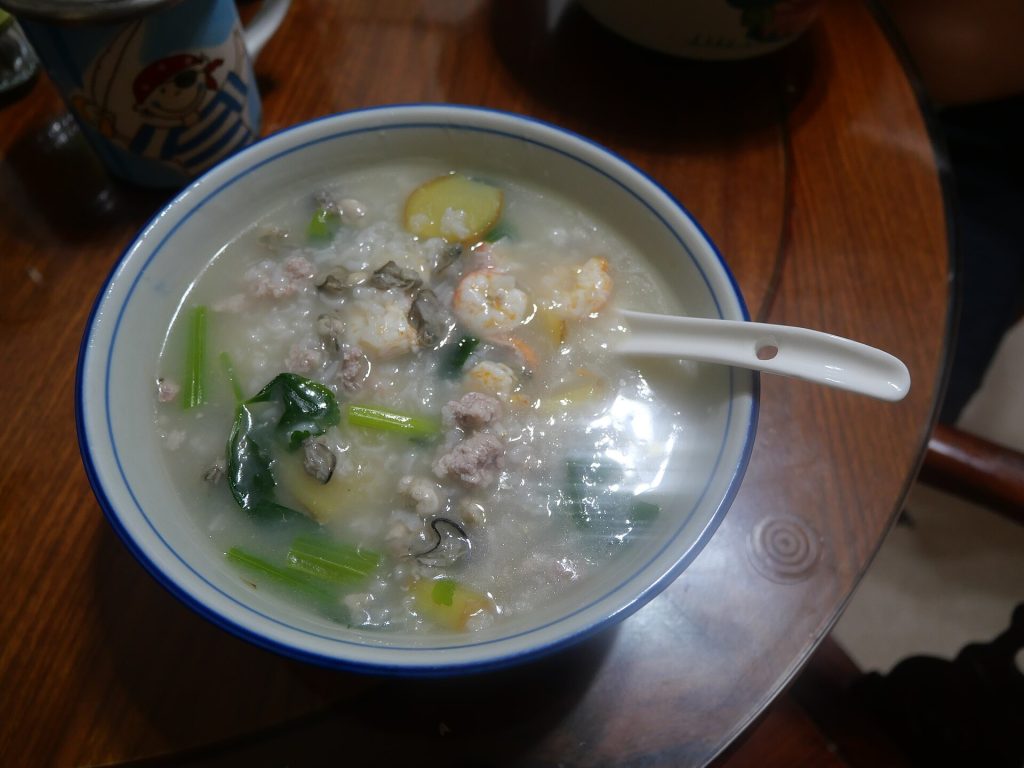
In a traditional Ningbo seafood congee bowl, you will typically find:
* The Rice Base: Short-grain white rice cooked in a rich, savory broth—often fortified with pork bones, dried shrimp, or a splash of Shaoxing rice wine—rather than plain water. The grains remain distinct and plump, giving the porridge substance and bite.
The Catch of the Day: Depending on the season and market availability, bowls are loaded with razor clams (chengzizhi*), small yellow croaker, local squid, swimming crabs, prawns, and tiny baby oysters harvested from local mudflats.
* Aromatics & Garnishes: Fresh ginger julienne to neutralize fishiness, scallions, white pepper powder for a subtle warming kick, and sometimes a drizzle of fragrant sesame oil right before serving.
As autumn deepens into winter, eating a steaming bowl of seafood congee becomes a daily ritual for locals looking to ward off the damp chill rolling off the harbor.
—
When and Where Do Locals Eat It?
While you can find seafood congee at lunch or dinner in sit-down restaurants, the most authentic cultural experience happens at breakfast or as a **late-night supper (yexiao)**.
* Morning Warm-up: Early-rising fishermen and market vendors have long relied on a bowl of hot porridge to start their day. Walking into a steaming storefront at 7:00 AM gives you a front-row seat to authentic neighborhood life.
Late-Night Comfort: In Ningbo’s food streets, such as around the historic Drum Tower (Gulou) district or old lane markets, seafood congee stalls stay lively well past midnight. It is the ultimate comfort food after a night out, pairing wonderfully with side dishes like salted duck eggs, pickled vegetables, and crispy fried dough sticks (youtiao*).
—
Anatomy of a Bowl: Common Ingredients & Regional Variations
While the core concept remains consistent, Ningbo’s coastal geography creates distinct variations depending on whether you are dining in a downtown night market or a quiet fishing village further down the coastline toward Xiangshan.
* Crab & Rice Congee: Often considered a festive or weekend treat, whole swimming crabs are chopped in half, exposing the rich tomalley directly to the simmering porridge broth. The rice absorbs the sweet, savory crab fat, turning a golden-orange hue.
* Razor Clam & Ginger Porridge: Razor clams cook very quickly, yielding a tender, chewy texture that contrasts sharply with the soft rice. Generous amounts of crushed local ginger cut through the natural iron-rich minerality of the shellfish.
Yellow Croaker Congee: A prized local fish, small yellow croaker (da-huang-yu*) is deboned or simmered whole, lending a delicate, clean sweetness to the porridge base.
—
Essential Ordering Tips for First-Timers
Navigating a local Ningbo congee spot can be intimidating if you don’t speak Mandarin or read Chinese characters. To ensure a smooth experience, keep these practical tips in mind:
1. Point-and-Order Displays: Many traditional breakfast or porridge joints feature a glass counter filled with raw ingredients. You can literally point to the clams, shrimp, or fish pieces you want thrown into your custom pot of porridge.
2. Handle Digital Payments Before You Go: Most independent eateries and street stalls in Ningbo operate entirely cashless. Setting up your smartphone apps in advance is essential—make sure you have followed a guide like Alipay and WeChat Pay for Foreign Visitors in China 2026 so you can scan QR codes smoothly at the table.
3. Connectivity is Key: To translate menus on the fly or pull up venue reviews, you’ll need reliable mobile data. Check out options like China SIM and eSIM for Foreign Visitors in 2026 to stay connected from the moment you land.
4. Getting Around Town: Local hidden-gem congee spots are often tucked away in old lane-ways (longtang) rather than major tourist strips. Download navigation apps and brush up on local mapping tips with the How to Use Amap (Gaode Maps) in China as a Foreigner: 2026 English Guide to find the best-rated neighborhood bowls with ease.
—
Exploring More Ningbo & Zhejiang Flavors
If your culinary journey extends beyond a single bowl of congee, Ningbo and the broader Zhejiang province offer an incredible array of regional specialties:
Ningbo Tangyuan (Sweet Glutinous Rice Balls): No trip to Ningbo is complete without trying its famous black sesame-filled glutinous rice balls, traditionally served in a fragrant fermented rice wine broth (jiuniang*). They are a staple treat during winter celebrations, much like the traditions detailed in the Winter Solstice (Dongzhi) 2026 in China: Date, Dumplings, Tangyuan and Customs.
* **Stir-Fried Rice Cakes (Ningbo Niangao):** Chewy, cylindrical rice cakes stir-fried with mustard greens, pork strips, and small seafood are another local carbohydrate masterpiece.
* Bento & Convenience Quick Bites: If you are rushing between bullet train stations and need a quick bite on the go, modern convenience stores also offer local seasonal flavors; learn what’s worth grabbing via China Convenience Store Food: What to Buy and How to Pay (2026).
Whether you are seeking shelter from a chilly November wind or diving headfirst into China’s coastal food culture, a piping hot bowl of Ningbo seafood congee delivers an unforgettable taste of the sea. Grab a spoon, embrace the warmth, and enjoy one of Zhejiang’s greatest culinary treasures!
—
Frequently Asked Questions
Is Ningbo seafood congee spicy?
No, traditional Ningbo seafood congee is not spicy. Zhejiang cuisine values the pure, natural flavors of ingredients. While white pepper powder or fresh ginger is often added to warm the palate and neutralize any fishiness, the dish relies entirely on savory broths and fresh seafood sweetness rather than chili heat.
Can I find vegetarian seafood congee options?
Because the foundational flavor of the porridge comes from seafood stocks and animal proteins, finding a true vegetarian version in local specialty stalls can be difficult. However, many general breakfast shops offer plain rice congee (baizhou) served with various pickled vegetables, fermented bean curd, and gluten puffs.
How do I pay for food at local Ningbo street stalls?
Cash is rarely accepted at independent eateries in Ningbo. You will need to use a mobile payment app like Alipay or WeChat Pay linked to an international credit card. Review digital payment setup guides before arriving to ensure seamless transactions.
FAQ
Is this information current for 2026?
It reflects commonly reported practice as of 9 October 2026. Always re-check official sources before you travel.
What if my experience differs?
Follow staff on the ground—restaurants, hotels, parks and immigration desks have the final say for your case.