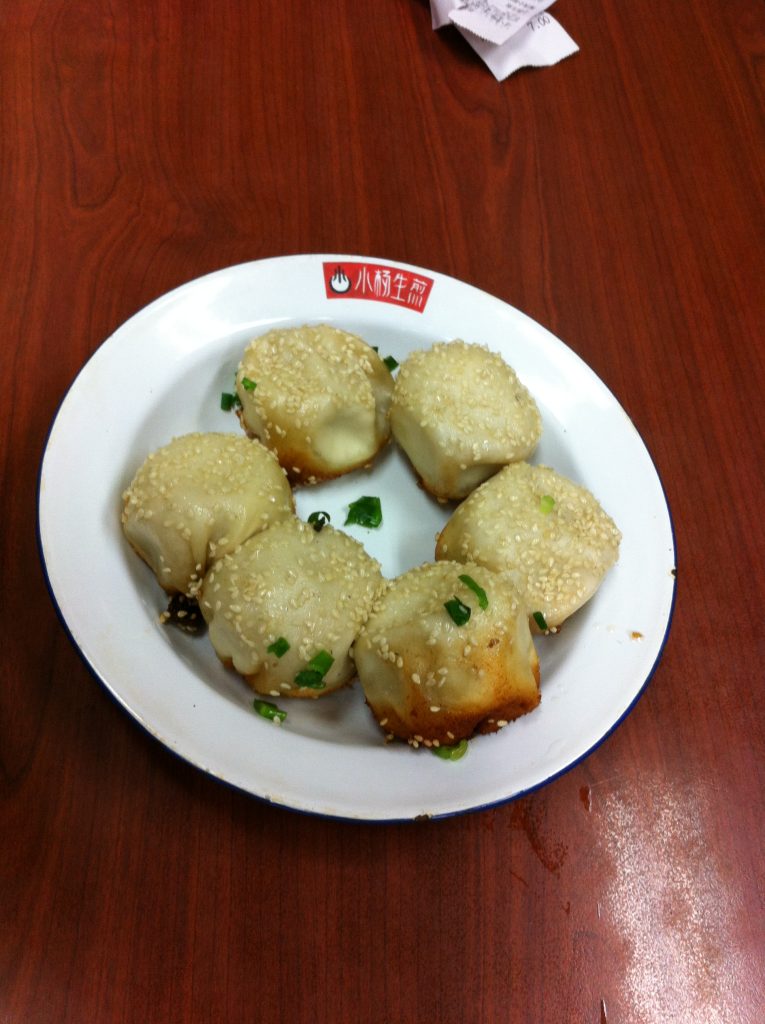
Why shengjianbao deserves its own first-timer guide
Shanghai breakfast culture has more than one famous bun. Xiaolongbao (soup dumplings) get the global headlines. Shengjianbao — also called shengjian mantou or simply shengjian — are the city’s pan-fried pork buns: crisp on the bottom, soft on top, juicy inside, and easy to underestimate until the hot broth catches you.
Shanghai’s official tourism English site describes pan-fried buns as a traditional local snack made with semi-fermented dough, fresh meat, and gelatinised pork skin, fried then steamed in a covered pan until the bottoms turn golden — see english.shanghai.gov.cn on Pan-Fried Buns. That is the texture promise: fried crunch plus steamed bun plus soup.
This guide is for first-timers who want to order calmly, eat safely, and understand how shengjianbao differs from xiaolongbao.
Shengjianbao vs xiaolongbao (so you order the right craving)
Both can contain pork and a soup component created with aspic that melts when cooked. They are not the same eat:
Shengjianbao
- Dough: yeast / semi-leavened bun dough
- Cook method: pan-fried, then steamed in the same pan
- Texture: crisp bottom, fluffy top
- Typical setting: breakfast / snack shops, quick counters
- Eating risk: hot soup plus crispy base — bite carefully
Xiaolongbao
- Dough: thin, unleavened wrapper
- Cook method: steamed in bamboo baskets
- Texture: soft, delicate all around
- Typical setting: soup-dumpling restaurants and chains
- Eating risk: hot soup plus thin skin — spoon-and-nibble
If you already read our xiaolongbao first-timer guide, keep those spoon habits for XLB — then switch mindset for shengjian: you are dealing with a sturdier bun that still hides hot liquid.
What you are looking at in the pan
A classic Shanghai shengjianbao run looks like this:
1. Buns sit in a wide flat pan with a little oil.
2. Bottoms fry to a golden crust.
3. Water (sometimes a thin slurry) goes in; the lid goes on; steaming finishes the tops.
4. Sesame seeds and chopped scallion often finish the pale tops.
Shops differ on pleat-up vs pleat-down traditions and on how thick the bun wall feels. Inside Shanghai, many locals prefer a thinner, crisp-focused skin; versions elsewhere may taste breadier. For a first visit, judge freshness by the pan: buns should be hot, bottoms lacquered gold, not pale and soggy from sitting.
How to order at a busy shop
Shengjianbao shops can move fast at breakfast. You do not need perfect Chinese, but you do need a clear number and a payment method.
Before you join the line
- Set up Alipay / WeChat Pay; many counters prefer QR.
- Decide how many buns you want. Portions are often sold in small sets (historically discussed in units of four in local habit — follow the shop’s posted portion sizes).
- Check whether the shop wants you to order at a cashier first or grab a ticket from a machine.
Simple phrases
- “生煎包” (shēngjiānbāo) — pan-fried buns
- “四两” / look at the board for the shop’s unit — or just point to the photo and show a number on your fingers
- “打包” (dābāo) — takeaway
- “这里吃” — eat here (if they ask)
If English menus exist, use them. If not, point to what others are receiving and confirm the count before you pay.
Busy-shop etiquette
- Have payment ready.
- Step aside after ordering so the next person can reach the counter.
- Do not hover over the pan for photos while staff are plating.
- Takeaway bags get greasy — hold them upright.
The hot-soup caution (read this twice)
The broth inside a fresh shengjianbao can be hotter than the bun skin suggests. First-timer method:
1. Put the bun on a spoon or small plate if provided.
2. Take a tiny corner bite or gently nip a hole to release steam.
3. Sip or wait a few seconds.
4. Eat the rest, dipping lightly if vinegar / chilli sauce is offered.
5. Do not inhale a whole bun in one heroic bite on your first attempt.
This is the same respect you owe any soup dumpling — plus the crisp base can trick you into chewing faster than the liquid allows.
If children are eating with you, cool and test one bun first. If you have a sensitive mouth, wait longer than pride suggests.
What to eat with shengjianbao
Common companions:
- A small bowl of clear soup or soy milk
- Vinegar with ginger shreds
- Hot chilli sauce for people who want heat
- A side of leafy greens or simple noodles if you need a fuller breakfast
Shengjianbao are rich. Two to four buns can be a full breakfast depending on size and your hunger. You do not need to “finish a mountain” to have done Shanghai correctly.
For a wider Shanghai first-visit frame — neighbourhood pacing, metro, and autumn timing — see Shanghai first visit in early autumn.
Choosing a shop without chasing myths
You will hear famous names. Fame helps as a starting shortlist; freshness and pan discipline matter more than logos.
Good signs:
- High turnover at breakfast hours
- Buns coming off the pan in batches
- Clear posted prices
- Locals ordering without drama
Caution signs:
- Buns sitting lukewarm under a lamp
- Unclear pricing until after you eat
- Aggressive touting far from the actual pan
Shanghai tourism materials sometimes highlight historic makers such as Dong Tai Xiang as part of the city’s snack story. Treat any single shop as one data point. Try one well-reviewed place near where you already are, then another neighbourhood later if you love the form.
Takeaway vs eat-in
Eat-in is better for first-timers because you can manage heat and sauce. Takeaway works if you are catching a train — but open the bag carefully; steam softens crisp bottoms fast, and soup can leak. Eat within a short window. Do not toss a sealed hot bag into a backpack next to electronics.
Dietary notes and honest limits
Traditional shengjianbao are pork-forward. Vegetarian versions exist in some modern shops but are not the default classic. If you avoid pork, ask clearly before ordering; do not assume “meat bun” means chicken.
Allergies: sesame toppings are common. Ask if sesame is a problem. Aspic and stock mean the “soup” is animal-based in classic recipes.
Timing your shengjian run in autumn 2026
Breakfast and mid-morning are the natural windows. Late afternoon can still work at busy shops, but some pans slow down. Around Mid-Autumn (Friday 25 September 2026, holiday roughly 25–27 September) and Golden Week (~1–7 October), central Shanghai snack lines lengthen — go earlier, or pick a neighbourhood shop away from the densest tourist corners. Holiday context: Mid-Autumn holiday open/closed.
Rainy mornings are excellent shengjian weather psychologically — just watch wet floors near busy doors.
A first-timer script you can follow
1. Arrive mid-morning on a weekday if you can.
2. Watch one full order cycle so you see portion size.
3. Order a small set for yourself (share if unsure).
4. Pay by QR; keep the ticket stub if they give one.
5. Bite carefully; release steam; then enjoy.
6. Decide whether you want a second set before you leave the stool.
That is enough. You do not need a scavenger hunt across five districts on day one.
After your first pan: where to go next
Once you understand shengjianbao heat and crunch, you can explore more calmly:
- Try a second shop in another district to feel how bun thickness and crispness vary.
- Pair a shengjian breakfast with a slow neighbourhood walk rather than rushing to the next landmark.
- If you love the soup-bun family, schedule a proper xiaolongbao lunch on a different day so textures do not blur together.
Shanghai rewards spaced appetites. One excellent pan-fried set can be the whole morning plan.
Closing
Shengjianbao are Shanghai’s pan-fried answer to the juicy-bun craving: crisp base, soft top, hot broth, sesame-scallion finish. They are cousins to xiaolongbao, not twins. Order a small portion at a busy pan, respect the soup temperature, and let the contrast of crunch and juice teach you why locals keep coming back for breakfast. Once you nail the careful first bite, the rest of Shanghai’s snack map feels easier — because you have already learned the city’s most important bun lesson: delicious can be hazardous if you rush.