If you are planning a culinary journey through China—perhaps taking advantage of expanded travel policies like the China 30-Day Visa-Free Entry in 2026: Which Countries Qualify and the Rules—your Sichuan food bucket list likely includes mapo tofu, kung pao chicken, and fiery hot pot. But no introduction to the cuisine of China’s southwestern Sichuan province is complete without a bowl of dandanmian (担担面), or Dan Dan noodles.
Tucked away in bustling night markets, quiet alleyways (longtang), and upscale regional restaurants alike, Dan Dan noodles are a masterpiece of texture and contrast. Yet, for first-timers, encountering real Sichuan Dan Dan noodles can be a sensory shock. The bowl is rich, nutty, lip-tinglingly numbing, and fiercely spicy all at once.
This guide breaks down everything you need to know about navigating Dan Dan noodles as a newcomer: what makes up that legendary sauce, how to handle the numbing spice, how to order it right, and where it fits in the wider landscape of Chinese noodles.
—
What Is Dan Dan Mian? (And Where Did the Name Come From?)
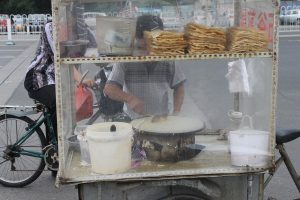
The name Dan Dan refers to the traditional bamboo carrying pole (dan dan) used by mobile street vendors in 19th-century Chengdu, the capital of Sichuan. Vendors would sling a pole across their shoulder with two baskets attached: one holding freshly pulled wheat noodles and broth, and the other housing the seasoned minced pork, chili oil, preserved vegetables, and sauces.
Passersby would flag down the vendor on the street corner, and the bowl would be assembled on the spot. While you are unlikely to see wandering pole-vendors on modern downtown Chengdu streets today, the spirit of fast, intensely flavorful street food lives on.
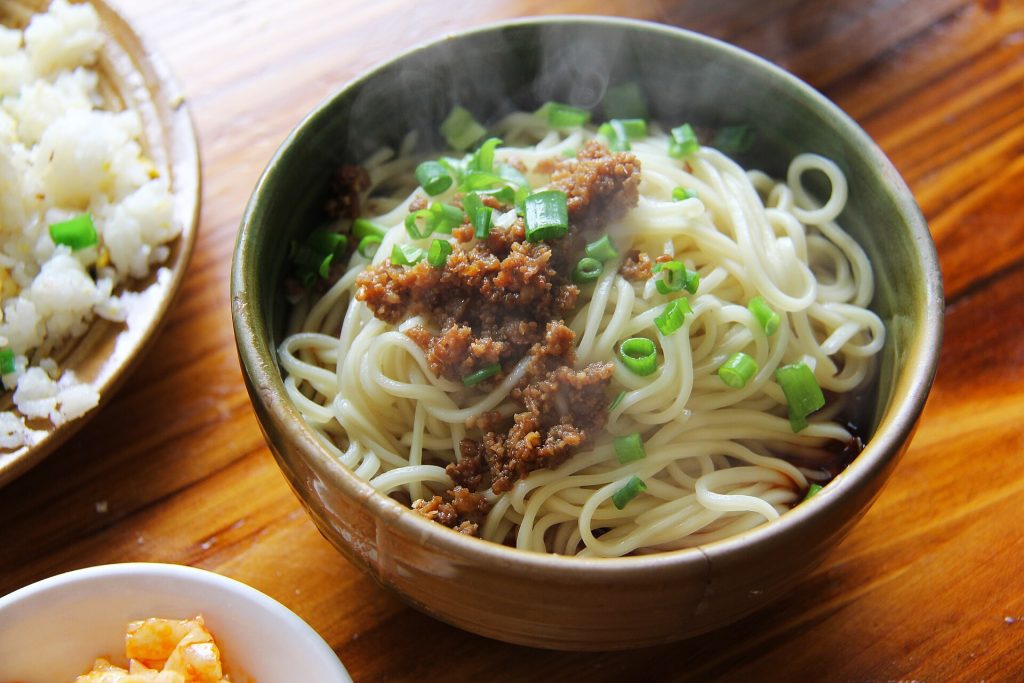
Unlike many Westernized versions that drench noodles in heavy peanut butter, authentic Sichuan Dan Dan noodles are defined by a meticulous balance of distinct flavor pillars:
* The Base: A concentrated, savory paste made from toasted sesame paste or roasted peanut paste, soy sauce, dark vinegar, and fragrant chili oil.
The Heat & Numb: Sichuan peppercrons (huajiao*) and roasted chili flakes.
The Topping: Crispy, wok-fried minced pork (or sometimes beef) seasoned with fermented bean paste (doubanjiang), and finely minced Sichuan preserved vegetable (suicai or yacai*).
* The Green: A handful of blanched leafy greens (like baby bok choy or pea shoots) to cut through the richness.
—
The Sauce and the Spice: Understanding the Numbing Profile
If you have already tried our Mapo Tofu for First-Timers: Navigating Sichuan’s Most Famous Numbing Classic, you will already be familiar with málà (麻辣)—the signature pairing of má (numbing from Sichuan peppercorns) and là (spicy from dried chilis).
However, Dan Dan noodles handle this flavor profile a bit differently than mapo tofu:
* The Sesame Foundation: Because sesame or peanut paste forms the thick base of the bowl, the initial bite is surprisingly nutty, rich, and mellow.
The Hidden Fire: As you mix the noodles, the layer of bright red chili oil (hongyou*) coating the top incorporates into the sesame paste. The heat builds progressively rather than hitting you all at once.
* **The Málà Effect:** Authentic Sichuan peppercorns don’t burn your tongue with capsaicin heat; instead, they produce a vibrant, sparkling, citrusy numbness that makes your lips tingle. For first-timers, this can feel surreal—like your tongue is gently vibrating or drinking a carbonated soda. Embrace it! It is entirely harmless and subsides naturally.
—
Street vs. Restaurant Versions: Dry vs. Soupy
When ordering Dan Dan noodles in China, you will generally encounter two main styles:
1. **The Dry Style (Gan Ban / 干拌): This is the traditional Chengdu style. There is very little broth in the bowl. Instead, a concentrated pool of sesame sauce, soy, vinegar, and chili oil sits at the bottom. Crucial rule:** You must vigorously mix the noodles with your chopsticks for 10 to 15 seconds before eating, ensuring every single strand is coated in the sauce and topped with the crispy pork bits.
2. The Soupy Style: More common in northern China and overseas adaptations, this version includes a lighter broth (sometimes chicken or bone broth) mixed into the sauce, making it look more like a traditional noodle soup.
If you want the authentic Sichuan experience, look for the dry-style bowl (gan ban mian), which packs a much more intense punch of flavor.
—
How It Differs from Other Chinese Noodle Bowls
China’s regional noodle culture is vast and distinct. If you are exploring beyond Sichuan during your travels, you will notice Dan Dan noodles bear little resemblance to other famous regional bowls:
* Unlike Xiamen Shacha Noodles: As outlined in our Xiamen Shacha Noodles for First-Timers, coastal Fujian shacha noodles feature a sweet, savory, seafood-heavy peanut and satay broth loaded with seafood and tofu puffs. Dan Dan noodles are heavier on land-based spice, pork, and sesame.
* Unlike Suzhou Noodle Varieties: While delicate, clear-broth bowls like Suzhou Aozao Noodles for First-Timers or luxurious seasonal bowls like Suzhou Crab Roe Noodles (Xiefen Mian) for First-Timers focus on subtle, slow-simmered umami and premium toppings, Sichuan noodles are unapologetically bold, loud, and fiery.
* Unlike Yunnan Rice Noodles: Hearty rice noodle dishes such as Yunnan Crossing-Bridge Noodles (Guoqiao Mixian) for First-Timers rely on boiling chicken broth cooked tableside with raw meats and rice noodles, offering a completely different grain and texture profile compared to springy wheat-flour Dan Dan noodles.
—
Practical Tips for First-Timers in China
1. How to Ask for Milder Versions
If you have a low tolerance for spice or numbness, ordering in Sichuan can feel intimidating. Fortunately, you can easily customize your bowl:
* “Wei la” (微辣): Mild spicy. This reduces the amount of chili oil added.
* “Bu yao huajiao” (不要花椒): “No Sichuan peppercorns.” If you want the savory sesame and pork flavor without the tingling numbness, use this phrase.
* “Bula” (不辣): Not spicy at all (though rare for Dan Dan noodles, some casual snack shops can accommodate a non-spicy soy-and-scallion variation).
2. What to Drink with Dan Dan Noodles
Because Dan Dan noodles are rich, oily, and spicy, plain water won’t cut through the coating on your palate. Pairing options include:
* Bing Tang Xue Li (Iced Pear Juice): Sweet, chilled pear juice is ubiquitous in Chinese noodle shops and acts as the ultimate antidote to chili heat.
* **Suanmei汤 (Sour Plum Drink – Suanmeitang):** Tart, sweet, and smoky, chilled plum juice resets your tastebuds between bites.
* Hot Tea: Traditional jasmine tea or green tea helps cut through the sesame oil richness.
3. Finding Your Way to the Best Bowls
Navigating local neighborhood noodle shops in Chengdu or Chongqing can be an adventure. To pin down hidden-gem eateries recommended by local food bloggers rather than tourist traps, make sure you download and set up local mapping apps before you go, following our guide on How to Use Amap (Gaode Maps) in China as a Foreigner: 2026 English Guide.
If you are looking for a reliable, standardized sit-down dining experience where you can also sample top-tier broths and interactive service before diving into street-food spice levels, you can also check out Haidilao Hot Pot in China: A First-Timer’s Guide for Foreigners.
—
Final Checklist for Your First Bowl
1. Don’t judge the size: Authentic portions of Dan Dan noodles are typically served in small, handheld bowls meant as a snack or a single course, not a massive Western dinner trough. Feel free to order side dishes like smashed cucumbers (pai huanggua) or spiced beef shank to round out your meal.
2. Mix thoroughly: Resist the urge to slop noodles right off the top. Get your chopsticks down to the bottom of the bowl and turn the noodles over until the sauce is uniform.
3. Embrace the mess: Good chili oil will splatter. Don’t wear your finest white shirt when tackling a bowl of authentic Dan Dan noodles!
FAQ
Is this guide current for late 2026?
It reflects commonly reported practice as of October 2026. Always re-check official sources before you travel, because rules, ticket platforms and seasons change.
Where can I verify details?
Use the official website, WeChat account or ticket platform named for this topic. For payments and maps, see Lovely China’s practical visitor guides linked above.
What if my situation is unusual?
Ask your hotel, airline, park ticket office or embassy/consulate for case-specific advice rather than relying only on a blog post.