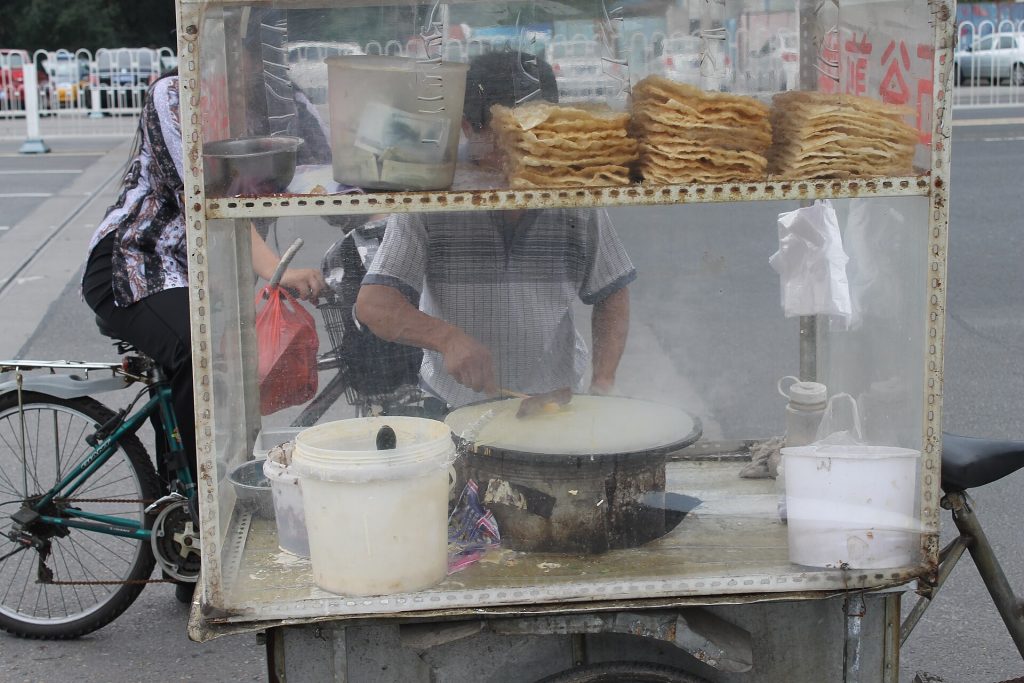
If you touch down in Beijing for an autumn getaway—especially with the crisp October and November breeze setting in—your morning routine needs an immediate upgrade. Forget hotel breakfast buffets. Step onto any bustling lane in the capital as the sun rises, follow the heavenly aroma of fermented bean paste, sizzling eggs, and fried dough, and you’ll find yourself face-to-face with a mobile cart or a tiny storefront commanding the longest line on the block.
You’ve found the jianbing (煎饼) vendor. Often translated as a savory Chinese breakfast crepe, a freshly made Beijing jianbing is a multi-textured masterpiece: crispy, chewy, savory, and spicy all at once. Whether you just arrived under the China 30-Day Visa-Free Entry in 2026: Which Countries Qualify and the Rules or you are mapping out your culinary itinerary across the capital using How to Use Amap (Gaode Maps) in China as a Foreigner: 2026 English Guide, conquering your first jianbing is an essential rite of passage.
Here is everything you need to know to order, decode, and devour Beijing’s favorite morning street food like a local.
—
What Exactly Is a Beijing Jianbing?
At its core, a jianbing is a savory street crepe built on a hot iron griddle. The batter is traditionally a blend of mung bean flour (ludoumiàn), wheat flour, and water, spread paper-thin with a wooden T-shaped paddle.
Unlike the softer, fluffier jianbing variants found in Tianjin, the classic Beijing style leans robust and crackly. Once the batter hits the griddle, a raw egg is cracked directly onto it, scrambled with a spatula, and flipped so the golden egg crust forms the exterior base. It is then painted with savory sauces, sprinkled with chopped scallions and cilantro, layered with pickled mustard tubers (zhacai), and wrapped tightly around a massive, crunchy fried dough cracker.
It is fast, intensely flavorful, and designed to be eaten on the go while piping hot.
—
Anatomy of a Jianbing: How Street Vendors Assemble It
Watching a master vendor assemble a jianbing is pure hypnotic theater. If you stand back and observe the rhythm of the cart, you’ll see the process unfold in seconds:
1. The Batter & Spread: A ladle of batter hits the sizzling round griddle. With a swift flick of the wrist and a wooden paddle, the vendor spins it into a flawless, uniform circle.
2. The Egg Bond: An egg (or two, if you request an extra) is cracked right onto the center, popped, and smeared smoothly across the surface. As the batter cooks, it binds with the egg.
3. The Flip & Paint: The entire crepe is expertly flipped. The vendor brushes on the essential flavor triad: tiánmiànjiàng (sweet bean sauce), fermented chili paste (làjiāo), and sometimes crushed sesame paste (zhīmajiàng).
4. Garnish Wave: A flurry of finely chopped scallions (cóng), cilantro (xiāngcài), and salty preserved radish bits (zhacai) are scattered across the top.
5. The Crunch Factor: The centerpiece arrives—either a cuìbìng (a large, rectangular crispy fried cracker) or yóutiáo (fried dough sticks).
6. The Wrap: The crepe is folded neatly into a tight, rectangular packet, sliced cleanly down the middle with a spatula, and handed to you in a plastic sleeve or paper bag.
—
How to Order in Simple Mandarin (or Pure Pointing)
Don’t let the language barrier intimidate you. Street vendors move at lightning speed during morning rush hour, meaning elaborate conversations are rare. You can easily get what you want using a mix of basic Mandarin phrases and confident gestures:
“Yí gè jiānfěng, yào là.” (One jianbing, make it spicy.*)
“Bú yào là.” (No spice, if your palate prefers mild.*)
“Duō jiā yì gè dàn.” (Add an extra egg.*)
If speaking feels too daunting, you can simply step up to the cart, hold up one finger to indicate a single order, and point enthusiastically at the sauces or the crispy cracker (cuìbìng) displayed on the cart. Most vendors are accustomed to international travelers and will flash a reassuring smile as they get to work.
—
Decoding the Fillings and Customizations
While the standard jianbing is a complete meal, modern vendors offer a variety of add-ons. Here is what you’ll see on the menu or ingredients tray:
* **The Base Cracker (Cuìbìng vs. Yóutiáo):** Most Beijing spots use the cuìbìng for that signature shattering crunch. Some places let you swap it for a soft yóutiáo (Chinese cruller), which absorbs the sauces and yields a chewier, heartier bite.
Sauces: The default is a balance of sweet bean paste and chili paste. If you love garlic, you can point to garlic sauce (suànzhī*) if available, though traditional purists stick to the bean-and-chili combo.
Extra Protein: While eggs are standard, some upgraded stands allow you to slide in sliced hot dogs, strips of braised pork, or even thin lettuce leaves (shēngcài*), though traditionalists argue lettuce introduces too much moisture to the crunch.
—
Hygiene and Queue Tips for First-Timers
* Follow the Locals: The absolute golden rule of Chinese street food applies here. If a cart has a line of office workers, taxi drivers, and school kids waiting patiently, the food is fresh, safe, and delicious. Avoid empty carts.
* Cash is Rare, Mobile is King: Virtually all vendors in Beijing operate via WeChat Pay or Alipay. Have your digital wallet loaded and ready before you step up to the front of the queue so you don’t hold up the morning rush.
* Watch the Griddle: Cleanliness is easy to spot—reputable vendors keep their metal spatulas spotless, wipe down the iron griddle between orders, and store their fresh garnishes in covered containers.
—
Morning vs. All-Day Spots
Traditionally, jianbing is strictly a breakfast food, sold from dawn until roughly 10:00 AM outside subway exits, office parks, and residential alleyways (hutongs). However, as food culture has evolved, Beijing has seen the rise of artisanal jianbing shops (like Jianbing Company style eateries or trendy indoor stalls) that serve them all day long with upgraded packaging and gourmet ingredients.
For the ultimate atmospheric experience, hunt down a traditional morning cart vendor wrapped in the chilly autumn air. Eating a steaming, crispy crepe while watching Beijing wake up is an unmatched travel memory.
—
How Jianbing Differs from Other Chinese Breakfasts
If you are exploring China’s vast breakfast landscape—perhaps transitioning from a comforting bowl of congee, a basket of soup dumplings (xiaolongbao), or diving into other regional staples like Egg Roll for First-Timers: What to Expect and How to Order—jianbing stands in a league of its own.
Unlike steamed or boiled breakfast items, jianbing is engineered entirely around contrast. It combines the silky softness of cooked batter, the rich protein of egg, the punch of fermented bean paste, and the explosive, structural crunch of fried dough. It is handheld, portable, and fiercely savory—making it the undisputed king of China’s morning street food culture.
FAQ
Is this guide current for late 2026?
It reflects commonly reported practice as of October 2026. Always re-check official sources before you travel, because rules, ticket platforms and seasons change.
Where can I verify details?
Use the official website, WeChat account or ticket platform named for this topic. For payments and maps, see Lovely China’s practical visitor guides linked above.
What if my situation is unusual?
Ask your hotel, airline, park ticket office or embassy/consulate for case-specific advice rather than relying only on a blog post.