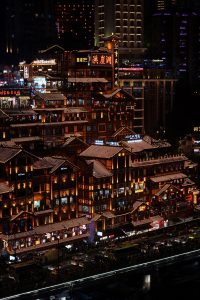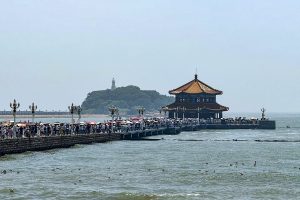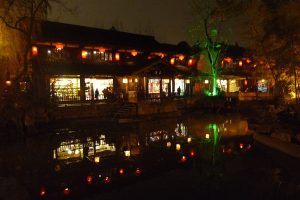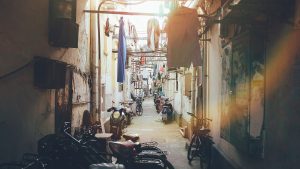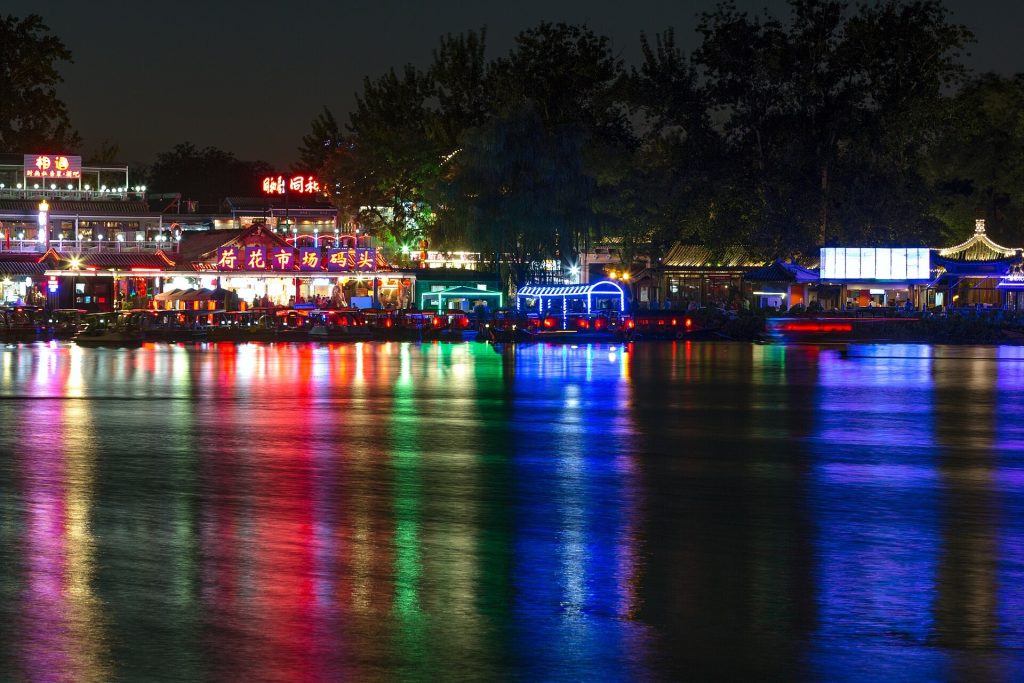
As the afternoon air in northern China sharpens with the early onset of a November evening, Beijing’s Shichahai takes on a quiet, amber transition. The tourist crowds of golden October have thinned, leaving behind the steady cadence of local residents, cyclists, and the low hum of neighborhood life. Walking the edges of Qianhai and Houhai at dusk offers travelers and expats a rare window into the city’s historic urban fabric—where the water reflects slate-grey courtyard walls, bare willow branches sway in the dry northern wind, and the smell of roasted sweet potatoes and steaming street snacks drifts from narrow alleyway mouths.
The Shift from Daylight to Evening Light
November dusk in Beijing arrives quickly, usually plunging the hutongs into shadow well before six o’clock. Starting your walk near the southeastern corner of Qianhai allows you to catch the last golden slivers of sun bouncing off the water before the lanterns along the shoreline flicker on.
The Atmosphere: The air is crisp, carrying the unmistakable dry chill of an approaching northern winter. Layers are essential here; a windproof jacket and scarf make the difference between an enjoyable stroll and a hurried march.
The Sights: Unlike the summer months when pedal boats crowd the surface and open-air bars spill loud music onto the paths, November brings a meditative stillness. You will see locals bundled in down jackets playing Chinese chess on stone benches or walking past with grocery bags looped over their bicycle handlebars.
Respecting Neighborhoods: Remember that Shichahai is not just a scenic zone; it is a living, breathing residential neighborhood. Keep voices moderate in the smaller hutongs, avoid peering directly into private courtyard windows, and respect resident-only zones.
For newcomers planning their broader itinerary around the capital, a structured look at major sights can help balance spontaneous neighborhood walks like this one—consult the Beijing first-visit guide to map out how historic lakes fit alongside modern transit and imperial landmarks.
Navigating the Hutong Edges and Warming Stations
As the temperature drops sharply with the fading light, moving away from the open water and into the labyrinth of surrounding hutongs provides natural windbreaks. The lanes here—such as Yandaishijie or the quieter alleys stretching toward Gulou East Street—offer small vendor stalls, tea houses, and pocket-sized eateries where you can pause to warm your hands.
Practical Warmth: If your hands or feet grow numb, duck into a neighborhood convenience store or a small bakery for a warm canned beverage (hot milk tea or sweet canned pear juice are widely available) or a fresh steamed bun.
Transit Planning: When your walk concludes, the nearest subway connections—such as Shichahai Station (Line 8) or Guloudajie Station (Lines 2 and 8)—are a short, well-lit walk away.
Digital Tools: Navigating hutong intersections after dark can occasionally disorient first-time visitors. Having reliable digital mapping and translation apps pre-loaded on your phone ensures a smooth journey back to your accommodation. For a breakdown of essential apps that function reliably across mainland networks and transit systems, check the China travel tools page.
Evening Walk Preparation Checklist
Before heading out for a late-autumn dusk walk around Shichahai, review this quick preparation checklist to ensure comfort and ease:
[ ] Layered Outerwear: Pack a windbreaker or down jacket, a scarf, and gloves; temperatures near the open water drop rapidly after sunset.
[ ] Charged Devices: Keep your smartphone fully charged for navigation and transit QR code scanning, bringing a power bank if temperatures cause rapid battery drain.
[ ] Footwear: Wear sturdy, comfortable walking shoes with good traction, as historic stone pathways and brick hutong alleys can be uneven.
[ ] Transit Cards: Ensure your transit app or physical transit card is topped up before evening rush hour.
FAQ
What is the best time to start a November evening walk at Shichahai?
Aim to arrive around 4:30 PM to 5:00 PM. This timing lets you catch the sunset reflections over the water before the sky turns fully dark by 5:30 PM, giving you ample time to explore the illuminated shoreline and surrounding hutongs before dinner.
Are the bars and restaurants around Houhai still open in November?
Yes, many establishments remain open, though operating hours may shift to earlier closing times on weekdays compared to the bustling summer season. It is also much quieter, offering a relaxed atmosphere for a warm drink or meal by the water.
How do I get to Shichahai using Beijing’s subway system?
Take Line 8 to Shichahai Station and use Exit A or C, which places you within a short walking distance of the Qianhai lake edge. Alternatively, you can take Line 2 or Line 8 to Guloudajie Station and walk south down Yandaishijie into the lake area.
Is it safe to walk alone in the Shichahai hutongs after dark?
Shichahai and its surrounding hutongs are generally very safe for evening strolls. Main pathways and lakeside promenades are well-lit and frequented by local residents. Standard urban awareness—such as keeping an eye out for quiet electric scooters sharing the narrow lanes—is all that is required.
Related Lovely China reading
For payments, start with Alipay and WeChat Pay hub and WeChat Pay vs Alipay for tourists. For trains, keep high-speed rail first-timers guide and 12306 passport signup for foreigners handy. City hubs: Beijing first-visit guide, Shanghai first-visit guide. Connectivity: roaming vs local SIM honest guide, pocket Wi-Fi vs eSIM for China, offline maps for foreigners. Bookmark China travel tools page.
Practical checklist
- Confirm official rules on the relevant government, park, airline, or bank page near your travel week
- Screenshot bookings, tickets, and QR codes while you still have stable Wi-Fi
- Save hotel and attraction names in Chinese characters in your phone notes
- Carry passport, a backup payment method, and a small cash float (why cash is still needed)
- Test one small mobile payment before you rely on wallets at a gate or taxi
- Keep the China travel tools page page bookmarked for related Lovely China hubs
FAQ
Is this stories advice official?
No. Lovely China orients travellers. Verify live rules on official pages, apps, and counters near your travel week.
Will every city behave the same?
No. Airports, stations, parks, and markets differ. Use local signage and staff instructions when they conflict with a general guide.
What should I screenshot before I lose Wi-Fi?
Bookings, tickets, hotel Chinese address, pickup pins, and payment success screens.
Notes for late 2026 travellers
November and early December bring cooler mornings, earlier sunsets, and comfortable walking weather across much of eastern and central China. Pack layers and leave extra time on clear weekends at popular sights.
This article does not invent ticket prices, opening hours, processing times, consular fees, or official statistics. When a number matters, verify it on the official site, app screen, or ticket board near your travel week.
If an official rule page disagrees with this guide, follow the official page. Lovely China orients English-speaking travellers; we are not an immigration, banking, or medical authority.