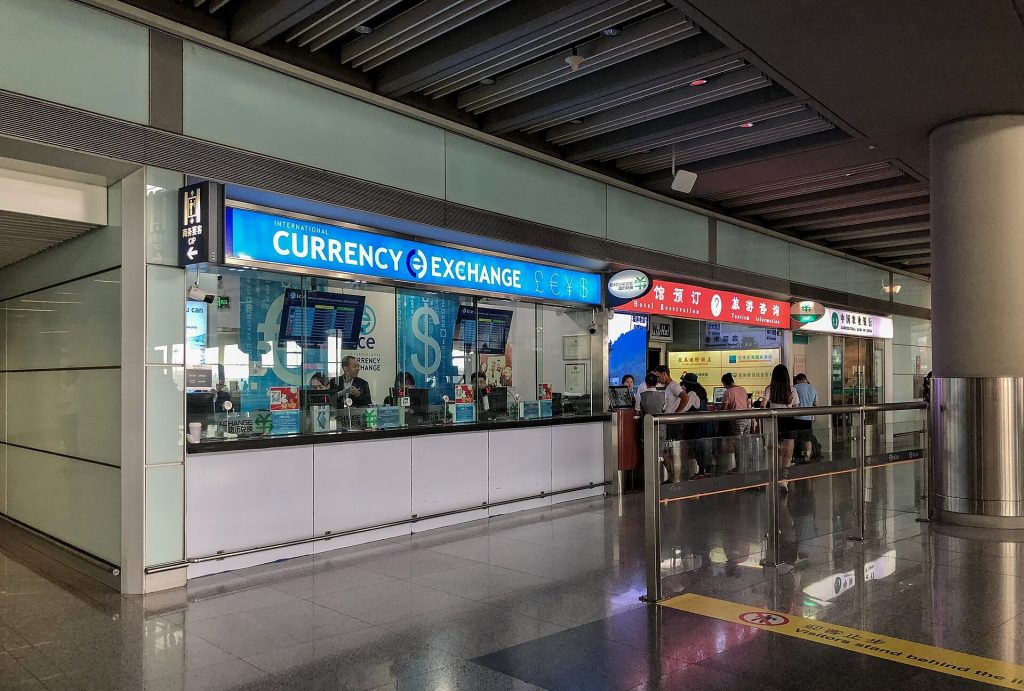
Physical cash still crosses Chinese borders under published limits. Those limits are not the same as leftover Alipay balances, and they are not the same as what an ATM will give you in the arrivals hall. If you plan to arrive with a wad of yuan or leave with leftover dollars and RMB notes, the question is customs and currency rules, not informal advice from the person in the next seat.
This article summarises official thresholds as they stand in current People’s Bank of China, customs, and State Administration of Foreign Exchange materials, and it tells you where to re-check them. For the declaration form itself, start with China customs entry declaration. For notes you still hold near departure, use what to do with leftover RMB cash and airport vs bank currency exchange.
RMB cash: the published per-person limit
Under the State Council’s rules on taking RMB across the border, and the People’s Bank of China materials that set the figure, each person may carry up to RMB 20,000 per trip. The official wording applies to Chinese citizens leaving or entering and to foreigners entering or leaving. If you would carry more than that in yuan notes, you must declare the cash to customs in the way current notices require. Do not treat “I will just split it between bags” as a plan.
The RMB 20,000 figure is a legal limit described in official materials, not a suggestion. It can be updated; confirm it on PBOC or customs pages before a trip that involves a large envelope of notes.
Foreign-currency cash: declaration and the 携带证
Separate rules cover foreign-currency banknotes and coins. In the interim measures issued by the State Administration of Foreign Exchange and the General Administration of Customs (published on gov.cn), inbound travellers who carry more than the equivalent of USD 5,000 in foreign-currency cash should make a written customs declaration.
On the way out, carrying the equivalent of USD 5,000 or less generally does not require a “carrying permit” (携带外汇出境许可证, often called a 携带证), and customs may release that amount without one. Amounts above the equivalent of USD 5,000 up to USD 10,000 generally require a 携带证 issued by a bank, which you then show to customs. Amounts above the equivalent of USD 10,000 are described as not allowed in principle, with limited special cases handled through the foreign-exchange authority. Frequent same-day or short-interval border crossings can face tighter practice; if that is your pattern, ask customs rather than scaling up a single-trip example.
Those dollar figures are official thresholds from the published measures, not a conversion tip. Re-check SAFE and GACC notices near travel week, including later customs announcements about luggage declaration (for example, GACC notices on traveller declaration, which can update the paperwork even when the cash limits themselves are unchanged).
How to behave at the channel
If you are over a threshold, use the declaration or red-channel process the port is currently running. Do not hide cash in a suitcase and hope. Do not ask a stranger to carry notes for you. Keep cash in original form you can explain: your notes, your passport, your itinerary.
Electronic transfers, travel cards, and leftover mobile-wallet balances are not “cash in your pocket” for this purpose, and they have their own problems. ATMs in China usually dispense yuan; they do not take your leftover notes back. See ATM foreign-card cash and why cash is still needed.
Practical planning, not unofficial changing
Carry what you actually need for the first day or two, plus a small buffer, rather than a holiday’s entire budget in notes. Spend down leftover yuan on ordinary purchases when you can. Official bank or airport exchange desks beat informal changers; this guide will not recommend the latter.
If a customs officer’s instruction disagrees with a remembered blog number, follow the officer and the official notice. Lovely China is not a customs authority.
Ground-level reminders for this topic
Stay flexible when a counter, app screen, or staff instruction disagrees with a blog. Lovely China orients travellers; live official pages and bilingual signs win. Keep China travel tools page, essential apps for foreigners, and Alipay and WeChat Pay hub bookmarked so logistics stay boring while you focus on the angle of this guide: Explain published cash-carrying rules at the border: under current People’s Bank of China and customs materials, each person may carry up to RMB 20,000 per trip without exceeding the RMB limit, and inbound foreign-currency cash over the equivalent of USD 5,000 should be declared; outbound foreign-currency cash at or under USD 5,000 generally needs no携带证, while higher amounts may require a bank or SAFE permit as described in the 2003/2004 SAFE–GACC interim measures. Cite official sources (PBOC, GACC/customs, SAFE / gov.cn) and tell readers to re-check live notices, including later customs declaration announcements. Distinct from leftover-RMB-before-leaving, ATM, and currency-exchange articles. This is about crossing the border with physical cash, not leftover wallet balances..
Related Lovely China reading
For payments, start with Alipay and WeChat Pay hub and WeChat Pay vs Alipay for tourists. For trains, keep high-speed rail first-timers guide and 12306 passport signup for foreigners handy. City hubs: Beijing first-visit guide, Shanghai first-visit guide. Connectivity: roaming vs local SIM honest guide, pocket Wi-Fi vs eSIM for China, offline maps for foreigners. Bookmark China travel tools page.
Practical checklist
- Confirm official rules on the relevant government, park, airline, or bank page near your travel week
- Screenshot bookings, tickets, and QR codes while you still have stable Wi-Fi
- Save hotel and attraction names in Chinese characters in your phone notes
- Carry passport, a backup payment method, and a small cash float (why cash is still needed)
- Test one small mobile payment before you rely on wallets at a gate or taxi
- Keep China travel tools page bookmarked for related Lovely China hubs
FAQ
How much RMB cash can I carry across the border?
Official People’s Bank of China and customs materials describe a limit of RMB 20,000 per person per trip, with a requirement to declare amounts above that limit. Re-check the live official pages before you travel, because the figure can be updated.
What about foreign-currency cash?
Published SAFE and customs measures say inbound foreign-currency cash over the equivalent of USD 5,000 should be declared. Outbound, amounts at or under that equivalent generally need no carrying permit; higher amounts may need a bank or foreign-exchange permit. Confirm the current tiers before you fly.
Is leftover Alipay balance the same as carrying cash?
No. This article is about physical notes and coins at the border. Wallet balances, cards, and ATM withdrawals are separate problems with their own guides.
Should I hide extra cash in a suitcase?
No. If you are over a published threshold, use the official declaration process. Do not ask a stranger to carry notes for you, and do not use unofficial money changers.
Notes for late 2026 travellers
Late December 2026 and the New Year week into 2027 bring colder mornings, earlier sunsets, and holiday crowds in many city hubs. Pack real winter layers in the north, and leave extra time on weekends and around 1 January.
This article does not invent ticket prices, opening hours, processing times, consular fees, or official statistics. When a number matters, verify it on the official site, app screen, or ticket board near your travel week.
If an official rule page disagrees with this guide, follow the official page. Lovely China orients English-speaking travellers; we are not an immigration, banking, or medical authority.