Landing in China is a sequence: aircraft door, immigration, baggage, then customs. First-timers often over-focus on the visa stamp and under-prepare for the declaration choice. This guide walks the practical path without inventing fine amounts or prohibited-item encyclopedias.
Before you fly, confirm whether you enter under a visa, a visa-free stay, or a transit programme—see 30-day visa-free entry countries and 240-hour visa-free eligible ports guide. After you clear, hotel registration still matters: hotel registration for foreigners.
The usual arrival order
1. Follow “Arrivals / Immigration” signs (bilingual in major airports)
2. Complete any required arrival card or electronic pre-declaration if your flight or airport instructs it
3. Present passport and entry permission to the officer
4. Collect checked bags
5. Choose the appropriate customs channel and exit to the arrivals hall
Exact forms change by airport and policy cycle. Follow the screens and staff instructions on the day—not a 2022 screenshot.
Red channel vs green channel thinking
Many airports use a dual-channel idea familiar from other countries:
- Green / nothing to declare when you are within personal allowances and carry no controlled items that require declaration
- Red / goods to declare when you have items that must be declared under current rules (examples often discussed by travellers include large amounts of cash currency, certain biological products, or commercial quantities of goods)
If you are unsure, use the declaration channel and ask. Choosing green while knowingly carrying a declare-required item is the risky move; asking a question is not.
Cash and currency honesty
Countries commonly set thresholds above which currency must be declared. China is no exception in spirit—check the current threshold on official customs information before you pack a thick envelope. Do not rely on a number memorised from a blog. Split nothing dishonestly across companions to evade rules.
What packing usually keeps simple
For ordinary tourism: clothing, one laptop, camera gear for personal use, reasonable medicines in original packaging with prescriptions for controlled drugs, and souvenirs bought abroad in personal quantities. Problems more often come from commercial samples that look like inventory, fresh food or seeds, and large volumes of the same retail item. When in doubt, leave it out or declare it.
Electronic vs paper declarations
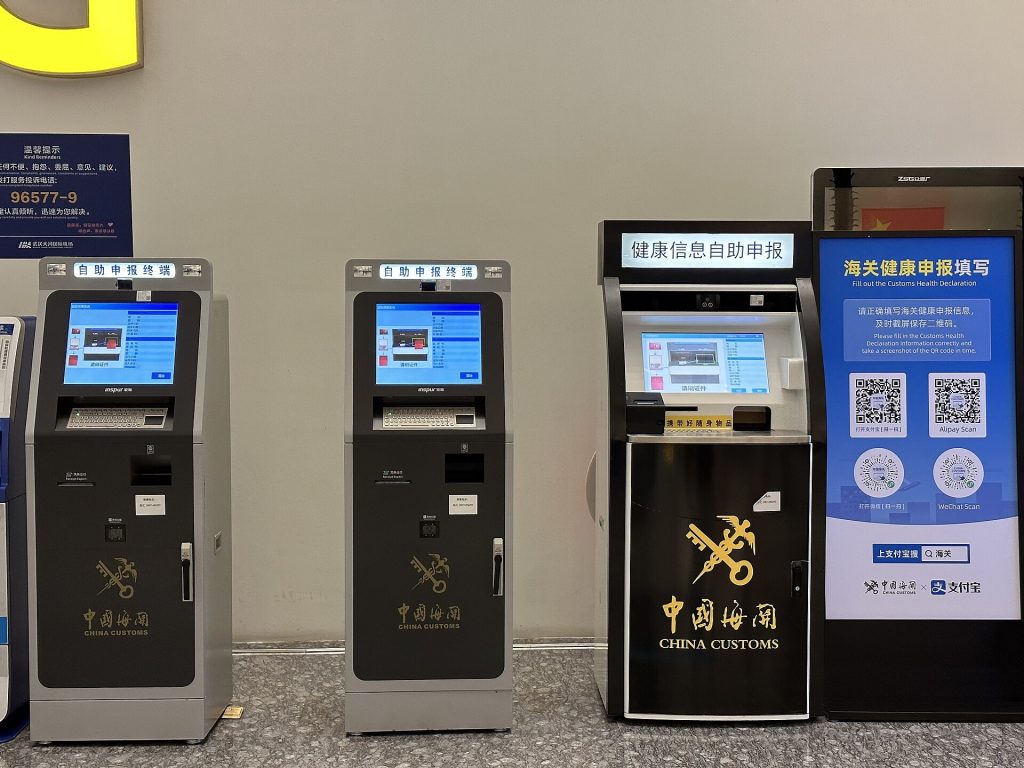
Some ports push electronic declaration via mini-programs or kiosks; others still use paper. Have passport data readable, hotel name in Chinese characters ready (see essential apps for foreigners and translation apps honest guide), and enough battery to show screens. Offline notes help when roaming is slow—pair with offline maps for foreigners.
After you exit customs
You are not done with compliance: hotels and some short-term rentals handle police registration. Keep the entry stamp or electronic record accessible. Payments and SIMs are the next practical projects—Alipay and WeChat Pay hub, roaming vs local SIM honest guide.
Related Lovely China reading
For payments and wallets, start with Alipay and WeChat Pay hub and WeChat Pay vs Alipay for tourists. For trains and long-distance moves, keep high-speed rail first-timers guide and 12306 passport signup for foreigners handy. For city orientation, the Beijing first-visit guide, Shanghai first-visit guide, and Chengdu first-visit guide hubs remain useful even when your trip centres on another province. Connectivity backups live in roaming vs local SIM honest guide, SIM vs eSIM carriers compare, pocket Wi-Fi vs eSIM for China, and offline maps for foreigners. Bookmark China travel tools page so you can jump between logistics topics without searching from scratch on hotel Wi-Fi at midnight.
Practical checklist
- Confirm official rules on the relevant government, park, airline, or bank page near your travel week
- Screenshot bookings, tickets, and QR codes while you still have stable Wi-Fi
- Save hotel and attraction names in Chinese characters in your phone notes
- Carry passport, a backup payment method, and a small cash float (why cash is still needed)
- Test one small mobile payment before you rely on wallets at a gate or taxi
- Build time buffers for security lines, November weather, and bilingual navigation
- Prefer refundable holds until visas, trains, or park tickets are confirmed
- Keep the China travel tools page page bookmarked for related Lovely China hubs
How to verify information without panicking
English travel blogs lag policy changes. When something critical is at stake—entry permission, ticket validity, or whether a card works—use primary sources: embassy or VAC pages, National Immigration Administration notices, official park reservation platforms, airline apps, and the screens inside Chinese super-apps. Lovely China articles such as Alipay and WeChat Pay hub, high-speed rail first-timers guide, and essential apps for foreigners help you orient, but they are not substitutes for the live rule in front of you.
If two sources conflict, choose the stricter one until you can ask a human at the counter. That habit prevents most arguments that begin with “I read online that…” at gates.
FAQ
Is the visa stamp the same as customs clearance?
No. Immigration and customs are separate steps.
What if I am unsure which channel to use?
Use the declaration channel and ask staff rather than guessing green.
Can Lovely China quote the exact cash declaration threshold?
No—thresholds change. Check official China Customs information near your travel week.
Do I still register at the hotel afterward?
Usually yes for foreign guests—see the hotel registration guide.
Notes for late 2026 travellers
Late October and November bring cooler mornings, earlier sunsets, and comfortable train weather across much of eastern and central China. Pack layers, keep phone batteries warm outdoors, and leave extra time whenever a clear weekend coincides with popular sightseeing.
This article does not invent ticket prices, opening hours, processing times, consular fees, or official statistics. When a number matters, verify it on the official site, consulate page, app screen, or ticket board near your travel week.
Write key Chinese addresses into your phone notes before you leave Wi-Fi. Screenshot tickets and booking codes. Carry a small cash float even if you prefer wallets—see why cash is still needed. Reconfirm last-mile transport the evening before early starts.
If an official rule page disagrees with this guide, follow the official page. Lovely China orients English-speaking travellers; we are not an immigration, banking, or medical authority. Keep the China travel tools page bookmarked for other logistics hubs.
Traveller mindset
Move slowly through paperwork moments. A calm queue is cheaper than a missed train or a refused visa file. When language fails, show passport pages, booking screens, and maps with Chinese labels. Hotel front desks and station information booths are used to helping foreigners through routine steps.
Keep expectations honest: China is highly digital, but edge cases remain. Your job is not to memorise every exception—it is to carry backups (second card, cash, offline maps, written addresses) so one failure does not end the day. For everyday apps, start with essential apps for foreigners.