The minibus rattles to a halt on a dusty lot where the smell of coal smoke mixes with the sweet steam of lamb skewers. A vendor waves a paper fan, shouting prices for bottled water and wide-brimmed hats. Beyond the turnstiles, the low roofs of three massive hangars stretch toward the horizon, each one covering a pit that has kept its silence for more than two thousand years. You adjust your backpack, step through the security arch, and walk into the cool shadow of Pit One, where the air holds the faint mineral scent of baked earth.
The First Glimpse: Standing at the Edge of Pit One
Walkways curve around a rectangular trench the size of two football fields. Below, row after row of life-size soldiers stand in battle formation, their gray-green ranks fading into the dim light at the far end. Each figure faces east, toward the ancient states the emperor had conquered. From the railing you see archers kneeling in the front lines, infantry standing behind them, and charioteers gripping the reins of four-horse teams. The scale hits you in the chest — this is not a museum diorama; it is an underground army frozen mid-march.
Light filters through the high windows and catches the seams where heads were once fitted onto necks, where hands were slotted onto wrists. Many torsos bear the scars of the roof collapse that crushed them when the timber supports burned centuries ago. Archaeologists have pieced thousands of fragments back together, but gaps remain. A few soldiers still lie on their backs, half-buried in the soil where they fell, waiting for the next season of careful excavation.
Reading the Ranks: Who Stands Where
The figures are not identical copies. Generals stand tallest, their chests armored with overlapping leather plates tied by painted cords. Middle-ranking officers wear shorter coats and caps tied under the chin. Foot soldiers sport topknots or flat caps, their tunics hitched up for running. Archers kneel on one knee, the soles of their shoes carved with tread patterns for grip. Cavalrymen lean slightly forward, boots hooked into stirrups that did not exist in the West for another thousand years.
Look closely at the faces. One has a high forehead and thin mustache; another shows a square jaw and thick eyebrows. The craftsmen modeled them on real recruits from different provinces — some from the northern steppes, others from the southern river valleys. Traces of pigment still cling to collars and cuffs: cinnabar red, malachite green, azurite blue, and a purple made from barium copper silicate that Chinese chemists invented long before Europe knew the formula. Rain and fire washed or burned most of it away, but the few protected spots glow like bruised jewels.
Beyond the Infantry: Pits Two and Three
Pit Two sits a short walk north, under its own arched roof. Here the formation shifts. Chariot squadrons cluster in the center, each box drawn by four horses with ears pricked forward. The horses are masterpieces — nostrils flared, veins raised on muscular necks, manes clipped in the military style. Around them spread crossbowmen in kneeling and standing poses, their bronze triggers and wooden stocks long since rotted, leaving only the hollows in clenched fists.
Pit Three is smaller, quieter. It holds a command post: a war chariot with a canopy, surrounded by high-ranking officers arranged in a U-shape. No rank-and-file soldiers here. This is where the generals would have planned the emperor’s eternal campaigns. A single horse stands harnessed to the chariot, its saddle blanket carved with geometric patterns. The sense of strategy is palpable; you almost expect a map to be unrolled on the lacquered table that has long since turned to dust.
The Bronze Chariots: Engineering in Miniature
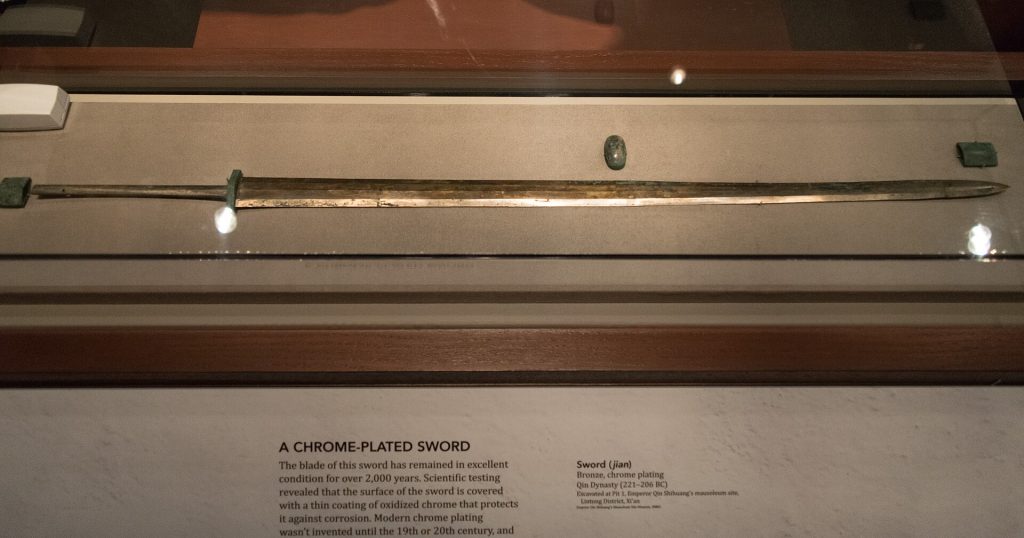
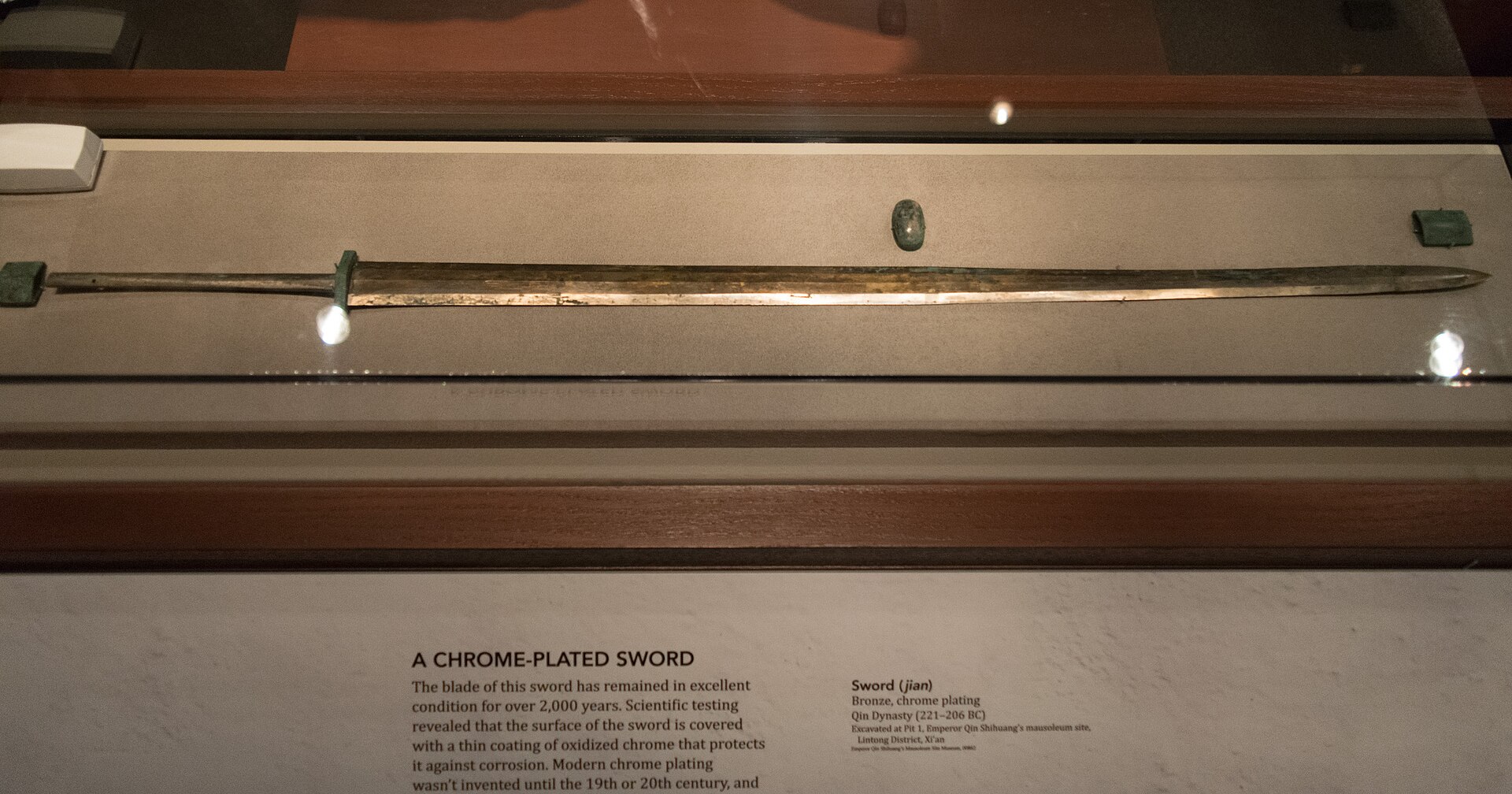
In the exhibition hall beside Pit Two, two half-size bronze chariots sit in climate-controlled cases. They were found twenty meters west of the main tomb mound, crushed flat by the weight of earth but painstakingly restored. The first chariot is a light inspection vehicle, its driver standing under a bronze umbrella with movable joints. The second is a heavier sleeping carriage, its windows fitted with sliding panels and latches that still turn. Each piece — harness hooks, bit rings, axle caps — was cast separately and assembled with pins and sockets. The wheels rotate freely. The horses’ tongues are modeled individually. You stand there realizing the Qin metallurgists had mastered chrome plating on the weapons and lost-wax casting on the chariots two millennia before the industrial revolution.
How the Figures Were Made: A Workshop in the Earth
The pits were not just burial chambers; they were production lines. Kiln sites discovered nearby show that the figures were fired in sections — legs, torsos, arms, heads — then assembled on site. Each workshop stamped or inscribed its mark on the hidden parts: a name, a place, a foreman’s signature. Quality control was strict. A flawed torso meant the whole batch was rejected. The clay varies by pit, mixed with sand or crushed pottery to control shrinkage. The heads were molded from about ten basic face shapes, then individualized by hand — eyebrows pinched, eyes carved, ears attached. This modular method allowed thousands of unique figures to be produced in the decade or so before the emperor’s death.
- Local yellow clay dug from the Wei River floodplain
- Coarse sand or grog added to prevent cracking
- Body parts molded separately in sections
- Heads customized by hand after molding
- Assembled, then fired in kilns at roughly 1,000°C
- Painted with mineral pigments bound in lacquer
What Locals Expect: Moving Through the Site
Chinese tour groups move fast. A guide lifts a flag, speaks into a microphone, and the cluster follows at a clip that leaves little time for staring. If you want space, arrive when the gates open — usually around the hour the morning mist lifts off the pomegranate orchards — or stay late after the big buses depart. The walk between pits is exposed; in summer the sun beats off the white gravel, and in winter the wind cuts across the plain from the north. Wear shoes you can walk kilometers in. The site is larger than it looks on the map.
Photography is allowed without flash. Tripods and selfie sticks are not. Guards will tap your shoulder if you lean over the railings. Do not toss coins into the pits — it happens more often than you would think, and the conservation team has to fish them out with magnets. If you buy a souvenir warrior from the official shop at the exit, keep the receipt; customs officers at the airport sometimes ask for proof it is a modern replica, not a smuggled fragment.
Common Missteps: What First-Timers Get Wrong
- Rushing straight to Pit One and skipping the exhibition hall — the bronze chariots and the short film on excavation techniques give context that makes the pits readable.
- Assuming the figures you see are the original colors. The painted surfaces oxidize within minutes of exposure; what you see is the fired clay body.
- Thinking the emperor’s tomb mound — the green hill visible to the south — has been opened. It has not. Mercury readings and respect for the site keep it sealed.
- Buying “ancient arrowheads” from vendors outside the gate. They are cast iron from last week’s furnace.
- Underestimating the walk from the ticket gate to Pit One. It is fifteen minutes on foot, or a short shuttle ride that costs a few yuan and saves your calves for the stairs.
The Farmers’ Well: Where It Began
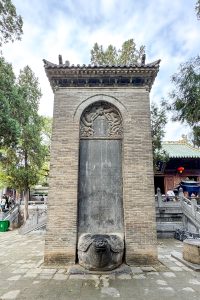
Near the ticket hall, a small courtyard preserves the well shaft where Yang Zhifa and his brothers struck terracotta fragments while digging for water in the spring of 1974. A stone tablet marks the spot. Yang, now in his eighties, sometimes sits in the gift shop signing picture books. He will tell you they thought the broken pottery was an old kiln waste pile. They sold the first fragments to a local station for pocket money before archaeologists realized what lay beneath. The wellhead is capped now, but you can peer down the stone lining and imagine the moment the shovel hit a warrior’s shoulder — the first touch of sunlight on that armor in twenty-two centuries.
When you leave, the light has shifted. Shadows stretch long across the pits. The soldiers do not move, but the angle of the sun changes the depth of their eyes, the set of their jaws. You walk back through the turnstiles, past the skewer smoke and the hat vendors, carrying the weight of an army that was never meant to be seen.