The steam rising from a brass pot in a Yanbian farmhouse carries the scent of fermented soybean and mountain herbs. An ajumma in a floral apron ladles doenjang-jjigae into chipped enamel bowls, while her grandson scrolls through short videos on a cracked phone screen, replying in a mix of Yanbian dialect and standard Mandarin. Outside, the Changbai foothills fade into dusk. This is not a museum diorama. It is a Tuesday evening in a village where the Korean language has survived war, migration, and policy shifts, served alongside pickled radish and the rhythm of a janggu drum.
Where the Villages Sit
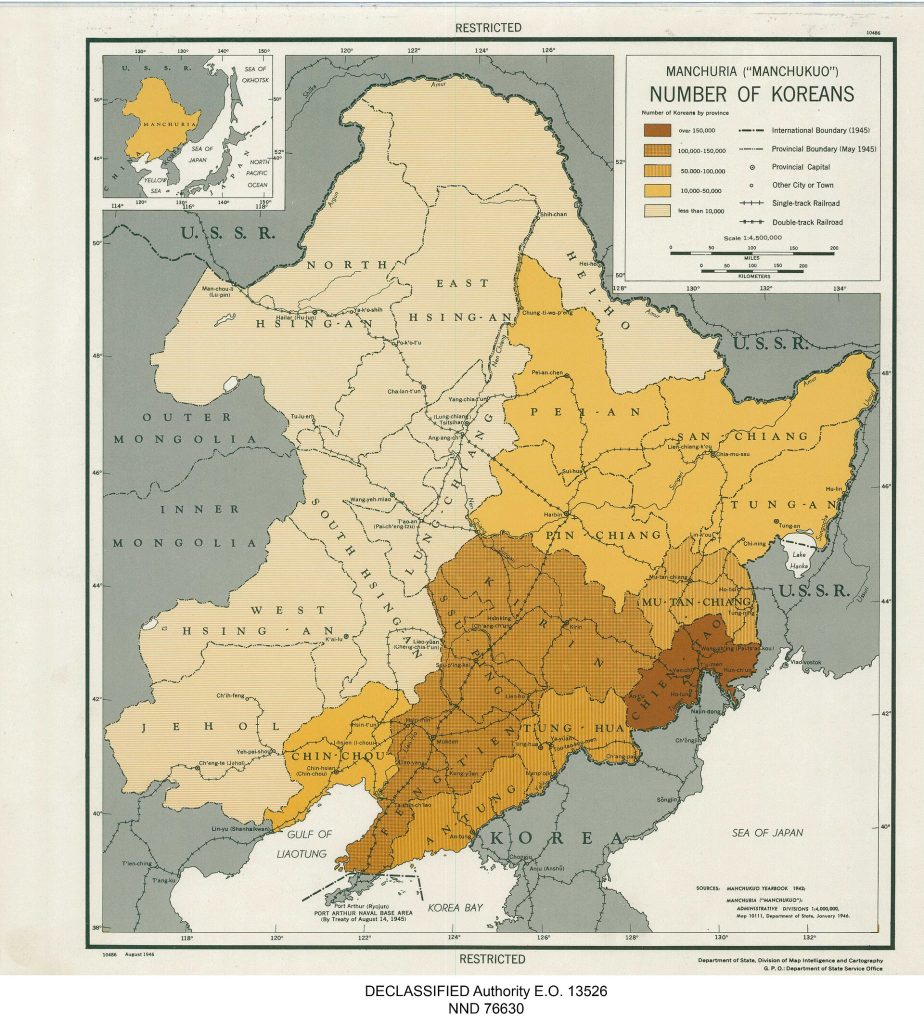
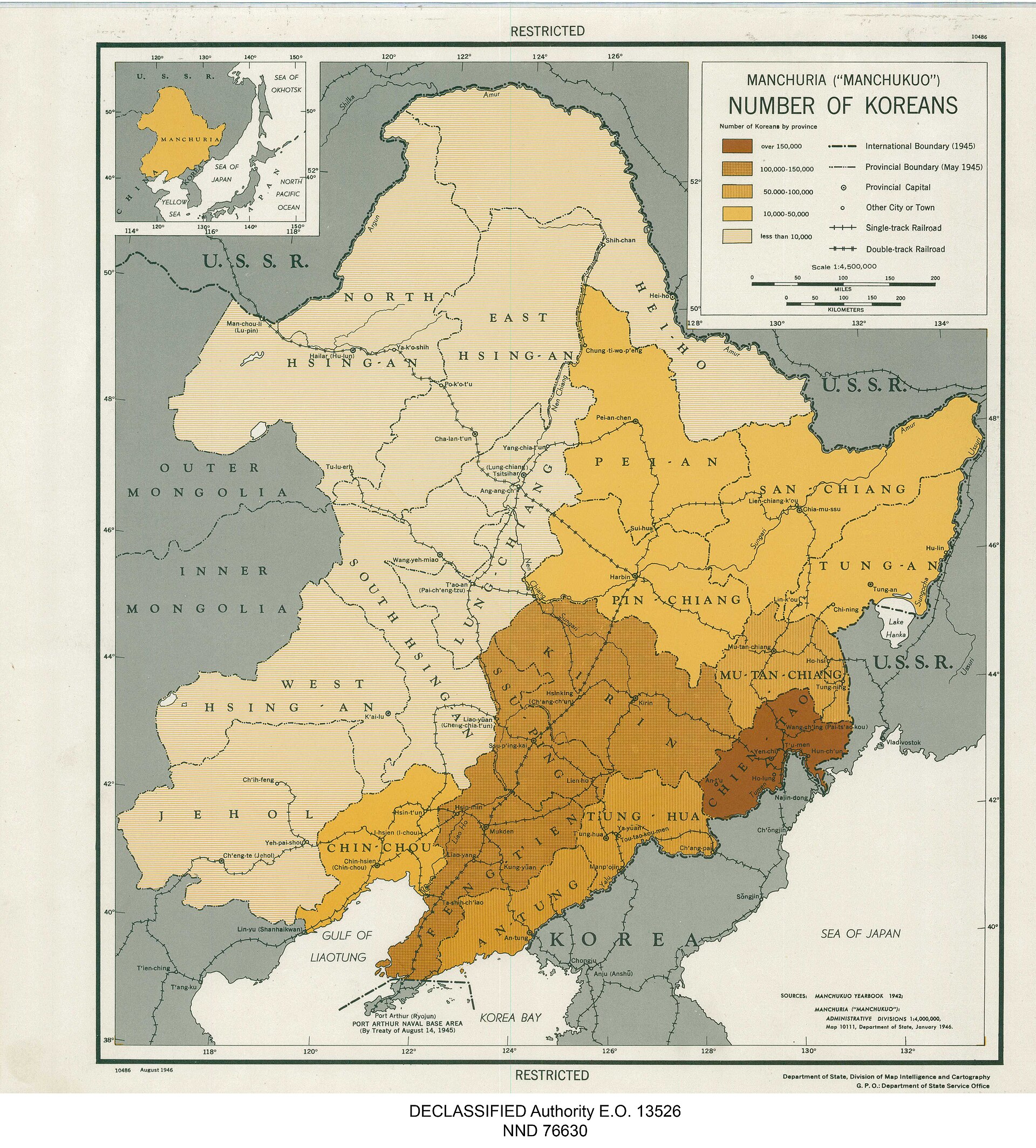
Most Korean Chinese communities cluster in the three northeastern provinces — Jilin, Heilongjiang, and Liaoning — with the Yanbian Korean Autonomous Prefecture in Jilin acting as the cultural heart. Drive two hours north of Yanji city and the highway narrows to a two-lane road flanked by rice paddies. Villages like Hongqi, Tumen River, and Longjing appear as clusters of white-tiled roofs and blue-painted doors. In Heilongjiang, the settlements thin out near the Russian border, but you still find hamlets where the village loudspeaker crackles with morning announcements in Korean before switching to Mandarin. Inner Mongolia’s Hulunbuir grasslands hold smaller pockets, often centered around a single church or a communal well. Further south, Shanghai’s Gubei district and Qingdao’s Licang area function as modern satellites, populated by professionals and students who return north for Chuseok and Lunar New Year.
What Lands on the Table
A meal in a Yanbian home is a negotiation between the peninsula’s traditions and the northeast’s larder. The cold winters mean kimchi is buried in earthenware jars deeper than in Seoul, yielding a crunch that holds through March. Wild mountain vegetables — gosari (bracken), dureup (angelica shoots), and windeulkae (wild sesame leaves) — replace the cultivated greens common further south. Pork belly simmers with fermented soybean paste until the fat turns translucent. Cold buckwheat noodles arrive in a stainless steel bowl with a vinegar-mustard broth that numbs the lips.
- Staples: Short-grain rice mixed with millet or sorghum; hand-pulled buckwheat noodles (naengmyeon) served icy in summer, steaming in winter.
- Ferments: Kimchi made with napa cabbage, Korean radish, gochugaru (red pepper flakes), jeotgal (salted seafood), and a heavy hand of garlic; doenjang (soybean paste) aged two years in onggi pots; gochujang (red pepper paste) sweetened with malt barley syrup.
- Mountain Forage: Gosari soaked overnight and stir-fried with perilla oil; dureup blanched and dressed with soy-vinegar; windeulkae wrapped around grilled pork.
Home method — basic kimchi (winter batch):
- Quarter 5 kg napa cabbage. Soak in 10% brine for six hours, turning once. Rinse twice, drain in a bamboo sieve.
- Blend 200 g gochugaru, 150 g fish sauce, 100 g minced garlic, 50 g minced ginger, 30 g sugar, 1 cup glutinous rice flour slurry (cooked and cooled), 300 g julienned Korean radish, 100 g chopped Asian chives, 50 g minced salted shrimp.
- Rub paste between every cabbage leaf. Pack tight into onggi jars. Press a clean stone on top. Seal lid with clay rim.
- Bury jar to the shoulder in frozen ground. Retrieve after the first full moon of the lunar new year.
In a Yanji restaurant, order the “laobian” (old-style) set: a sizzling stone pot of bibimbap with wild fern, bean sprouts, and a raw yolk; a side of grilled mackerel brushed with gochujang; and a bowl of mul-naengmyeon to finish. Avoid places that serve “Korean BBQ” with sweet marinated short ribs — that is a Seoul export tailored for tour groups. The local palate prefers unmarinated pork belly grilled over charcoal, dipped in sesame oil, salt, and crushed pepper.
Festivals That Move the Calendar
The lunar calendar governs the rhythm. Seollal (Lunar New Year) arrives with the second new moon after the winter solstice. Families gather before dawn for charye — an ancestral rite where a table holds tteokguk (rice cake soup), grilled fish, jujubes, chestnuts, and three colors of namul (seasoned vegetables). The youngest male bows deepest. By midmorning, children in hanbok visit elders, receiving crisp red envelopes and advice they pretend to heed.
Chuseok, the harvest moon festival on the fifteenth day of the eighth lunar month, shifts the focus to the graves. Entire clans drive to mountain burial mounds, armed with sickles to clear weeds, then lay out songpyeon (half-moon rice cakes steamed on pine needles), freshly harvested pears, and soju. The air smells of cut grass and incense. In Yanbian, the festival coincides with the Korean Folk Festival — wrestlers in satba belts grapple on sand pits, farmers swing hourglass drums in pungmul circles, and grandmothers compete in a knife-sharpening contest that draws louder cheers than the wrestling.
Dano, the fifth day of the fifth lunar month, is quieter. Women wash their hair in water boiled with changpo (sweet flag) to ward off summer fevers. Men swing on rope swings strung between pine trunks. In Longjing village, a single shaman still performs the byeolsingut — a rite for the village guardian spirit — though the audience now includes more smartphone cameras than believers.
Cultural Sites Worth the Detour
Yanji’s Korean Folk Culture Park looks like a theme park from the parking lot, but the reconstructed thatch-roof houses inside hold real artifacts: a 1920s foot-treadle loom, a wedding palanquin, a set of brass bangjja yugi (bronzeware) that rings like a bell when struck. The attached museum displays a handwritten letter from An Jung-geun, the independence activist, smuggled out of Lushun prison. Allow two hours.
Longjing’s Yun Dong-ju Memorial Hall sits on a hill overlooking the Tumen River. The poet studied at the nearby Christian school before dying in a Japanese prison at twenty-seven. His manuscripts, written in pencil on rice paper, show corrections in a careful hand. The garden plants mugwort and pine — images from his verse. No English captions. Bring a translation app or a patient friend.
In Hunchun, the Fangchuan Scenic Area marks the tripoint of China, Russia, and North Korea. A observation tower lets you see the Russian village of Khasan and the North Korean port of Rajin. The Korean Chinese border guards here speak three languages and sometimes trade cigarettes for Russian chocolate. The site closes at sunset; the last bus leaves at five.
For a living site, attend a Sunday service at the Yanbian Gospel Church, a red-brick building from 1912. The hymnal uses the old Korean orthography. Afterward, the courtyard fills with ajummas selling homemade rice cakes wrapped in bamboo leaves — cash only, no WeChat Pay.
What Newcomers Get Wrong
First mistake: assuming every Korean Chinese person speaks fluent South Korean standard language. The Yanbian dialect preserves Middle Korean vowels lost in Seoul, mixes in Manchu loanwords, and follows Mandarin syntax when the speaker switches codes mid-sentence. A South Korean visitor often understands the words but misses the humor.
Second: treating the autonomous prefecture as a cultural theme park. Locals work shifts at the railway yard, run logistics firms, teach at normal universities. They do not exist to perform ethnicity. Ask before photographing a charye table. Do not step on the threshold of a traditional house — the spirits reside there.
Third: ordering “Korean food” in Shanghai or Beijing and expecting the Yanbian profile. The capital’s Korean restaurants cater to South Korean expatriates — sweeter, less fermented, heavier on beef. If you want the mountain taste, eat in a village home or a Yanji back-alley canteen where the menu is handwritten on a wall.
Fourth: ignoring the seasonal clock. Visiting in the depth of winter (the lunar twelfth month) means frozen roads, limited transport, but the best kimchi and the warmest welcome. Arriving during the summer rainy season (the lunar sixth month) brings landslides on mountain passes and mosquitoes the size of thumbtacks. Plan around the lunar holidays if you want open doors; avoid them if you want quiet roads.
Fifth: assuming the border is porous. The Tumen River may look shallow enough to wade, but sensors, cameras, and patrols on both sides make crossing a federal offense. The only legal crossing for foreigners is the Quanhe-Wonjong checkpoint, and it requires a North Korean visa arranged months ahead. Stand on the Chinese bank, take the photo, drink the instant coffee from the vendor’s thermos, and walk back.