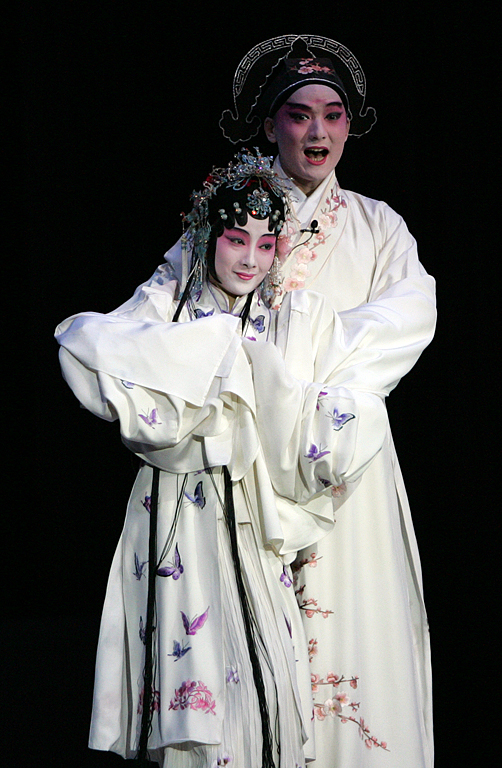
The lanterns along the Qinhuai River had just flickered on when I slipped into the side courtyard of a Nanjing teahouse. An elderly woman in a silk jacket was tuning a pipa, the pegs clicking against the wood. She plucked a single phrase — the opening aria of The Peony Pavilion — and the chatter at the next table died. For the next hour, Du Liniang walked in the garden, died of longing, and returned from the underworld, all while steam rose from my clay pot of jasmine tea. That night I understood why this sixteenth‑century Kunqu masterpiece still fills seats: it is not a museum piece. It is a living argument that love can outwit death, bureaucracy, and even the limits of the stage.
Where the play lives on stage
Kunqu troupes tour the major cities — Suzhou, Shanghai, Beijing, Hangzhou — but the most atmospheric performances happen in garden pavilions rather than proscenium theatres. In Suzhou’s Master‑of‑the‑Nets Garden, the audience sits on stone benches beside a lotus pond; the actors enter through moon gates, sleeves brushing the bamboo. In Shanghai’s Yuyintang, a restored 1930s playhouse, the acoustics are sharper and the subtitles are projected in English and Chinese. If you are in Nanjing, ask for the “small theatre” (小剧场) version at the Jiangsu Grand Theatre — ninety minutes, no interval, stripped to the core arias. Avoid the massive “tourist spectacular” staged in some theme parks; they replace the delicate shui xiu water sleeves with LED backdrops and cut the dream‑wandering scene to twenty minutes.
Following the libretto without fluent Chinese
Most venues hand out a bilingual booklet, but the print is tiny and the house lights go dark fast. I photograph the synopsis pages with my phone before the overture starts, then dim the screen to the lowest setting. Key scenes to track: the garden dream (游园惊梦), the portrait painting (写真), the underworld judgment (阴判), and the resurrection (还魂). The arias are sung in classical Suzhou dialect; even native Mandarin speakers miss half the words. Let the qupai (labeled melodies) guide you — each tune carries an emotional tag. When you hear “Hao Shi Jin” (好事近), the mood turns tender; “Zhe Gu Tian” (鹧鸪天) signals grief. If the theatre offers a pre‑show talk — usually thirty minutes before curtain — go. The dramaturg will explain the hand gestures that mean “I am writing a poem” versus “I am weeping.”
What to wear, when to arrive, how to sit
- Clothing: dark, quiet fabrics. Silk rustles less than nylon; avoid sequins or stiff denim that squeaks on stone benches.
- Footwear: flat shoes you can slip off. In garden venues you may be asked to step onto a raised wooden platform.
- Arrival: thirty minutes early for seat selection; the best sightlines are the center of the second row, slightly elevated.
- Posture: knees together, hands resting on thighs. Crossing legs or leaning back is considered disrespectful to the performers.
- Phones: off, not silent. The pipa’s harmonics are easily drowned by a vibration motor.
During the dream‑wandering aria, the lead actress may pause for a full breath while the flute holds a single note. Do not applaud. The silence is part of the score. Applause belongs at the end of each act, signaled by the conductor’s baton dropping to his knee.
Eating and drinking around the performance
Kunqu evenings traditionally begin with a light banquet. In Suzhou, order a tray of song shu gui yu (squirrel‑shaped mandarin fish), a bowl of wonton in clear broth, and a pot of Biluochun green tea. The fish arrives scored and fried, its sweet‑sour sauce glittering like amber; eat it with chopsticks, peeling the crisp skin from the tender flesh. In Shanghai, the pre‑show snack is xiao long bao — steam them at the table, bite the pleated top, sip the broth, then dip the pork in black vinegar with ginger threads. Finish with a few osmanthus rice cakes. Avoid heavy soy‑braised dishes or chili oil; they coat the palate and dull the subtle shifts in the singer’s timbre.
Common missteps and how to recover
- Expecting a linear plot. The play moves by poetic association — dream, memory, judgment, rebirth. Let the images wash over you instead of hunting for cause and effect.
- Treating the English surtitles as gospel. Translations flatten the double entendres. When Du Liniang sings “spring color fills the garden,” the Chinese chun se also means “amorous feeling.”
- Leaving at intermission. The second half — the underworld trial and the resurrection — contains the most technically demanding arias. The lead’s ku qiang (crying tone) in the judgment scene is why connoisseurs buy tickets.
- Buying “best seat” scalper tickets. They often place you behind a pillar or under a speaker cluster. Book through the theatre’s official WeChat mini‑program or the venue box office two weeks ahead.
- Photographing with flash. The actors’ eyes are adjusted to candle‑level light; a flash can blind a performer mid‑aria. If you must shoot, use a fast prime lens, ISO 3200, no flash, and only during the curtain call.
After the final bow in Nanjing, the pipa player packed her instrument into a brocade case and walked past my table. She smiled, tapped the case, and said, “Du Liniang will wake again tomorrow night.” I nodded, paid the bill, and stepped out into the lantern light, still hearing the flute’s last note dissolve into the river mist.