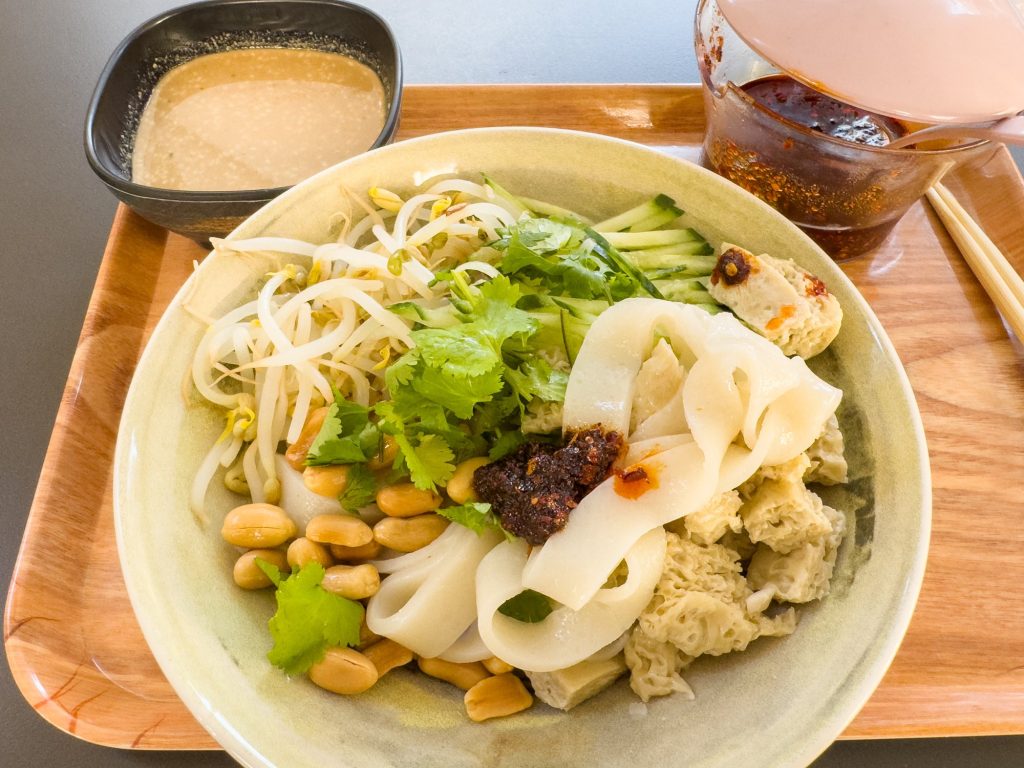
Why liangpi is worth learning before the heat rises
Liangpi (凉皮) — cold “noodles” made from wheat or rice starch sheets, dressed with sauce, chilli oil, vinegar, and crisp vegetables — is one of the most refreshing plates you can order on a warm Chinese day. You find it in northwestern snack shops, food courts, market stalls, and city lunch counters far beyond its Shaanxi roots. For foreign visitors, it is approachable once you understand sauce levels, gluten notes, and a short ordering script.
Early autumn 2026 still brings mild-to-warm afternoons in many cities. Mid-Autumn Festival falls on Friday 25 September 2026 (holiday roughly 25–27 September), with a makeup workday on Sunday 20 September. National Day Golden Week runs roughly 1–7 October 2026, with a makeup workday on Saturday 10 October. Snack lines lengthen near tourist areas on holiday afternoons, so a slightly earlier lunch keeps the first plate calm. If your trip straddles both holidays, Golden Week 2026 vs Mid-Autumn helps you plan when street food streets feel busiest.
This guide explains what liangpi is, how regional styles differ, how to set sauce and heat, what gluten-sensitive travellers should know, and how to order without guesswork.
What you are actually ordering
Sheets, strips, and the “cold” part
Liangpi is not always a thin spaghetti-like noodle. Many versions are wide, soft sheets or ribbons cut from a steamed starch batter. They are served cool or room-temperature, not in a hot broth. The pleasure is contrast: soft starch, sharp vinegar, fragrant chilli oil, garlic, and crunchy cucumber or bean sprouts.
Related dishes you may see nearby:
- Biangbiang or other wide hot noodles in Xi’an-style shops
- Liangfen (凉粉) — jelly-like starch cubes with similar sauces
- Roujiamo or other handheld snacks on the same street
You can stay with one plate of liangpi on day one. Add a side only if you are sharing or very hungry.
Wheat vs rice base — ask when it matters
Some liangpi is wheat-based; some is rice-based; some shops mix styles. Names and colours are not a perfect allergy test. If you need to avoid gluten, do not assume “cold noodles” are safe. Ask “这是小麦的还是米的?” (wheat or rice?) and be prepared to skip the dish if staff are unsure. Sesame paste, soy sauce, and wheat wrappers in other dishes on the table can also matter.
Regional styles without overthinking the map
Shaanxi-style expectations
In and around Xi’an, liangpi is a signature snack: wide sheets, bold vinegar-chilli balance, garlic, and often gluten (面筋 — chewy wheat gluten pieces) on top. If you are visiting Xi’an in early autumn, pairing liangpi with a short old-city walk is a classic first-timer rhythm. For broader city pacing, see Xi’an first visit in early autumn.
Majiang (sesame) and milder city versions
Some shops emphasise sesame paste (májiàng / 麻酱), which makes the plate creamier and slightly softer in heat. These versions can feel friendlier if you are chilli-cautious. Ask for less chilli rather than assuming sesame means mild — chilli oil may still be poured generously.
What “regional” means for travellers
You do not need a perfect taxonomy. Treat “regional style” as a flavour hint: sharper vinegar here, heavier sesame there, more gluten toppings elsewhere. Order the house default once, then adjust heat and toppings on the second visit.
Sauce, heat, and toppings: choosing without awkwardness
The core flavours
Most plates build from:
- Vinegar (bright, sour)
- Chilli oil (colour and heat)
- Garlic and/or ginger
- Soy sauce or salted seasoning
- Optional sesame paste
- Cucumber, sprouts, or other crunch
First-timer heat settings
Calm defaults:
1. 少辣 (shǎo là) — less spicy
2. 微辣 (wēi là) — mildly spicy
3. 不辣 (bú là) — no chilli oil if you want zero heat
Starting mild is not “touristy”; it is how you taste the vinegar and starch before your mouth is overwhelmed. You can add chilli from a table bottle later if one is provided. Removing chilli after the fact is harder.
Gluten toppings and other add-ons
Chewy wheat gluten pieces are common and delicious for many people — and a hard no for gluten-free diets. If you see pale spongy cubes or strips on top, ask what they are. Egg, peanuts, or sesame may appear depending on the shop. Point and confirm rather than guessing from colour.
Shop flow: how to order a calm first plate
Counter and tray rhythm
Typical flow:
1. Look at sample bowls in the glass case or photo menu.
2. Say “凉皮” and your heat level.
3. Confirm any toppings you want removed or added.
4. Pay by mobile wallet or cash if accepted.
5. Take the tray to a stool or small table; mix before eating.
Busy snack shops reward short scripts. Set up Alipay and WeChat Pay for foreign visitors before you rely on lunch queues.
QR menus and photo pointing
If a QR code appears and English is weak, use the same calm habits as other Chinese restaurants: save a photo of the characters 凉皮, show staff, and state 少辣 out loud. QR menus for foreigners covers the broader pattern when the interface jumps languages.
Useful ordering words and a sample script
Keep it short:
- Liangpi: liángpí / 凉皮
- Less spicy: shǎo là / 少辣
- No spicy: bú là / 不辣
- Sesame paste style: májiàng / 麻酱 (if listed)
- To take away: dàbāo / 打包
Sample: “一份凉皮,少辣” — one liangpi, less spicy.
If staff ask about gluten toppings or sesame, answer with a clear yes/no and a pointing gesture. Mixing the plate thoroughly before the first bite distributes sauce so you do not hit a pure chilli pocket.
How to eat it without looking lost
Helpful habits:
- Toss the sheets so sauce coats every ribbon.
- Lift a manageable chopstick bundle; wide sheets can slap sauce if overloaded.
- Alternate bites of cucumber crunch with soft starch.
- Sip water or a mild drink if the chilli builds.
Liangpi is a plate you mix. Leaving a pool of red oil at the bottom unused is common if you chose mild heat — that is fine.
Portions, pairings, and pacing
One plate is enough for a light lunch for many adults. If you are sharing, order one mild and one slightly spicier so the table can compare. Pairing with a meat sandwich snack or a small soup can make a fuller meal, but day one can stay single-plate simple.
Food-court versions may arrive milder and sweeter; specialist northwestern shops may arrive sharper. Neither is “fake.” Adjust heat language to the room you are in.
Timing around Mid-Autumn and Golden Week 2026
Snack streets near tourist sites get busier on Mid-Autumn (Friday 25 September 2026 and the ~25–27 September window) and again through Golden Week (~1–7 October). The Sunday 20 September makeup workday can also create weekday-like lunch crowds. Practical habits:
- Eat a little earlier or later than local peak lunch.
- Prefer neighbourhood counters over the single most photographed stall if queues feel stressful.
- Keep tissues in your bag; chilli oil and vinegar splash.
Allergies, hygiene, and calm expectations
Wheat starch, wheat gluten toppings, sesame, soy, garlic, and chilli oil are common. Rice-based sheets help some travellers but not all recipes are pure rice, and cross-contact in shared kitchens is possible. If your allergy is serious, choose another dish rather than negotiating uncertainty at a loud counter.
Shared chopsticks trays and self-serve sauce bottles are normal. Carry hand sanitiser if that helps you settle. Do not expect identical heat across cities. “Classic” means cold dressed starch sheets with a vinegar-chilli logic, not a chain clone.
A simple first-plate plan
1. Choose a busy liangpi or northwestern snack shop with visible turnover.
2. Order one plate, less spicy.
3. Ask about gluten toppings if you need to avoid them.
4. Mix thoroughly, taste, then add table chilli only if you want more heat.
5. Save the Chinese name 凉皮 in your phone for the next city.
That is enough. Once sauce and heat language feel automatic, liangpi becomes an easy warm-weather lunch between museum mornings, old-city walks, and the busier Mid-Autumn or Golden Week days when you want something cold, fast, and genuinely local.